Red-State shows: Breaking Bad and Friday Night Lights

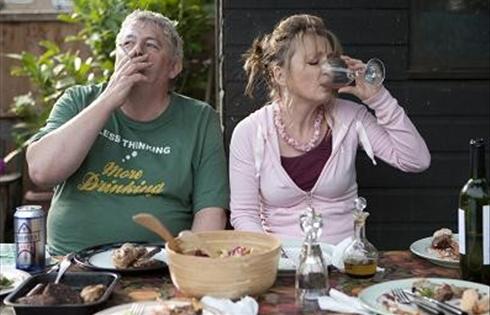
We’ve been watching two Red-State t.v. shows, Breaking Bad and Friday Night Lights. In the recent NYT Magazine piece about Breaking Bad and its show-runner Vince Gilligan, the author pointed out that although BB has an audience as big at Mad Men‘s, it’s less visible than that show in the media, perhaps because whereas it’s a #1 show in Santa Fe/Albuquerque (where it takes place), Memphis, and Kansas City, it’s not even top ten in NYC and L.A. E.g., it’s a red-state show. I had not thought of it quite that way, but the contrast with Man Men especially brings out the contrast: Mad Men is about sophisticated NYC ad agency execs, BB is about Walt, a high school chemistry teacher in Albuquerque, dying of cancer and selling meth, ostensibly to leave his family a financial cushion (since of course his paltry teacher salary would not provide that). Other main characters include Walt’s brother-in-law, a D.E.A. agent, and their two suburban wives (Walt’s wife goes back to work as an accountant for a small company in season three). No cultural elites to be found, with the exception that proves the rule of Walt’s old college buddy and his wife who are now wealthy and culturally sophisticated scientists and seem to exist in a different world. Their brief appearance in the show only underlines that otherwise, BB takes place in a world of middle-class (or below) economics and aesthetics. I doubt there will ever be “Breaking Bad yourself” Facebook apps to make yourself look like a ravaged Bryan Cranston (as there is for Mad Men).

We’re in the third season now (on DVD; season 4 just started), and I think the show has improved. The first season’s pilot began by throwing you into a shocking and surreal scene (of Walt and his meth-cooking partner, his former high school student, fleeing the cops in their RV on the highway), but that season settles into an in-some-ways predictable rhythm, exploring the ironies as Walt maintains his suburban life and job while also secretly cooking and dealing meth. It kind of seemed like a masculine version of Weeds with some of the same themes of bland suburbia and an illicit underworld beneath it, and an emphasis on life in recessionary times, a head of the household doing what she or he needs to do to maintain the home. But as the show has gone on, it’s become increasingly unpredictable, suspenseful, and sometimes almost David Lynchian in its everyday surrealism. In season three the Twins, two murderous Mexican assassins, are maybe a bit much… (they reminded me a little of the Russian giant impervious to pain in the Stieg Larsson novels). But in this season the show has reminded me more of the Sopranos, with more of a feeling that you don’t know where the show is going; and Bryan Cranston has definitely developed some Tony Soprano-like gravitas and moral ambiguity.

Then we also started watching Friday Night Lights (first season!). A few friends (and many critics) have been recommending it for years. This one is totally Red-State. Small West Texas town obsessed with high-school football; many characters devoutly Christian; big emphasis on the positive values of teamwork and belief in oneself and one’s teammates; as Sarah commented, a high school that seems almost entirely dedicated to producing male jocks and sexy women (so far there is next to no reference to classes or academic work). But, it’s really good… very gripping, and one of us went into this with zero interest in football, the other (me) quite little. Maybe part of what’s so good about it is what made ER so gripping, a fictional immersion in a very challenging and difficult job that brings a diverse group of characters together in a common obsession. Of course it’s disturbing (to me) that high-school football bears that weight, but once you accept the given that these students and the coaches are engaged in an activity of immense public significance with a lot at stake, with possibilities for heroism, triumph, utter failure, shame, life-transforming injury, it creates a world of vividly meaningful drama which you don’t get in your typical show. There are, as with ER, soap-opera elements too, but the center of gravity is the team, the games and the season. There’s also a pathos in the viewer’s potential realization that the games are not in fact of such true significance… who really cares in the end if the Panthers win the season? (Well, it definitely matters for the coach, one of the main characters, who will lose his job if they don’t win.)  But that pathos becomes part of the meaning — the sense that they’re all pouring their hearts and lives into this game, a questionable fiction into which so much is invested.

I’m curious to see how it develops and to what degree, for example, the show expects a viewer who “agrees” with the importance of high school football, as opposed to one (like me) who wonders whether it’s a great idea for the entire town to focus obsessively on the job performance of 16 year old kids.

One minor note — the show has some basic continuity problems so far.  The fill-in quarterback Matt Saracen gets beaten up badly enough to go to the hospital, then two days or so later has no marks on his face; the player with a spinal injury cannot yet even more his fingers; he has a breakthrough where he moves his hands for the first time, then a day or two later is wheeling himself around in a chair.  (I assume this is unrealistic.)

Vampire Weekend, Lil Jon, the Dalai Lama, & the Oxford Comma: a fuller consideration


You have probably by now heard all about this week’s dust-up, kerfuffle, brouhaha, call it what you will, about the Oxford Comma:

By Associated Press, Published: June 30

LONDON — A report that Oxford University had changed its comma rule left some punctuation obsessives alarmed, annoyed, and distraught. Passions subsided as the university said the news was imprecise, incomplete and misleading.Catch the difference between the two previous sentences? An “Oxford comma” was used before “and” in the first sentence, but is absent in the second, in accordance with the style used by The Associated Press.
Guides to correct style differ and the issue became heated on Twitter after reports of the Oxford comma’s demise.
But have no fear, comma-philes: the Oxford comma lives.
Oxford University Press, birthplace of the Oxford comma, said Thursday that there has been no change in its century-old style, and jumped into the Twittersphere to confirm that it still follows the standard set out in “New Hart’s Rules.”…
The kerfuffle at least answered the musical question posed by indie band Vampire Weekend: “Who gives a —- about an Oxford comma?”

This must have been one of those occasions where a million people at once (myself among them) thought it would be at least mildly clever and apt to reference the Vampire Weekend song (“Oxford Comma”).  I wonder if it shot to the top of the iTunes download charts this week.

I had never paid close attention to the lyrics to the song.  First of all, although by some standards I could probably count as a “punctuation obsessive,” as this A.P. piece rudely puts it (I prefer “comma-phile”), I’ll admit didn’t precisely know the definition of an Oxford comma.  But I took the concept to stand for snobby/fussy/elite punctiliousness among the educated/preppy classes… a perfect objective correlative for Vampire Weekend, as they style themselves as auto-ethnographers of that world.

Here are the full lyrics:

Who gives a fuck about an Oxford comma?/ I’ve seen those English dramas too/ They’re cruel/ So if there’s any other way/ To spell the word/ It’s fine with me, with me

Why would you speak to me that way/ Especially when I always said that I/ Haven’t got the words for you/ All your diction dripping with disdain/ Through the pain/ I always tell the truth

Who gives a fuck about an Oxford climber?/ I climbed to Dharamsala too/ I met the highest lama/ His accent sounded fine/ To me, to me

Check your handbook/It’s no trick/ Take the chapstick/ Put it on your lips/ Crack a smile/ Adjust my tie/ Know your boyfriend, unlike other guys

Why would you lie about how much coal you have?/ Why would you lie about something dumb like that?/ Why would you lie about anything at all?/ First the window, then it’s to the wall/ Lil’ Jon, he always tells the truth

First the window, then it’s through the wall/ Why would you tape my conversations?/ Show your paintings/ At the United Nations/ Lil’ Jon, he always tells the truth

“Oxford comma” turns into “Oxford climber;” punctiliousness about obscure grammar rules associated with social climbing and Anglophile snobbishness.

Wiki tells us that:

on January 28, 2008, Michael Hogan of Vanity Fair interviewed Ezra Koenig regarding the title of the song and its relevance to the song’s meaning. Koenig said he first encountered the Oxford comma (an optional comma before conjunctions at the end of a list) after learning of a Columbia University Facebook group called Students for the Preservation of the Oxford Comma. The idea for the song came several months later while Koenig was sitting at a piano in his parents’ house. He began “writing the song and the first thing that came out was ‘Who gives a fuck about an Oxford comma?'” He stated that the song “is more about not giving a fuck than about Oxford commas.”

Someone here explicates the line “Why would you lie about how much coal you have?:

Lying about how much coal you have can easily be done through the omission of an oxford comma.

An oxford comma is the comma right before the and in a series.

I have 100 pounds of iron, 50 pounds of steel, and coal.
I have 100 pounds of iron, 50 pounds of steel and coal.

In the first example, the amount of coal is not specified, while in the second example there are clearly 50 pounds of coal. By omitting the oxford comma, you can let people think that you have 50 pounds of coal, even if you do not, as the oxford comma is often viewed as optional.

But why would you lie about how much coal you have? why would you lie about something dumb like that?

What worries me a bit about this analysis, however, is that when I Googled “Oxford comma, steel, coal” in a few variants, I kept getting references to Vampire Weekend and none to the steel/coal sentence as a classic one used to explain the grammar rule in Britain.  Perhaps I needed to go further down the Google pages, though.

Reading through old comments on the song’s entry on songmeanings.net, one oft-debated crux relates to the references to “Lil Jon” (the rapper) — or is it the former Australian Prime Minister?

The Australian Prime Minister, John Howard, was know as both Honest John and Little John. He very vocally supported Bush’s War On Terror, even going so far as to make a speech at the United Nations.

Possibly there could be an allusion there, but probably not, because “First the window, then it’s to the wall/ Lil Jon, he always tells the truth” is a citation of these Lil Jon lyrics from his huge (but crude, NSFW, sorry) hit, “Get Low:”

Get low, Get low, Get Low, Get Low
To the window, to the wall,
To the sweat drip down my balls

To all skeet skeet skeet skeet goddamn
To all skeet skeet skeet skeet goddamn [? or something]

So as someone commented (sorry I’ve lost this reference already), the line “To the window, to the wall, to the sweat drip down my balls” does not need an Oxford comma because “Lil’ Jon, he always tells the truth,” that is, unpretentious, crude American speech conveys its meaning very effectively.  It doesn’t really matter whether or not there is a comma after “to the walls” (although I actually am not sure what “meaning” that line conveys, but perhaps that’s the point, that meaning per se often matters less than rhythm, rhyme, and feeling).

Another crux relates to “I climbed to Dharamsala too/I met the highest lama/ His accent sounded fine/ To me, to me.”  Liddiloop explains that “Dharamsala is a village in Northern India which has been, since the early 1960s, the capital-in-exile for Tibetan refugees fleeing persecution in Chinese-occupied Tibet, and yes, the Dalai Lama lives there, and is the ‘highest Lama’ referred to in the song. He is known for his idiosyncratic english which is far from fluent, but loved by many – so i reckon the singer is pointing out that you don’t need to be word perfect in order to get meaning across…”

So the speaker links Dalai Lama and Lil Jon as speakers of improper, non-standard “weird English” that is preferable to the fussily grammar-obsessed language of the snotty interlocutor, presumably the singer’s English (or maybe Anglophile, just back from a year abroad?) girlfriend whose “diction drip[s] with disdain.”

Other cruxes: the “coal” — is this simply a reference to the sentence about steel and coal commonly used to illustrate the Oxford comma, or (also) a figure for wealth, possibly diamonds?  The chapstick: suggesting that the girlfriend is almost OCD in her fussy obsessiveness and concern with appearances?

Thinking about this has given me a fuller appreciation for the wit, density, and allusiveness of Vampire Weekend’s lyrics, and of the complexity and cleverness of their self-positioning in reference to prestige codes.  Also codes and implications of nationality and foreign travel, e.g. Oxbridge vs. Nepal vs the United Nations, different kinds of cosmopolitanism and the knowledge or wisdom it can but will not necessarily bring.  (One subtext: Vampire Weekend are often criticized or mocked for being too Ivy League, too “white,” pretentiously cosmopolitan in the way they draw on Afropop, etc.  So you can see why they might want to ally themselves with Lil Jon here — but as ever, they are smart and self-aware about that desire to achieve authenticity, too.)

Skeet skeet skeet goddamn! (Or is that skeet, skeet, skeet goddamn?)

Brilliance/ Craziness of the St Louis City Museum

We had a great visit with friends to St Louis this weekend.  The zoo was fantastic… the Botanical Gardens amazing: we especially enjoyed a temporary exhibit up at the moment on “Extreeme Tree-houses” — at least a dozen “tree houses” made by artists, these not up in trees but around the bases.  All enchanting/engaging in different ways.

But here I want to discuss the great, amazing and very strange City Museum.  We forgot a camera so I am going to rely on the museum’s promo photos.

It’s difficult to convey how different this place is from any other “children’s museum” I’ve seen.   It has some of the qualities of Willy Wonka’s castle or a haunted house, I thought.  I commented to Sarah at one point that it feels like something set up by psychoanalysis-influenced surrealists in Argentina in the 1930s.  Here are a few tidbits from Wikipedia:

City Museum is a museum, consisting largely of repurposed architectural and industrial objects, housed in the former International Shoe building.  …The museum bills itself as an “eclectic mixture of children’s playground, funhouse, surrealistic pavilion, and architectural marvel.” Visitors are encouraged to feel, touch, climb on, and play in the various exhibits…City Museum was founded by artist Bob Cassilly, who remains the museum’s artistic director, and his then-wife Gail Cassilly. The museum’s building was once a shoe factory and warehouse but was mostly vacant when the Cassillys bought it in 1993. Construction began in January 1995 and the building opened to the public on October 25, 1997. The museum has since expanded, adding new exhibits such as MonstroCity in 2002, Enchanted Caves and Shoe Shaft in 2003, and World Aquarium in 2004. A circus ring on the third floor offers daily live acts. The City Museum also houses The Shoelace Factory, whose antique braiding machines makes colorful shoelaces for sale.

A minute or so into our visit, Celie and Iris and their buddy Thea climbed up into the curling metal slinky-like tunnel you can see in the center of this photo.  They disappeared from view.  Where did they go?  We had no idea.  There is no way to find out.  They popped out somewhere.  At one point we heard their voices in the din.  For a while we thought we would have to climb in too to find them, but were worried we were too fat.  Eventually we went up some nearby ramp and eventually spotted them across several shafts and small bodies of water, stone dinosaur heads, and numerous other chutes and passages leading into the ceiling, walls, or floor.  Some tight passages and tunnels end abruptly such that you have to back your way back out.  At one point I found myself walking through an enormous 19th-century bank vault door that felt as if it might clang behind me.  There are a lot of opportunities to walk into the mouth of some creature or another.  Some very digestive shapes in the tubes and cylinders.  You kind of feel you might get dumped down into the garbage compactor of the Death Star.

The whole museum is kind of like this.  In one spot there’s a small closet-like door or rather hole in the wall.  If you go in there you enter a somewhat creepy little labyrinth with several layers of wall space, lit by a few dim Christmas bulbs.  You feel a bit like a mouse in the wall.  At other points you can look up and see people walking above, or look down and see some kid waving under your feet.

Somewhere in the central enclosed system of spaces on the first floor we encountered a heavily tattooed dude who was one of the first museum employees we’d encountered.  He pointed out to us a spiral staircase we could climb up that would eventually allow us to chute down a 10-story slide to the bottom.  When I asked him if it was scary for kids he said, “well, I put my 17 month-old in it, and he survived!”  We decided to give that one a miss.  Celie I did go down a shorter slide that created a beautiful kaleidoscopic effect as painted metal tubes spin from your hands.

It’s kind of like a Dangerous Museum for Girls and Boys.  I seriously am bewildered about the liability question.  I have to assume that they know what they’re doing, but kids must get hurt now and then (or at least scared and stuck).  Thea skinned her knee and there was a whole first-aid center at the front administering band-aids cheerfully.  But the kids were in ecstasy.  They were really exploring and it was not all administered and explained to death by adults.  There’s potential for some actually scary moments, but the overall feeling is joyfully creative and surprise-filled.  You can see all the seams of the museum, it’s kind of a giant Rube Goldberg device.

Outside we entered a teetering, winding metal structure hanging off the side of the building that led at one point to a de-purposed fighter jet.  Unnervingly, the inside was not really stripped clean but was bristling with cut off wires.  Iris sat in the cockpit and steered a bit.

Down below were some people selling beers and margaritas (!).  Sarah is convinced that anyone could apply to set up shop and sell something.

On weekend nights it is open until 1:00 a.m. and occasionally they have “sleepover nights” when you can camp out on the roof — which we did not even make it to; it apparently contains a Ferris wheel, and there is an aquarium somewhere.  There seemed to be a wedding going on, as various well-dressed older people started streaming in towards closing time.

?!!!  What a cool place, a wildly imaginative version of urban renewal via the arts.

One other tidbit from our trip — we happened basically by accident on this amazing restaurant, the Firefly Cafe, in Effingham Illinois.  Where the Eff is Effingham?  On 70 between Terre Haute and St Louis.  It’s in a giant former barn with a big organic garden attached and a lake in back filled with huge koi.  Saveur magazine or somewhere named it the #2 Most Sustainable restaurant in the U.S. a couple years ago.  We had a pretty light lunch but the food was fantastic– amazing beets and greens salads from the garden.  Want to figure out some way to arrange for dinner there.

*Another Year*: Care-giving and the Depressed Person

Remember that David Foster Wallace story “the Depressed Person” — controversial (it elicited many angry letters in Harper’s when first published) because it seemed so unsympathetic to the “depressed person” of the title, a woman whose evenings were organized around phone calls to those dwindling numbers of old friends who were still willing to listen to her endless self-pitying monologues?  (Of course the irony is that we now realize that this may have been a self-portrait on DFW’s part — at the least, the portrayal came from “inside” depression).

Mike’s Leigh’s Another Year made me think of the story, simply in that it is in part a portrait of depression.  The movie focuses on the lives of Jerry and Tom, a 60-something social worker/counselor and geological engineer couple who share a comfortable, happy life revolving around their fulfilling jobs, home, their gardening in the nearby “allotment” (public garden), and time with their 30-y.o. son and old friends.  It’s structured around a year, the “another year” of the title, divided into four seasonal breaks, each with somewhat different cinematography and mood — this organization indebted to Ozu’s seasonal movies, perhaps?  Also reminded me of Rohmer.

Limits of Care-Giving

As the movie develops, however, it becomes increasingly dominated by the tour de force performance of Leslie Manville as Mary, Jerry’s longtime coworker and their Depressed Friend.  Mary initially seems like a charming, effervescent mess who is clearly not altogether happy but still bubbles over with energy and emotion.  A few drinks in, though, and she starts to fall apart into self-pity about how badly she feels her life has gone, how stuck she feels, how unrewarded.  The movie actually begins with Jerry talking with a deeply depressed patient who has no will to try to improve her life — we never see the patient again, but Mary reenacts that scene in various ways, such that it becomes clear that Jerry’s friendship with Mary is difficult to separate from her profession as a care-giver and counselor.  The movie is all about care-giving — its meaning, limits, dilemmas. How much care can Jerry be expected to offer her depressed friend?

Psychological Wealth and Poverty

I also thought of it as being about different concepts of “wealth.”  Tom and Jerry are so “rich” — they are financially comfortable and own their lovely home, but more than this, the movie emphasizes their possession of an extravagance of different kinds of emotional & psychological capital.  They have so much happiness and comfort that they can afford to be generous with it.  Mary seems poverty-stricken next to them in her loneliness, desperation, self-involvement, inability to control her own emotions and moods.  The movie could be criticized for being very “bourgeois” in the link it implies between financial and emotional assets — when you consider, for example, Mary’s pathetically mis-firing dream of owning her own car, which turns out to be a used lemon that she can’t manage to maintain and eventually loses — by contrast, we see Tom and Jerry loading gardening supplies and vegetables in and out of their solid Subaru (I think?)– just one example of the way Mary’s unhappiness and T&J’s happiness are manifest in material possessions.  Mary is always dying to spend time in her friends’ home (this becomes a problem later when she starts showing up uninvited), and you can see why — Tom and Jerry’s own happiness and comfort are palpable in their home, and it’s easy to visualize Mary’s cheap, small rental apartment about which she complains bitterly.  It’s not simply a matter of ownership or money, however: part of the reason Jerry and Tom can have a nice house and nice car is presumably that they are on an even keel emotionally, are able to follow through on their plans, and don’t fall into bad financial decisions due to personal freakout or crisis.  That is to say, their emotional and financial “good health” are reinforcing and create a virtuous feedback loop (and precisely the opposite with Mary).

I can imagine some viewers feeling frustrated by a whiff of smugness in Tom and Jerry’s lives — and maybe on Leigh’s part, too; he seems completely to identify with these people who, in their late middle age, have been very lucky and can look back with pleasure on a life that has led them to a happy place.  And he seems to relate strongly to their difficulties in “managing” their various difficult, depressed friends and relatives (Mary’s male counterpart is their old buddy Ken who comes to visit for a weekend and reveals that the thought of getting on the train back to Hull makes him sick because there’s nothing left for him there other than work.)

Gathering of the Toxic Depressed

Here are Mary and Ken.  The depressed are all big drinker and smokers here.

Another potentially off-putting detail: the depressed people seem cut off from child-rearing and from any fully adult relationship to children and childhood.  Neither Ken nor Mary have kids.  Mary lights up a cigarette right next to a new mother holding her infant, who moves across the garden; Ken joins Mary for this little bitter gathering of the toxic.  And Mary comes on in a creepy way to Jerry and Tom’s adult son, whom she at once wants to see (in her nostalgia) as still a child but also as a love object.

The Narratability of Unhappiness

I watched the DVD track of Leigh’s own commentary.  He mentioned that the film is partly about the link between happiness and simple luck — Jerry and Tom’s good fortune at having things work out so well.  (Although as a friend commented to me, that luck is also linked to character; it’s difficult to imagine either Tom or Jerry having turned into Ken or Mary even if their life had taken wrong turns.)  Like Leigh’s last film Happy Go Lucky, this one is an exploration of happiness — a difficult quality to capture on film; it can seem “unnarratable” as per the famous Tolstoy line about happy families all being alike whereas every unhappy family is unhappy “in its own way.”  This view suggests that narrative itself or an interesting story requires unhappiness to break up the sameness of happiness.  Whereas Leigh seems to be suggesting that it’s in fact unhappiness and depression that approach unnarratability in their routine, redundancy, circular unprogressive movements.

Leigh emphatically rejects as flat-out wrong those who interpret the movie’s final scenes as implying a critique of Jerry and Tom.  At this point in the movie Mary shows up uninvited at just the wrong moment, and Jerry especially is, initially, quite cold and critical of Mary: the seemingly never-ending flow of care-giving gets abruptly turned off.   Leigh seemed a bit defensive — he spent some time explaining why Jerry’s reaction was absolutely reasonable and that to see the film as criticizing her or portraying her as smug or hypocritical is off base.

I actually agree with Leigh… Well, obviously he can’t be wrong about his intentions, but beyond that, I agree that given the circumstances and how narcissistic Mary’s behavior is, it seems wrong to demand of Jerry that she suppress any displeasure at having her small family gathering gate-crashed by her impossible friend.  It is interesting, however, to realize how fully Leigh seems to identify with the bourgeois worldview of his protagonists — I do think that the Leigh of 20-25 years ago (of his early films like Abigail’s Party, Bleak Moments, etc) would likely have identified more with the depressed outsiders and been quicker to look for complacency and hypocrisy among his more privileged & comfortable characters.

Just to be clear, I loved the movie (Leigh is my favorite current director; here as it usually the case, his unusual film-making methods lead to incredible performances from the actors) & don’t intend this as a criticism.  And I think the film is very humane and sympathetic to Mary.   But, I think this is a film that might look very different from different audience perspectives — e.g. for someone who identifies more with the life path of Mary (or Ken) than with the happy protagonists’.

Basic or Bad?: Gucci Gucci Louis Louis Fendi Fendi Prada

  • My head has been spinning trying to track the Kreayshawn, nee Natassia Zolot, phenomenon this week.  Her video “Gucci Gucci” was uploaded to Youtube about two weeks ago, and since then she has signed a reportedly million dollar deal with Columbia and been subjected to a spiraling cascade of insta-punditry, hype, backlash. I fully expect to see a Hitler/Downfall meme shortly involving Kreayshawn.
  • I don’t think anything since “Combination Pizza Hut and Taco Bell” has given me the same “what is this?” feeling as “Gucci Gucci.”  There’s almost a Catfish or Exit Through the Gift Shop quality, e.g. is this either (a) “real”? (b) “fake”? (c) some kind of deeper game messing with our notions of either?  Is “das racist”??  The Das Racist guys are neither “white” nor African-American, which smooths the edge of the issue a bit, but a Ms. Natassia Zolot rapping about smoking blunts has nowhere to hide.
  • The ear-worm “Gucci Gucci Louis Louis Fendi Fendi Prada/ Basic bitches wear that shit so I don’t even bother” balances on a razor-thin boundary between “selling”/”not selling.”   It’s a lot like “I’m at the Pizza Hut, I’m at the Taco Bell,” in fact.  It’s anti-consumerism, it’s consumerism, it’s the combination consumerism anti-consumerism.  Well, it is anti- — you wouldn’t want to be one of those basic bitches, would you? — but Keashawn also gets to say “Gucci Louis Fendi Prada” a million times and stand in front of a Fendi store….
  • …while wearing the most outlandishly fabulous outfits, e.g. pink Minnie Mouse ears, huge dark accountant glasses (that’s her buddy actually, Lil Debbie, I believe — named after the snack cake?), giant square gold earrings that are sometimes linked by a chain to a nose-ring, tattoos up and down the arms, the big Native American icon medallion.  And, in the “Bumpin Bumpin” video (which “Gucci Gucci” samples, adding to the sense of having fallen into a strange self-referential rabbithole), a comparatively demure yet still garish Fred Flinstone jacket with “FRED” down the arms in big letters.  This meme is worth it if only for the fashion!
  • She’s “a self-described occasional lesbian” and will in fact steal your girlfriend: “I’m colder than the fridge and the freezer/ I’m snatching all your bitches at my leisure.”
  • She’s a cat lover: “I’m rolling up your catnip and shitting in your litter.”  She apparently also enjoys riding elephants (see “Bumpin Bumpin” here again).
  • This is kind of freaky… a friend just emailed a link to a 6-year old Natassia singing with her mom’s garage-rock band the Trashwomen in 1995.
  • The backlash, while understandable given the million dollar contract combined the goofing-around-on-Youtube quality of the project (I can’t say it doesn’t slightly bother me that Natassia earned more on Wednesday than I may in my lifetime), can seem censorious, scolding, and to me, wrong-headed.  So she’s not a “good rapper”?  Isn’t that like saying the Sex Pistols couldn’t play their instruments?  Time will tell, but this girl definitely has style and an attitude.  She’s a director and film student too.  And I can’t stop singing to myself: Gucci Gucci Louis Louis Fendi Fendi Prada…

The darker side of Burl Ives

A guest post from Moonraking reader & friend Jen F. (first guest post ever!):

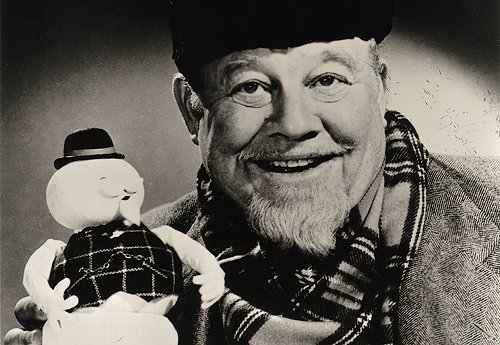
So, Z. and I have recently gotten into listening to a CD of Burl Ives singing “Little White Duck” and other kids’ songs that we got at the library. I had these two Burl Ives records as a child that I loved. Most of all, I remember they had these strange old minor-key folk songs full of mumbled nonsense phrases that I found very haunting and fascinating when I was little. One of these songs, “Buckeye Jim,” later turned up on an Elizabeth Mitchell CD. But most of them weren’t on the Little White Duck CD, so I decided to look for more Burl Ives on Amazon. It turns out the records I had were never released as CDs, but one of them, The Lollipop Tree, could be had in good shape (and a decent price) from a used LP dealer, so I ordered one. It’s definitely exactly the one I had. As J. commented, “Who knows, maybe it IS yours!” So Z. and I sat down to listen to these weird old songs (and also the title track, “Lollipop Tree,” which he had already gotten to know from a YouTube video; it’s much more cheery). As soon as I heard them, I immediately remembered them, though they’d been quite hazy in my mind. As a kid, though, I barely registered any of the actual lyrics. The one I remembered most was “Tam Pierce.” This turns out to be a story about a guy who lends his horse to a bunch of friends and never gets it back, and then you find out the horse is dead. The strange part, though, is that every verse has a list of the “friends” in question that Burl kind of mutters in this incantatory way: “Bill Brewer, Jan Stewer, Peter Gurney, Peter Davey, Daniel Whiddon, Harry Hawk…” This was the part that seemed most compellingly creepy to me as a kid. Even better, though, was “Wee Cooper o’ Fife,” which has this delightful nonsense refrain: “There was a wee cooper who lived in fife/ Nickety, nockety, noo, noo, noo/ And he has gotten a gentle wife/ Hey Willie Wallacky, hey John Dougall/ Alane quo’ rushety, roo, roo, roo.”

Well, as a kid I never really listened to the actual story in this one either, and it turns out the deal is the wife thinks because she’s of a higher class she doesn’t need to do any housework, so the cooper beats her into submission! Great song for a kids’ record! I was rather appalled, esp. since Z. always wants to know every word a song is saying. Maybe I’ll try to skip this one when we play it… (Here’s a complete transcription of the lyrics.)

Even stranger, though, is that it turns out the schoolchildren in Hitchcock’s The Birds sing an American version of this song (with different lyrics–no wife-beating) right before they get attacked by our feathered friends. Finally, to cap it all off, at the end of side 1 Burl sings a song called “Lavender Cowboy,” which is about a cowboy who wants to be like the other “he-men” but “only has two hairs on his chest”!!

Burl Ives! Who knew??

Meek’s Cutoff, Etsy Culture, and the Evacuation of Meaning

Meek’s Crossing is the excellent new movie by Kelly Reichardt, both of whose previous films are definitely worth watching.  (Actually there’s one more, her first, River of Grass, that I have not seen).  Wendy and Lucy (2008) was her breakthough: it features Michelle Williams as a young woman in the present day heading for Alaska for work with her dog Lucy, in an unreliable car with a small amount of money to last her until she can find employment.  Her car breaks down, she gets arrested for shoplifting, and Lucy disappears.  The movie is to a significant degree about her relationship with her dog… and about life in recessionary America for those with few resources.  It’s very good although I did find it a bit of a downer.  I prefer Old Joy (2006) which I see as a key representative film of the late Bush era, offering a haunting portrayal of varieties of liberal or counter-cultural states of mind in this period.  It co-stars (the alt-indie cult Americana singer) Will Oldham as an exasperating, sad slacker/hippie — his strong performance gave me new respect for him.  (Both films are based on short stories by Reichardt’s collaborator Jon Raymond.)

Anyway: the new one is in some ways a big departure, in others very continuous with Reichardt’s previous two.  A departure in that it must have had a larger budget and is a period drama — a revisionary, female-perspectived Western set in 1845 on the Oregon Trail.  Continuous in that it again features a Michelle Williams character on a sad, possibly doomed odyssey through the U.S. on a search for a better life, landing in what may turn out to be the dead end of an Oregon that delivers much less than promised to those without the means or skills to take advantage of it.  Williams’s character Emily Tetherow is part of a group of three couples, one child, and a disreputable guide named Meek (who’s kind of a cross between the Jeff Bridges character in True Grit and that scary character wearing the bear skin they encounter in the woods) they’ve hired to help them make their way to the Willamette Valley in Oregon in 1845.

Sarah made a good observation that Meek’s Crossing could be seen as an expression of Etsy culture.  Etsy of course is the very popular online forum for mostly homemade crafts made and marketed by nostalgic indie types: hipster embroidery, knitting, and the like.  The movie begins and ends with extremely-Etsy credits cross-stitched on homespun cloth, and the movie’s perspective is always that of the women on the journey who are locked into the “domestic” world of their wagons; they have little say in the major decisions of the journey which they (and we) often overhear the men discussing, and which frequently involve whether or not to hang or shoot someone.  (There’s an Altman-like effect in the way the men’s conversations are sometimes difficult to make out from our perspective positioned with the eavesdropping wives.)

The women are always making bread in little wooden bowls and knitting; the movie can be very slow, offering real-time depictions of the process of loading a gun or making bread or a new replacement wooden wagon axle.  In one scene, Emily Tetherow repairs (with cross-stitching) the leather mocassin of the Native American man they’ve captured and have been debating whether to kill on the spot (Meek’s preference) or to allow to accompany them as a guide.  The men either want to murder him or temporarily use him, but in repairing his leather shoe, Michelle Williams’s character demonstrates how Anglo women’s domestic knowledge and skills, along with their marginalized perspective, allow them to forge sympathetic bonds with Native Americans and to make a cross-cultural connection.

So one way to read the film would be to see it as a revisionary feminist Western that celebrates 19th-century “women’s work” and that arguably (in the Etsy manner) fetishizes homemade crafts and laborious manual labor as an implicit antidote to 21st century soulless white-collar work.   The critical reading of this could be that there’s a potential self-satisfaction or wishful thinking in the implication that this kind of craftsmanship, and the set of perspectives and attitudes associated with it, offers an utopian alternative to the masculine cruelty and ethnocentrism of the dominant culture.  Well, self-satisfied insofar as, as per Sarah’s reading, the movie implicitly suggests some kind of link between 21st century cross-stitching Etsy/home-crafting culture and that of the world depicted in the movie.  (J. Hoberman hints at such a link in his quip that the film’s women are “alt-Bedouin in their protective gingham dresses and heavy bonnets.”) I personally have no problem at all with hipster/indie/Etsy neo-hippie craftsmanship, but I do suspect that its practitioners can be prone to wishful thinking about how much of a challenge to mainstream culture their knit beer cozies and the like constitute.

The movie certainly doesn’t pan out in any kind of self-satisfied or celebratory manner, however.  [Spoiler alert — in what follows I will give away plot details from the movie’s conclusion).

In an imagined upbeat version of the movie, Emily Tetherow’s bond with the captive would save the group, with “the Indian” leading them to a source of water. (This is the only way he is identified, btw.)  In actuality, however, the journey apparently ends in disaster.  The Anglos interpret the Indians’ mutterings (he speaks no English) to be suggesting that water lies on the other side of a ravine and hill that will be difficult to cross in their wagons.  Desperate, they attempt to lower the wagons to the bottom of the ravine via ropes, but one rope breaks, crashing the cart and spilling their remaining water.  In the shocking final scene, the Indian simply walks off, muttering to himself, leaving the party to what would seem certain death.  Cut to embroidery/ cross-stitched credits.  As J. Hoberman observed, the movie ends up recalling Aguirre, the Wrath of God in its depiction of a journey into the wilderness that winds up in circular movement leading nowhere but to destruction and death.

The Tetherows and companions have been obsessed with the possibility that “the Indian” is either reading or transmitting signs to potential hidden companions.  He scrawls drawings and marks on stones as they travel — other rock drawings are visible throughout the journey — and when the party catch him leaving inscribed stones behind that may serve as markers of their path, they almost kill him on the spot, in terror that he is leading them to slaughter.  Yet as they realize their only hope may lie in his ability to read the landscape for signs of water, they must place their hopes in his signifying abilities.

But the final scene strongly implies the possibility that he may be insane or at least at least as confused as the Thetherows & friends; as he wanders away, he seems not purposeful but lost in his own world, and the film left me with the sense that all the speculations about his powers of receiving and transmitting signs have been beside the point, since he is neither a shrewd enemy nor a valued native informant but simply a confused soul severed (or “cut off”, as per the title) from any sustaining community or cultural system.  (Again, even more cut off than the white settlers, who at least can die together.)

This is just one possible interpretation, but my sense was that all “the Indian”‘s scrawlings on rock were meaningless… giving the whole movie a final sense of futility and evacuated meaning that’s quite powerful and that demands a rethinking of much that’s preceded it.  The film becomes an exploration of what it means to be culturally “cut off,” severed from any sustaining culture’s web of signs, wandering in a world filled with signs that appear pregnant with significance but ultimately reveal themselves as empty or at least conveying nothing to us.  If “the Indian” is slyly communicating with his people, at least we’re in a meaningful (albeit enemy) world; to realize that he has just been scrawling on rocks and can neither offer help nor harm is, in a sense, a much bleaker conclusion. And in one final turn of the screw, we could read the film’s “handmade” end credits as a parting allusion to our own futile desire to reconnect ourselves to lost whole pre-industrial cultures.  In this sense a revival of homemade crafting could be analogous to the Western as a nostalgic genre.

A fun Saturday night, in other words!  Actually, it’s really good — almost everyone in the theater sat through the entire final credits, just soaking it in.

Uncle Boonmee Who Can Remember His Past Lives

I saw this a week or two ago at the IU Cinema and keep meaning to write something about it.  Perhaps all I have to say, really, is that it’s like a cross between Akira Kurosawa’s 1975 Dersu Uzala and Donnie Darko.  In fact, it is so much like that that I’ll be surprised if no one else has pointed it out.  I don’t remember Dersu Uzala very well as I haven’t seen it since the 1970s, when a somewhat eccentric friend of my father’s took me to see it.  I had assumed that this was when it was released, but checking the date, did he really take me when I was six years old???  (More likely it was a showing somewhere at least a few years later.)  I do remember being absolutely mystified by the movie, which is a Herzogian account of an early 20th-century native of the Siberian forests:

The film opens to a forest that is being cleared for development, and Arseniev searching for an unmarked grave. The film then flashes back to Arseniev’s surveying expedition to the area of Shkotovo in Ussuri region in 1902. A topographic expedition troop, led by Captain Arseniev, encounters a nomadic, aboriginal Nanai tribesman named Dersu Uzala who agrees to guide them through the harsh frontier. Initially viewed as an uneducated, eccentric old man, Dersu earns the respect of the soldiers through his great intelligence, accurate instincts, keen powers of observation, and deep compassion. He repairs an abandoned hut and leaves provisions in a birch container so that a future traveler would survive in the wilderness. He deduces the identities and situations of people by analyzing tracks and articles left behind.

Dersu Uzala saves the lives of Captain Arseniev and one of his men not once, but twice…  [wiki]

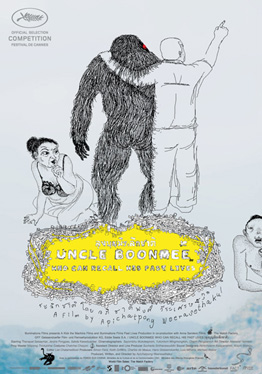
Uncle Boonmee combines a similar mysterious immersion-in-the-primeval-forest setting with cheesy (or what you would assume would seem cheesy, though do not really) sci-fi elements, namely hairy, Yeti-like “monkey ghosts” whose eyes are little bright red LED flashlight dots.  I was charmed to read that the director Apichatpong Weerasethakul was heavily influenced in this film by fond memories of watching Thai sci-fi/horror B, C and D-movies on t.v., movies so cheaply made that the monsters had to stay in the shadows so you wouldn’t see how bad their costumes were.

It’s quite a beautiful, strange, sometimes droll movie.  The animated films of Miyazaki would be another analogy: Weerasethakul’s style is less accessible, weirder, but the film shares with something like The Princess Monaoke a respect for the natural or nonhuman world as animate, numinous, and at once alien and welcoming. Perhaps the most memorably strange scene involves a princess with discolored skin (possibly from a burn?) who prays to a catfish god to heal her.  She wades into the pool and, no other way to say it, has sex with the catfish god: you actually see it wriggling and splashing between her legs.  Otherwise most of the movie takes place in a recognizably contemporary Thailand where Uncle Boonmee, who owns a little farm where he raises bees, lives through his final days before death, a process that involves conversations with various family members including both the ghost of his wife and his lost son who has now returned as a Monkey God: turns out he got lost in the jungle and mated with a female Monkey God, after which he became one himself.  Said son is basically in a gorilla suit but the effect is not comic but movingly strange; the fantasy elements somehow allow for the expression of deep feelings of sadness, regret, and love.

I started to think about the movie differently when I read that Weerasethakul seems to have intended Boonmee’s death, shot in somewhat grainy 16 mm., to represent the death of cinema itself: “When you make a film about recollection and death, you realise that cinema is also facing death. Uncle Boonmee is one of the last pictures shot on film – now everybody shoots digital. It’s my own little lamentation.”  There is also a Thai political angle — as a young government soldier, Boonmee hunted for and killed communists in the forests, actions he now regrets — that I didn’t feel equipped to interpret very deeply.

This would be better to see on the big screen than on DVD — it helps to feel immersed in its visual world.

“My mind is like a switchboard:” Poly Styrene R.I.P.

I was sad to hear of the death from breast cancer yesterday of Marianne Joan Elliot-Said, a.k.a. Poly Styrene, at the age of 53. Nitsuh Abebe has a nice piece about Styrene (and her death) on the New York Magazine blog.

Styrene was the singer for X-Ray Spex, whose 1978 album Germ-Free Adolescents I discovered at age 14 or so (so, 1985ish 1983ish) from Robert Christgau’s Rock Albums of the 1970s book.  It was and has always been one of my favorite punk-era albums and, really, favorite albums.

Poly Styrene was one of the truly great punk singers/ personalities.  I have to steal this fabulous photo from the Abebe piece I link to above:

She was British-Somali.  She wore braces.  She shaved her head.  She freaked out Johnny Rotten by talking about hallucinations.  She wrote lyrics like this:

My mind is like a plastic bag/ That corresponds to all those ads/ It sucks up all the rubbish/ That is fed in through by ear/I eat Kleenex for breakfast/ And use soft hygienic Weetabix/ To dry my tears/My mind is like a switchboard/ With crossed and tangled lines/ Contented with confusion… My dreams I daren’t remember…/ I’ve dreamt that I was the ruler of the sea/ The ruler of the universe/ The ruler of the supermarket/ And even fatalistic me.

Or like this: “Oh bondage up yours/ Oh bondage no more/ Oh bondage up yours/ Oh bondage no more.”

Germ-Free Adolescents, like some of the greatest other punk albums, was obviously heavily influenced by reggae’s Biblical apocalyptic fatalism and vision of a world in end days.
She wore clothing made out of what looked to be shower curtains, left-over army salvage, and anything in very bright plastics.  And cardigans and colorful gloves and strange hats.  She gave punk rock color (fashion & race), wit, a female perspective.
She was a poseur.  She liked to make people stare.  She was a feminist.  (And later, a Hare Krishna!) She made female stereotypes seem absurd.

You could say she was the female Johnny Rotten but perhaps the female David Johanson of the New York Dolls in 1975 or so is more accurate.

Her voice was an ungodly caterwaul that influenced a thousand riot grrls.
Here is Poly Styene and X-Ray Spex performing their first single, “Oh Bondage Up Yours!”  And “Identity“.  And “The Day the World Turned Day-Glo.”  And here’s a 1978 interview.  And another one in which she discusses how she chose her name while brushing her teeth: “I chose the name Poly Styrene ‘cuz it’s a lightweight disposable product.  Plastic, disposable…”
X-Ray Spex was one of the first emphatically post-modern bands, creating their music and image out of consumer society, plastic, identity crisis, credit cards, apocalypse, hygeine, suicide, television, in a spirit of outrage and critique as well as hilarity, creative appropriation, and fun.  “I was playing with words and ideas. Having a laugh about everything, sending it up.
I really feel sad about her death.