*Another Year*: Care-giving and the Depressed Person

Remember that David Foster Wallace story “the Depressed Person” — controversial (it elicited many angry letters in Harper’s when first published) because it seemed so unsympathetic to the “depressed person” of the title, a woman whose evenings were organized around phone calls to those dwindling numbers of old friends who were still willing to listen to her endless self-pitying monologues?  (Of course the irony is that we now realize that this may have been a self-portrait on DFW’s part — at the least, the portrayal came from “inside” depression).

Mike’s Leigh’s Another Year made me think of the story, simply in that it is in part a portrait of depression.  The movie focuses on the lives of Jerry and Tom, a 60-something social worker/counselor and geological engineer couple who share a comfortable, happy life revolving around their fulfilling jobs, home, their gardening in the nearby “allotment” (public garden), and time with their 30-y.o. son and old friends.  It’s structured around a year, the “another year” of the title, divided into four seasonal breaks, each with somewhat different cinematography and mood — this organization indebted to Ozu’s seasonal movies, perhaps?  Also reminded me of Rohmer.

Limits of Care-Giving

As the movie develops, however, it becomes increasingly dominated by the tour de force performance of Leslie Manville as Mary, Jerry’s longtime coworker and their Depressed Friend.  Mary initially seems like a charming, effervescent mess who is clearly not altogether happy but still bubbles over with energy and emotion.  A few drinks in, though, and she starts to fall apart into self-pity about how badly she feels her life has gone, how stuck she feels, how unrewarded.  The movie actually begins with Jerry talking with a deeply depressed patient who has no will to try to improve her life — we never see the patient again, but Mary reenacts that scene in various ways, such that it becomes clear that Jerry’s friendship with Mary is difficult to separate from her profession as a care-giver and counselor.  The movie is all about care-giving — its meaning, limits, dilemmas. How much care can Jerry be expected to offer her depressed friend?

Psychological Wealth and Poverty

I also thought of it as being about different concepts of “wealth.”  Tom and Jerry are so “rich” — they are financially comfortable and own their lovely home, but more than this, the movie emphasizes their possession of an extravagance of different kinds of emotional & psychological capital.  They have so much happiness and comfort that they can afford to be generous with it.  Mary seems poverty-stricken next to them in her loneliness, desperation, self-involvement, inability to control her own emotions and moods.  The movie could be criticized for being very “bourgeois” in the link it implies between financial and emotional assets — when you consider, for example, Mary’s pathetically mis-firing dream of owning her own car, which turns out to be a used lemon that she can’t manage to maintain and eventually loses — by contrast, we see Tom and Jerry loading gardening supplies and vegetables in and out of their solid Subaru (I think?)– just one example of the way Mary’s unhappiness and T&J’s happiness are manifest in material possessions.  Mary is always dying to spend time in her friends’ home (this becomes a problem later when she starts showing up uninvited), and you can see why — Tom and Jerry’s own happiness and comfort are palpable in their home, and it’s easy to visualize Mary’s cheap, small rental apartment about which she complains bitterly.  It’s not simply a matter of ownership or money, however: part of the reason Jerry and Tom can have a nice house and nice car is presumably that they are on an even keel emotionally, are able to follow through on their plans, and don’t fall into bad financial decisions due to personal freakout or crisis.  That is to say, their emotional and financial “good health” are reinforcing and create a virtuous feedback loop (and precisely the opposite with Mary).

I can imagine some viewers feeling frustrated by a whiff of smugness in Tom and Jerry’s lives — and maybe on Leigh’s part, too; he seems completely to identify with these people who, in their late middle age, have been very lucky and can look back with pleasure on a life that has led them to a happy place.  And he seems to relate strongly to their difficulties in “managing” their various difficult, depressed friends and relatives (Mary’s male counterpart is their old buddy Ken who comes to visit for a weekend and reveals that the thought of getting on the train back to Hull makes him sick because there’s nothing left for him there other than work.)

Gathering of the Toxic Depressed

Here are Mary and Ken.  The depressed are all big drinker and smokers here.
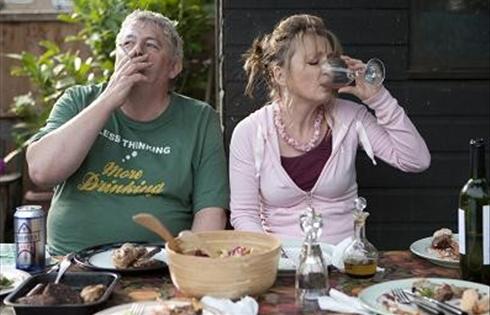
Another potentially off-putting detail: the depressed people seem cut off from child-rearing and from any fully adult relationship to children and childhood.  Neither Ken nor Mary have kids.  Mary lights up a cigarette right next to a new mother holding her infant, who moves across the garden; Ken joins Mary for this little bitter gathering of the toxic.  And Mary comes on in a creepy way to Jerry and Tom’s adult son, whom she at once wants to see (in her nostalgia) as still a child but also as a love object.

The Narratability of Unhappiness

I watched the DVD track of Leigh’s own commentary.  He mentioned that the film is partly about the link between happiness and simple luck — Jerry and Tom’s good fortune at having things work out so well.  (Although as a friend commented to me, that luck is also linked to character; it’s difficult to imagine either Tom or Jerry having turned into Ken or Mary even if their life had taken wrong turns.)  Like Leigh’s last film Happy Go Lucky, this one is an exploration of happiness — a difficult quality to capture on film; it can seem “unnarratable” as per the famous Tolstoy line about happy families all being alike whereas every unhappy family is unhappy “in its own way.”  This view suggests that narrative itself or an interesting story requires unhappiness to break up the sameness of happiness.  Whereas Leigh seems to be suggesting that it’s in fact unhappiness and depression that approach unnarratability in their routine, redundancy, circular unprogressive movements.

Leigh emphatically rejects as flat-out wrong those who interpret the movie’s final scenes as implying a critique of Jerry and Tom.  At this point in the movie Mary shows up uninvited at just the wrong moment, and Jerry especially is, initially, quite cold and critical of Mary: the seemingly never-ending flow of care-giving gets abruptly turned off.   Leigh seemed a bit defensive — he spent some time explaining why Jerry’s reaction was absolutely reasonable and that to see the film as criticizing her or portraying her as smug or hypocritical is off base.

I actually agree with Leigh… Well, obviously he can’t be wrong about his intentions, but beyond that, I agree that given the circumstances and how narcissistic Mary’s behavior is, it seems wrong to demand of Jerry that she suppress any displeasure at having her small family gathering gate-crashed by her impossible friend.  It is interesting, however, to realize how fully Leigh seems to identify with the bourgeois worldview of his protagonists — I do think that the Leigh of 20-25 years ago (of his early films like Abigail’s Party, Bleak Moments, etc) would likely have identified more with the depressed outsiders and been quicker to look for complacency and hypocrisy among his more privileged & comfortable characters.

Just to be clear, I loved the movie (Leigh is my favorite current director; here as it usually the case, his unusual film-making methods lead to incredible performances from the actors) & don’t intend this as a criticism.  And I think the film is very humane and sympathetic to Mary.   But, I think this is a film that might look very different from different audience perspectives — e.g. for someone who identifies more with the life path of Mary (or Ken) than with the happy protagonists’.

David Vann’s “Caribou Island:” Frost-Bound World

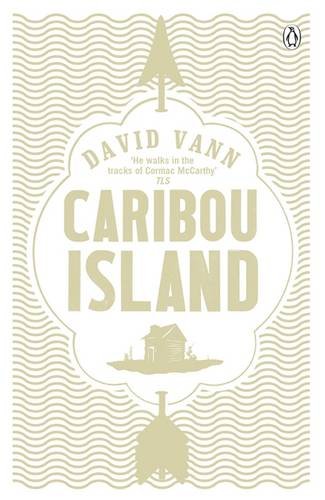
David Vann’s Caribou Island is a pretty intense read.  It’s the story of the disintegration of the marriage of Gary and Irene, who are in their late 50s or so.  They met at Berkeley where Gary was working on a (never-completed) PhD in Medieval Studies; they ended up in Alaska, where, it becomes clear, he has been pursuing some kind of fantasy about the sort of pure, pre-modern/pre-industrial community that he had formerly studied in Icelandic and English epics.  Gary recites lines from the Anglo-Saxon elegy The Seafarer in the woods — “frost-bound world/ hail fell on earth/ coldest of grains” — and obviously sees himself as some kind of modern Seafarer.  Gary has now decided they must move from the mainland to a deserted island where they will live in a simple wood cabin that Gary, with no training and having not even consulted a manual, will build by hand as the early Alaskan winter closes in.  Irene is sure Gary will leave her if she resists, so she goes along with it, sometimes complaining bitterly.

The level of bitter marital invective and bile is quite high, e.g. “Fuck you;” “You think you deserved someone better than me;” “Maybe I did.”  “Why not punch me in the face?”  And — this an especially memorable one — “You’ve destroyed my life, you fuck.” Gary and Irene’s grim spiral is intercut with the experiences of their sympathetic daughter Rhoda, who works as a veterinary assistant, and her awful dentist husband Jim and the young campground tourist he picks up and has an affair with.  The novel is somewhat odd, tonally.  Without giving too much away, it goes to some very bleak places, but it can also be mordantly amusing.  Much of the novel dwells on the landscape, the woods, the freezing water, and Gary and Irene’s desperate attempts to make their way through this beautiful but indifferent and overwhelming nature and to make a home in it.  (Vann is great on the claustrophobia of nature, the feeling of huddling in a plastic tent or a badly-constructed wood cabin and feeling the woods and weather pressing down at you.)  But there’s also social comedy in the depiction of the Alaska town with its bourgeois, hippies, tourists, druggies, wilderness freaks, etc., which feels sociologically accurate and sharply observed (Vann grew up in Alaska).

The novel made me think of Coetzee’s Disgrace occasionally in, again, its willingness to go all the way to extreme limit cases and to think about experiences of something like “bare life,” human beings pushed to a state of some kind of brute destitution: “Why did everything have to be taken?… All gone.  What was left?” Rhoda’s work as a vet’s assistant also made me think about Disgrace‘s David Lurie and his work incinerating the dogs killed at the pound; and both novels bear the influence of pre-20th-c English literature, albeit of different eras (the medieval epics here, Romantic poetry in Coetzee).

There were a couple moments when the implicit metaphor of the doomed cabin as a figure for Irene and Gary’s marriage threatened to become too explicit. “Maybe you can nail each layer down into the next, Irene said.  With longer nails.  That might bring them [the boards] closer together.  And she was thinking this was a kind of metaphor, that if they could take their previous selves and nail them together, get who they were five years ago and twenty-five years ago to fit closer together, maybe they’d have a sense of something solid.”  But, they’re literary people, he a former English PhD student, she a school teacher, and people who read a lot do think about metaphors in their lives in this way, so I decided this was OK.

I listened to the interview with Vann on WKCR’s Bookworm in which Vann discusses his father’s suicide (when Vann was 13) and the several other suicides within his recent family history.  I think he said that his step-mother’s mother shot herself while on the phone with his step-mother; or wait, was that his father’s suicide?  Too many.  Vann comes off as a pretty cheerful and funny guy, not grim at all in manner, although he says that he spent much of his early adult life consumed by a sense of “doom” that he would reenact his father’s experience. Bookworm‘s host Michael Silverblatt was somewhat relentless in pressing some of the implications, for Vann, of writing about these experiences (his previous work of fiction, Legend of a Suicide, was based directly on Vann’s own experience with his father).  Silverblatt said something like, “I can see how writing about this could be therapeutic, but on the other hand, did you ever worry that in doing so, you would bring yourself closer to enacting these tragedies yourself?”  Vann sort of laughed and said that he did think about that although no one has ever put it “quite so directly.” 

Hanif Kureishi on the Kama Sutra

Hanif Kureishi on the Kama Sutra in the Guardian, great piece!

It suggests that the gentleman should keep away from lepers, malodorous women and anyone with white spots. It is arch, comical and amazing – less Byron and more the sort of thing that Jeeves would have said to a priapic Bertie Wooster had Bertie been Indian and PG Wodehouse without the sense to omit sex from his books. It states, for example, that “intercourse with two women who have good feelings for each other is known as the ‘combination’. The same with many women is called ‘the herd of cows’.”… If it turned out that the woman was also consulting a similar manual then the two characters in this drama would be playing roles that would ensure they’d remain outside the experience. Both would be in a fixed place and the relationship would merely be an exchange of fantasies….Like Alfred Kinsey’s reports at the end of the 1940s and early 50s, the Kama Sutra tries hard to turn passion into science.

A genuinely useful self-help guide to bearing pleasure might have to contain advice about putting up with the envy, contempt and hatred of oneself as well as of others, along with any self-disgust, guilt and punishment that may follow. It would be an education in determination and ruthlessness and, to a certain extent, in selfishness and in forgetting….It might be important to recognise that our pleasures have to be guarded from our own aggression, much as our freedoms are.

Newspaper Obituaries/ Tom Rachman’s *The Imperfectionists*

Sometime over the last few years I started to appreciate the New York Times‘ obituaries for the first time.  I started reading parts of the NYT at a pretty young age but I don’t know that I ever made it through an obituary in my youth, unless perhaps for someone like John Lennon.  My new interest in the genre must have had something to do with getting older myself, although I have to say that I think it’s less about that or anything morbid than appreciating the obituary as a concentrated little life narrative.  I’ve never done this, but I’ve considered bringing in some examples to a class, perhaps with wedding announcements, as a way to think about life narratives and their conventions and forms.  The NYT ones are usually little gems, filled with surprises, twists, and wonderfully vivid and odd details.

Today has an especially good collection.  (Or at least, these are the ones in my Sunday paper — of course now the concept of “today’s paper” is mutable.)  The longest one is of Poppa Neutrino, “an itinerant philosopher, adventurer and environmentalist… who founded his own church, crossed the Atlantic on a raft made from scrap and invented a theoretically unstoppable football strategy.”  He invented “the Neutrino Clock Offense, a system of secret hand signals, based on the face of a clock, designed to let passer and receiver communicate while a play is in progress. Despite his best efforts, Mr. Pearlman was unable to persuade any college football teams to adopt it.”

Also on the page are Eleanor Galenson, a psychoanalyst who revised Freud’s accounts of the origins of sexual identity and concluded “that children make the discovery of genital difference between the ages of 15 to 19 months, and that this has an impact on their play, their relationship with their own bodies, their relationship with their parents.” Also Bernd Eichinger, screenwriter and producer of many films including the Hitler film Downfall, criticized by Wim Wenders for generating a “kind of benevolent understanding” of the Nazi leaders by virtue of seeing the world through their perspective.  (Maybe a missed opportunity here: why no mention of the Downfall internet meme?)

And finally — in some ways this is my favorite kind of obituary, a mini-biography of someone one is guaranteed never to have heard of before — an account of the life of Milton M. Levine, who made his fortune on “Uncle Milton’s Ant Farm,” over 20 million of which have been sold since he invented it in 1956, inspired by the red ants at a July 4th picnic.  The obit concludes, “I found out [the ants’] most amazing feat yet… They put three kids through college.”

There’s a neat story or section in Tom Rachman’s excellent novel The Imperfectionists about the writing of an obituary.  This novel revolves around a broad cast of characters who worked at various times, from the 1950s through the present, for an English-language newspaper in Rome; Rachman worked at the International Herald Tribune so I presume that’s the model, although the novel’s paper seems maybe like a more second-rate version of the IHT?  The book reminded me a little of Jennifer Egan’s A Visit From the Goon Squad in its revolving/expansive/overlapping cast of characters.  It’s not as innovative as Egan in its use of this structure, however, perhaps a bit more like Winesburg, Ohio or (a more recent example) Olive Kitteridge.

The novel has a bit about a journalist with a flagging career who’s been assigned to do “preparedness” for an obituary of a forgotten Austrian feminist of the 1960s and 70s: “preparedness” meaning the research a paper does ahead of time for a potential subject of an obituary.  A potentially awkward situation, of course:

[N]othing is worse than obit interviews.  He must never disclose to his subjects why he’s researching because they tend to become distressed.  So he claims to be working on ‘a profile.’  He draws out the moribund interviewee, confirms the facts he needs, then sits there, pretending to jot notes, stewing in guilt, remarking, ‘Extraordinary!’ and ‘Did you really!’  All the while, he knows how little will make it into print — decades of a person’s life condensed into a few paragraphs, with a final resting place at the bottom of page nine, between Puzzle-Wuzzle and World Weather.

I won’t give away how it turns out, but the experience is surprising in various ways.

The novel is a valedictory love letter to print journalism and simply to print itself in its pre-internet forms.  This passing detail from the final chapter, about one of the book’s more peripheral characters, nicely captures that mourning and the sense that from our perspective, 1950-2000 or so feels like an era, an era of print’s gradual decline, not understood until close to the end:

Winston Chang, after a period of sleeping in his parents’ basement, found work at an exotic-animal refuge in Minnesota.  He adored the job overall but disliked lining the monkey cages with newspaper — even the sight of headlines made him panicky these days.  However, this was not to bother him for long: the local paper folded, and he switched to sawdust.  Soon, even the monkeys forgot the comforts of newspaper.

Recent movies: American Psycho, Heat, Wizard of Oz

In the last couple weeks we saw two movies I’d been meaning to watch for a while.

Michael Mann’s Heat was fantastic.  The glittering surfaces of Mann’s fantasy L.A. define a really original noir setting in which Pacino and DeNiro maneuver with melancholy anger until one inevitably destroys the other.  Pacino comments in a DVD extra that in his mind, his character was high on coke half the time, which helps to explain some of his scenery-eating instant-classic rants.  As I watched, I started to realize that 40% of The Dark Knight is taken directly from Heat.  This becomes clearest in the bank heist — the robbery that begins The Dark Knight is practically cut and pasted from one in Heat, including the ominous soundtrack.  There’s also a direct link in the actor William Fichter: he has a modest but important role in Heat and then he shows up as a the mafia bank employee in the opening heist scene of The Dark Knight.  Was this a subtle tribute/acknowledgment on Christopher Nolan’s part?

American Psycho.  Also impressed by this one.  The violence remains disturbing (I actually think it gave me a nightmare), but I found it compelling and original as an exploration of hallucinatory dementia.  It’s also hilarious at moments (Patrick Bateman’s narrated record reviews of Robert Palmer, Huey Lewis and the News, and Phil Collins, whose bland AOR music he seems to require to motivate him to either sex or violence, are very funny) and really interesting as a “historical” film: made in 2000, set in 1987, the representation of Bonfire of the Vanities-era yuppie NYC is stylized and almost cartoonish at times (the giant cell phones) but in ways that I found surprising/unexpected.  It becomes much more than the obvious allegory (heartless Wall Street yuppie as psychopath) you might expect.

The film’s back story is interesting.  Leonardo DeCaprio was set to star until Gloria Steinem prevailed on him to withdraw for the sake of his teenage female fans.  Mary Harron was fired and rehired.  Oliver Stone and David Cronenberg were both attached to it at various times, as was Johnny Depp.  I haven’t read Brett Easton Ellis’s novel, but it seems that Harron did him a real favor by turning it into a narrative that’s at least plausibly feminist.  Easton Ellis, for his part, is still undecided about whether women can be great film directors, because “there’s something about the medium of film itself that I think requires the male gaze.”  Wow: does Laura Mulvey have this to answer for?

We watched The Wizard of Oz with the girls.  I was amused by the 1939 special effects.  Basically, a 12-year-old with a Mac could create more sophisticated effects now (the flowers in Munchkinland are obviously plastic), but here we are, still enjoying it 70 years later, and the Wicked Witch of the West’s sky-writing is still scary.  We had this exchange afterwards:

Iris:  I didn’t think the flying monkeys were so scary.  I would if I saw them in real life, though.  I’d pee my pants off.

Celie, not missing a beat:  If I saw a real flying monkey, I’d pee every piece of pee my body would ever pee.

The Middle-Aged Man Confronts the Bright-Eyed Kiddies

This is my second post on Greenberg and my first on Jonathan Franzen’s Freedom, which I just finished.

Even if you haven’t seen Greenberg, you probably saw the ads/previews [this part starts at 2:09] including the scene where the 40 y.o. Greenberg sits uncomfortably, surrounded at a party by young 20-somethings, expressing his sense of generational alienation: “your parents were too perfect at parenting.  All the Baby Mozart and Dan Zanes songs?  You’re all ADD and carpal tunnel… Hope I die before I meet one of you in a job interview.”  Part of what’s funny about the scene is Greenberg’s fight with some of the party-goers about what music to play.  He’s just done cocaine and thinks Duran Duran would be the perfect soundtrack; interestingly, the kids don’t want to play anything current, but AC/DC (I think).  Suggesting that part of the generational divide has to do with the lack of generational divide.  Greenberg actually shares many of the same cultural references and touchstones with these kids, there isn’t the easy and maybe comfortingly blatant taste gap, which renders more ambiguous and unsettling the sharp differences that do exist.  That he wants to listen to Duran Duran definitely marks him off from them, but not for completely obvious reasons.

There’s a similar scene in Freedom when two of the 40ish protagonists, Walter the environmental lawyer and his college roommate Richard Katz (once the leader of the punk band the Traumatics, now achieving new success with an alt-Americana outfit called Walnut Surprise) go to a club in Washington D.C. to see “the suddenly hot band Bright Eyes, fronted by a gifted youngster named Conor Oberst.”  Walter, who is (at this point) idealistic and enthusiastic, loves the show, but it freaks Richard out:

Katz hadn’t gone to a show as an actual audience member in several years, he hadn’t gone to hear a kiddie idol since he’d been a kiddie himself, and he’d become so accustomed to the older crowd at Traumatics and Walnut Surprise events that he’d forgotten how very different a kiddie scene could be.  How almost religious in its collective seriousness…. He and Walter were at least twice the age of everyone else at the club, the flat-haired boys and fashionably unskinny babes….

Kiddies were streaming onto the floor from every portal, Bright-Eyed (what a fucking youth-congratulating name for a band, Katz thought) and bushless-tailed.  His feeling of having crashed did not consist of envy, exactly, or even entirely of having outlived himself.  It was more like despair at the world’s splinteredness.  The nation was fighting two ugly ground wars in two countries, the planet was heating up like a toaster over, and here at the 9:30, all around him, were hundreds of kids… with their sweet yearning, their innocent entitlement — to what?  To emotion.  To unadulterated worship of a superspecial band.  To being left to themselves to ritually repudiate, for an hour or so on a Saturday night, the cynicism and anger of their elders…. They gathered not in anger but in celebration of their having found, as a generation, a gentler and more respectful way of being.  A way, not incidentally, more in harmony with consuming.  And so said to him: die.

Completely brilliant and spot-on!  Further evidence of some kind of new generation gap emerging.  I came across this hostile review of the Gary Shteyngart novel that reads it as an “attack on the young,” a mocking salvo in the war between the bitter, uglifying 39-year-olds and the hopeful, pretty 24 year-olds.

It is so on!  As an aging hipster who tries to “keep up,” I’ve definitely been there.  Last year we went to see Richard Thompson and Joanna Newsom (different shows) in close succession, and it was weird how we seemed to be among the youngest in the whole place for Richard T. and among the oldest for Newsom.  It almost felt a little creepy in the latter show.  The Buskirk-Chumley keeps the lights on pretty high and so it all feels very blatant and unavoidable: “yes, I could almost be your dad, is my non-youthful presence a downer for you?”

By the way, for the record, I am a big Conor Oberst fan.  He is now 30 years old, though, so may not be entirely on the side of the kiddies anymore (or quite as bright-eyed — actually my favorite of his albums is his most recent solo record on which he is definitely more jaded than he used to be).  Wonder if Franzen or anyone let him know about the reference or if it came out of the blue; kind of a cool tribute, really.  (There’s also a funny passing reference to Ian McEwan — the character Joey got Atonement from his sister for Christmas and he “struggles to interest himself in its descriptions of rooms and plantings;” since Joey is a young Republican, this is not necessarily a diss on Franzen’s part, though a little tricky to interpret.)

Also for the record, Freedom is, as advertised, brilliant and memorable.  I couldn’t stop reading it and got through a big chunk in one long insomniac session.  It feels almost eerily of the moment, the Way We Live Now, unsettlingly consonant with the bad vibes of the summer of 2010 with its gushing oil spill, environmental despair, and calcifying angry politics.  Probably the single most memorable moment of the novel involves the speech that takes a wrong turn and ends with the speaker screaming “WE ARE A CANCER ON THE PLANET!  WE ARE A CANCER ON THE PLANET!” until he’s pulled from the mike and violently beaten up (the video of the speech becomes a Youtube internet meme).

More Nordic thrillers

I thought I’d recommend a couple Nordic mystery series that I’ve enjoyed lately (we’ve — Sarah has read them all too).

The one I’m most excited about is the Swedish trilogy (so far?) by Asa Larsson (no relation to Stieg).  These are Sun Storm, The Blood Spilt, and The Black Path, all featuring as protagonist a troubled young lawyer named Rebecca Martinsson.  In the first novel we learn that although Martissson is working at a fancy law firm in the city, she grew up in the rural far North of Sweden where she was involved in some way with a fundamentalist Christian church.  When the pastor of this church is found brutally murdered, she returns home and gets sucked into the investigation.  Actually, I think the series takes an uptick in quality after this first one; I liked Sun Storm but thought both The Blood Spilt and The Black Path were really impressive.  I hate to invoke this invidious concept, but the latter two in the series seem to transcend the procedural genre, achieving the qualities of really good, complex literary fiction, with a range of highly individualized, distinct consciousnesses all represented precisely and evocatively.  However, it’s worth starting at the beginning with Sun Storm.

The novels have some things in common with Henning Mankell and, yes, with Stieg Larsson.  They don’t have the Tom Clancy-ish, pulpy qualities of Stieg’s — they’re pretty sober and measured in tone with no techo-thriller flourishes — but they are similarly obsessed with misogyny and male institutional/structural domination of women.  And while the “feminism” of the Stieg Larsson series is sometimes challenged on the grounds that his novels wallow in depictions of violence against women, these Asa Larsson books are certainly deeply female and I think feminist in approach.  Sarah remarked on how good they are on parenting and motherhood — subtle depictions of the complicated emotions involved in raising young kids (especially in relation to one very appealing policewoman).

The other series is Arnaldur Indriðason’s Icelandic novelsI wrote about Jar City and Arctic Chill a while ago and just read Voices, the third in this series featuring detective Erlendur Sveinsson.  OK, a Wikipedia check revealed that there are actually TEN in the series and that I’ve read them slightly out of order.  The one I just read, Voices, actually belongs after Jar City and Silence of the Grave (which I’ve also read) but before Arctic Chill.  Anyhoo, these are all excellent, pretty straight-forward procedurals in the Mankell style.  Erlendur is a lot like Kurt Wallender and the novels, like Mankell’s, expose the seamy underbelly of a Nordic society adapting to new forms of immigration, diversity, and associated stresses and pathologies.  Indriðason is particularly obsessed with child abuse and other issues related to children and parents.  Voices takes place in and around a Reykjavik hotel where the longtime handyman/doorman is found stabbed to death in his Christmas Santa Claus outfit.  We soon discover, of course, that the murdered man has an interesting past — he was once a famous child-prodigy choirboy whose rare recordings are now valuable.  Erlendur and his colleagues delve into the mystery while dealing with the usual family pressures of Christmastime (Erlendur is trying to reconcile with his drug-addict daughter).

Anyway — good reads.  If you liked Stieg Larsson they’re worth a try, and in fact if you didn’t like Stieg you might like these as they’re a bit more “literary” and restrained in style, lacking some of Stieg’s pulp-fiction, Ian Fleming-esque excesses (no giant Russian thugs impervious to pain, etc.)

Sam Lipsyte’s The Ask: the Disgust and the Pity

Sam Lipsyte’s The Ask will probably long remain the funniest and best novel filed under this Library of Congress Cataloging-in-Publication data:

1.  College administrators– Fiction.  2.  College benefactors — Fiction.  3.  Education fund raising — Fiction.

Because god forbid this cheapskate thrifty consumer should actually buy a new hardback book (sorry, Sam), I first read his previous novel Home Land while I was waiting for this one to come from the library.  They have a lot in common, to the point that Home Land feels a bit like a first run at this one (which is deeper and more emotionally nuanced, though Home Land is also hilarious).  The narrator/protagonist of both is a similar character, a middle-aged (39 in The Ask, a bit younger in Home Land I believe) middle-class fuck-up confronting his own failure (in career, friendship, love, sex) and the success of his former friends and classmates.  In both novels the guy struggles with an educational institution — in Home Land he’s trying to submit class notes for his high school alumni newsletter; in The Ask he’s in effect graduated such that he dwells on his college days and is trying to keep his job as a fund-raiser for Mediocre University of New York City.

Lipsyte is just a very very funny writer.  I’ll share two of my favorite passages in The Ask. Here he describes his wildly-successful former college buddy Purdy who made a fortune with some kind of 1990s tech/internet music enterprise.

Still, he had been ahead of his time with his online music outfit.  It might sound ridiculous now, but he had been one of the first to predict that people really only wanted to be alone and scratching themselves and smelling their fingers and staring and screens and firing off sequences of virulent gibberish at other deliquescing life-forms.  So for us he provided new music and photographs of fabulous people making and listening to the new music, as well as little comment boxes for the lonely, finger-smelling people to comment on the looks and clothing of the fabulous people…

That captures the tone and worldview pretty well.  A Confederacy of Dunces came to mind for me; there’s a similarly disgusted, hilarious bile directed at contemporary culture.   This passage is also typical in its seething jealousy — Lipsyte is a poet of self-hating envy.  Milo hates and resents Purdy for being a winner in such a corrupt, crappy, stupid game, and he can’t break out of his self-destructive spiral of envy/self-hatred/self-pity/rage.

It also struck me that The Ask is oddly similar to Man Gone Down by Michael Thomas.  Screw-up artist father in contemporary Brooklyn, trying to hang on to his shaky marriage and to be a good father despite himself; encounters with successful friends from long ago; somewhat desperate unemployment leading to bouts of last-ditch manual labor.  The tone is 180 degrees different — Man Gone Down isn’t funny in the least (I kind of admired it but actually didn’t finish it) — and the vector of sociological analysis is all different too.  Man Gone Down is about an African-American (half white) man in a world of white privilege; The Ask is about a white man “of many privileges and zero skills” who played his cards slightly wrong (he intended to be a painter) and is on the verge of falling out of the middle class entirely.

Here’s another passage that cracked me up.  Milo, with his 3-year-old son (the novel’s very funny on parenting, daycare, etc), is having a coffee with the mother of another kid.  He thinks they’re flirting heavily, and he’s decided he doesn’t have it in him to cheat on his wife, so he’s going to disappoint the woman by pulling back.  Then she mentions her boyfriend.

“Boyfriend?”

I watched her face register what I, and only I, it turned out, had been mulling, saw the surprise there, the disgust, the deeper disgust, the moral judgment, the slight flattery, the steepening dive into new realms of physical revulsion, followed by pity’s steadying hand.

So hilarious.  “Pity’s steadying hand” killed me.  In post-college days Lipsyte was the cape-wearing singer of a sort-of grunge band called Dung Beetle, singing under the name Sam Shit.  There’s definitely something rock-and-roll and improvised-feeling in the novel’s wildly creative and obscene invective — Milo and Lipsyte could be what Sam Shit turned into — but the writing is also very precise and exact.  This passage captures the self-pity and disgust that well up out of the narration.  Lipsyte’s protagonists have a bit of a hangup about the physical ideal embodied by preppy WASPs; the novels are partly about being white and privileged but not quite privileged enough or as much as it seemed back in college, not secure or coolly confident in one’s privilege, not handsome, not fully in control of one’s body, emotions, life or career.  (Can’t find the line now but at some point someone says to Milo something like: 400 years of white male privilege and you can’t do any better than this?)

Home Land is pretty amazing as surreal satire — witness for example the Kid, the world’s champion masturbator, who makes dream-like appearances as a wandering cowboy sage continually pondering the question, “how much whang can a man spank?”  But The Ask goes deeper and is both uproarious, affecting, and pretty unsettling — it’s really fricking bleak.

Here’s an interview.… And a good Jennifer Scheusler NYRB review.  And the A.O. Scott think piece linking The Ask to Hot Tub Time Machine (he totally has a point, actually).

Pleasure reading (late 2009/holidays)

Got around to reading Philip Roth’s 2004 counterfactual The Plot Against America which I found compelling and kind of scary.  It’s a re-imagining of American history in which Republican candidate Charles Lindbergh defeats F.D.R in 1940 on an anti-war, anti-semitic, covertly pro-German (or at least pro-accommodationist) platform.  What makes it really get under your skin is that Roth seems to be drawing heavily on his own Newark childhood, so it reads not as science fiction or fantasy but as a creepily plausible rethinking of both U.S. and his own family history if the country had taken a drastically different turn in the late 1930s.  So, for example, the depiction of his brother who embraces the new Lindbergh regime seems charged with real and intense family memories and conflicts.  The novel also feels obviously of its 2004 Bush administration moment in its detailed thinking through of how a truly fascist U.S. might play out.

Recently read both The Girl with the Dragon Tattoo and the sequel The Girl Who Played with Fire by Stieg Larsson, a Swedish journalist who, to what must have been the deep frustration of the international publishing world, had actually died at age 50 in 2004 prior to the publication of any of his novels.  The third of the trilogy is due out in the States soon.  These are interesting blockbusters.  They’re pulpy and have some of the limitations of most blockbuster fiction: the characters can be cartoonish, the plots implausible, sensationalist and heavily dependent on techno-thriller conventions of various sorts.  (For example, a whole lot of both novels involves descriptions of computer hacking.)  But, they’re total page-turners, really hard to put down and a lot of fun (I gave Sarah the second one at Xmas and over the last few days we were reading it simultaneously, with me picking it up when she put it down; we each had our own bookmark).  I guess I felt the second one was inferior and in the end closer to that techno-thriller cliche than the first, which is more thoughtful and interestingly broody about Swedish politics, patriarchy, and misogyny.  Has there ever been an international blockbuster series of novels whose major theme is male violence against women?  The Swedish title of the first one is Men Who Hate Women and the hero, Lisbeth Salander, is a female avenger against male sadists and abusers.  Salander is in some ways too Hollywood-ready, kind of Laura Croft-like in some ways, but she’s also a great heroine in her weird combination of Sherlock Holmes (she’s Asbergers-y, a genius/savant with a photographic memory), Jason Bourne or the Fugitive, and Batman or something.  The novels also reminded me a bit of a recent favorite of mine, the Danish thriller The Exception by Christian Jungersen of a couple years ago; they share a left-wing, anti-racist Scandinavian perspective on problems of contemporary globalism such as sex trafficking, war crimes, and the like.

One more thing: one of my favorite things about the novels and about Salander is that she’s a kind of superhero version of Pippi Longstocking: uses “V. Kulla” as a fake name on her doorbell at one point for example (cp. Pippi’s Villa Villakulla).

Read two Patricia Highsmith novels while in Cambridge for the holidays, inspired by reviews of the new Highsmith biography which make her sound like a very weird and fascinating character (did you know she worked as a writer for superhero comic books, for example?).  One of her most famous, Strangers on a Train, and a more obscure one, The Blunderer.  Similar plots and characters: “men who hate women,” actually, or men who want to get rid of their wives. Strangers on a Train is a brilliant “double” novel and a novel of homosexual panic — it would’ve fit perfectly into Eve Sedgwick’s Between Men.

Best Music Writing 2009, this year guest edited by Greil Marcus.  I threw this into an Amazon order as a stocking stuffer for myself.  Someone gave me the 2007 volume, which I loved, and I haven’t missed one since (ok, that only makes 3).  I’m a longtime fan (and erstwhile practitioner) of rock/pop music criticism, which can feel like a dying mainstream art.  But these collections inspire confidence that there’s loads of brilliant, imaginative and funny writing out there about pop music, albeit sometimes in hard to find places.  The books tend to collect a really diverse mixture of artist profiles from Rolling Stone or The New Yorker with pieces from little magazines and quasi-unpublished bits from blogs and whatnot.  A few favorites from this one:

  • Vanessa Grigoriadis “The Tragedy of Britney Spears” — a long investigative piece from Rolling Stone, itself a voyeuristic peek at this train-wreck of a career but also a thoughtful analysis of Spears’ downwardly spiraling dependency on celebrity/paparazzi culture (she is now romantically involved with a paparazzi she met on one of her daily chases).  Reads a bit like a Bruce Wagner novel.
  • John Jeremiah Sullivan, “Unknown Bards: the blues becomes transparent to itself.”  Reflections on John Fahey and other collectors and aficionados of early 20th-century blues recordings.  Really smart and interesting on the paradoxes and ironies attendant on old white men obsessing over old records made by Southern black men.  Also an argument for blues as great, transcendent art.
  • James Parker, “Unauthorized!  Axl Rose, Albert Goldman, and the renegade art of rock biography.”  Hilarious overview of the disreputable genre of the “unauthorized” rock biography, including analysis of several biographies of “persistent, near-magical malignancy.”
  • A nice short piece by Jonathan Lethem about the nature/meaning of rock vocals in “post-Elvis, post-Sam Cooke, post-Ray Charles popular music” in which he makes a case that “the singer in rock, soul and pop has to be doing something ineffable that pulls against any given context.”  I actually found this argument surprisingly original and persuasive.
  • An investigative piece by Josh Eells about “the eyeliner wars,” e.g. the harrassment and persecution of “emos” (androgynous fans of Dashboard Confessional and My Chemical Romance) in contemporary Mexico.  Reminded me of a good piece from the anthology of a year or two ago about the surprisingly enormous cult of Morrissey in Mexico.
  • Paul Ford’s “Six-word reviews of 763 SXSW Mp3s.”  Just what it sounds like: 763 reviews of 6 words or less (tweets, in effect) of bands performing at the South by Southwest conference, a reducto ad absurdum of the Blender-style capsule review genre.  In the introduction Greil Marcus aptly describes this feat of reviewing and of dismissal as “heroic, or demonic” and as a performance that implicitly dismisses “music and criticism at the same time.”  Maybe you’d have to have put some time in a music reviewer to fully appreciate this one.

Torture Porn Lit

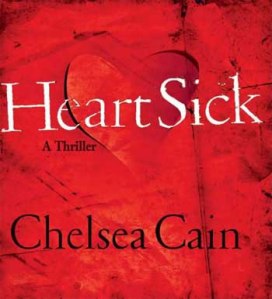
Heartsick-Chelsea-Cain-unabridged-compact-discs-Audio-Renaissance

Just read Heartsick by Chelsea Cain which I picked up looking for something else because, I think, Amazon named it the top thriller of 2007.

I didn’t altogether enjoy it — it seemed derivative (of Silence of the Lambs, although it does have the wit tacitly to acknowledge the debt when the psycho killer mockingly refers to the journalist as Clarice) and very, very gross.  It is gripping and well done in some ways — I wanted to read to the end to find out what would happen — but I was struck by the sheer bloody sadism of it.

It reminded me of a silly argument my brother and I had a while ago about the ethics and politics of so-called “torture porn” film, namely the Eli Roth Hostel movies.  It was silly because I think at that point neither of us had seen the movies… so if anything, I’d have to say he won the argument b/c it’s difficult to take a moral stance of condemnation about something you haven’t seen.   Although part of my point was, I refused to give in to the logic that because this on-the-face-of-it objectionable cultural object has become notorious, “you must see it yourself” to decide.  On the other hand, it’s hard to argue the position from ignorance.

Anyway, what I didn’t like about Heartsick is the back story involving the protagonist detective’s ten-day-long ordeal being slowly and lovingly tortured by the psycho serial killer he’d been investigating.  It actually works pretty well as back story to explain his particular trauma and what’s at stake for him in current case… but annoyingly, the novel is interwoven with day by day chronological accounts of that week and a half.  It’s really hard to take — painstaking description of what it’s like to drink drain cleaner, anyone? — and just seemed sadistic/self-indulgent in a mode of “can you top this” grossness.

I was mulling over the cultural meanings of ‘torture porn’ and thought of several possible explanations/causes for why this has trend emerged so clearly in the last decade or so.

  • Most obviously: sheer oneupsmanship in a modernist logic of greater and greater, purportedly more and more “daring,” transgressions.  This was basically the point I was making to Jake: within Modernist art of the early and mid 20th century, various forms of transgression, obscenity, and more and more realistic depiction of sex and violence became closely linked with artistic expression and a cultural vanguard.  One could think of this as the “First Amendment theory” of modernist transgression, in that to be “censored” or deplored becomes an almost necessary sign of artistic expression and integrity.  The thing is, though, that this dynamic has become tired and predictable when every gangsta rapper and thriller novelist or director participates in the same game.  Sorry, Eminem and Marilyn Manson, you are not James Joyce or Picasso bravely defying the philistines with your cds and DVDs sold at Walmart to every wanna-be radical tweener in America.  (Or for that matter Tarantino: I think he’s at his worst when he falls into this mode; most of the more interesting aspects of his movies have little to do with pushing the transgression envelope.)   And in this case, Chelsea Cain’s novel being that much grosser and more explicit than The Silence of the Lambs does not make it more daring.  Given that you can find stuff on the internet with a few keystrokes that would’ve made Henry Miller or James Joyce blush, that whole logic, which relies on certain dynamics of scarcity and concealment, is basically moot.  These days really radical, daring art is more likely to avoid this whole game of transgression entirely.
  • post-9/11 culture, Abu Ghraib and Guantanamo.  Needless to say a lot of the obsession with torture in pop culture comes directly out of this political/cultural dynamic: e.g. the t.v. series 24.  I’d assume that Saw and Hostel are part of this too, albeit less directly.
  • One other thought, a slightly less obvious one: in this novel anyway, there seemed to be a fascination with the idea of the body as art-work, and the serial killer as a kind of conceptual artist, carving and sculpting her victims’ bodies into new shapes.  A break in the original case came when the detective Archie noticed, looking at photos of all the crime victims, that the shape of a heart had been carved into all the torsos (hard to make out amid all the gore).  The journalist protagonist dyes her hair pink which I think is meant to link to this theme.   Like Jack the Ripper, these murderers are artist/author figures who leave their “signature” to be read by the police.  So here too we could link the trend to plastic surgery and various kinds of body-based conceptual art that views the human bodily as “plastic,” malleable and part of culture not nature.

Anything else going on here?  There’s always the possibility of whole-scale moral degeneration, I forgot that one…