100 Acres, Goose the Market

Indianapolis has always seemed like a surprisingly unexciting city for its size (pushing a million), even if I’m glad we live an hour away from the airport and a big-city mall, Trader Joe’s, etc.  (We’re sort of sick of the Children’s Museum, but it is very good.)  But lately the city has seemed to be looking up in various ways… We had a great little jaunt on Friday to our two new favorite places in town:

(1)  Goose the Market.  This place is sooo good.  We are dangerously obsessed with their Batali sandwich (named not for Mario but his father Armandino Batali, if you please), described by Bon Appetit, which named Goose the “top sandwich shop” in the U.S. a couple years ago, as “a standout Italian sandwich with coppa, soppressata, capocollo, provolone cheese, and tomato preserves.”  It’s a butcher/deli bar plus basement wine/beer bar plus small grocery with some nice vegetables, dried grains, and so on.  Really charming.  We did somehow manage to spend $48 on two sandwiches and what I imagined as “a few other things,” but really it’s not at all over-priced.

[photo from Helloindianapolis.com]

(2) We brought our Batalis and assorted snacks to the Indianapolis Museum of Art’s “100 Acres” Art & Nature park for a picnic.  A New York Times article describes it:

Twenty bone-shaped benches by the Dutch artist and designer Joep van Lieshout sprawl across a meadow, forming a huge human skeleton; the piece, “Funky Bones,” is meant both to evoke the remains and artifacts of the American Indians who once lived in the region and to offer a place to picnic and lounge. A terraced pier overlooking the park’s 35-acre lake and resembling a topographical map was designed by the sculptor Kendall Buster of Richmond, Va., as a perch for fishing or reading, except when the lake floods every year. All eight of the artists’ installations, which dot the park’s unruly woodlands, wetlands, meadows and lake, were conceived to handle wear and tear from people as well as nature.

“We didn’t want it to be a precious thing,” said Lisa Freiman, the museum’s curator of contemporary art and director of the park. “There are no restrictions. Whether you create them or not, people will touch and climb on the sculpture anyway.”

The girls loved the place and tore from installation/sculpture to sculpture.  By chance we visited on the weekend when a very short-term project was in place, sound artist Craig Colorusso’s Sun Boxes:

Marvel at a field of 20 solar-powered speakers, each programmed with a different loop of guitar notes, for an effect of an overlapping field of sound. The sounds of Sun Boxes have been described as both soothing and energizing, as they react to the natural fluctuations of cloudiness and sun to create an ephemeral composition. All are welcome to enter the sound environment at will during the three-day installation.

These were lovely… you could hear at least traces of the sound throughout the park, rising and falling at intervals.  It was overcast (started to rain lightly just when we were leaving) and there were a bunch of people hanging around the boxes who I assume were ready to cover them with tarps (or remove them? probably the former) if needed.

The girls had not been particularly excited about this outing, and once we were there, they kept stressing that it was “so different from what I thought.”  When I pressed them about what they thought it would be, Iris said, “like an art museum, and next to it, just some normal sculptures.”

Our plan was to go afterward to Havana Cafe which we read about in this article about Indianapolis’s ethnic food scene, but we got too tired and went home.

R.I.P Owsley Stanley/ Kid Charlemagne

Another great NYT obituary, this one for Owsley Stanley, “Artisan of Acid:”

Owsley Stanley, the prodigiously gifted applied chemist to the stars, who made LSD in quantity for the Grateful Dead, the Beatles, Jimi Hendrix, Ken Kesey and other avatars of the psychedelic ’60s, died on Sunday in a car accident in Australia. He was 76 and lived in the bush near Cairns, in the Australian state of Queensland.

Owsley Stanley, left, with Jerry Garcia of the Grateful Dead in a 1969 publicity photograph.

Mr. Stanley, the Dead’s former financial backer, pharmaceutical supplier and sound engineer, was in recent decades a reclusive, almost mythically enigmatic figure. He moved to Australia in the 1980s, as he explained in his rare interviews, so he might survive what he believed to be a coming Ice Age that would annihilate the Northern Hemisphere.

Once renowned as an artisan of acid, Mr. Stanley turned out LSD said to be purer and finer than any other. He was also among the first individuals (in many accounts, the very first) to mass-produce the drug; its resulting wide availability provided the chemical underpinnings of an era of love, music, grooviness and much else. Conservatively tallied, Mr. Stanley’s career output was more than a million doses, in some estimates more than five million.

He briefly attended the University of Virginia before enlisting in the Air Force, where he learned electronics. He later worked in Los Angeles as a broadcast engineer for radio and television stations. He also studied ballet and for a time was a professional dancer.

I am not sure if I knew of Stanley… probably I’d read references to him but they didn’t stick.  As is typical of NYT obits, this contains some amazing/weird/funny little details.  My favorite:

Mr. Stanley remained with the band off and on through the early ’70s, when, according to Rolling Stone, his habits became too much even for the Grateful Dead and they parted company. (He had insisted, among other things, that the band eat meat — nothing but meat — a dietary regimen he followed until the end of his life.)…

Mr. Stanley, who became an Australian citizen in the 1990s, was treated for throat cancer in 2004. In the Rolling Stone interview, he attributed his survival to his carnivorous diet. (A heart attack he had suffered some years earlier he ascribed to eating broccoli as a child, forced on him by his mother.)

Wow.  Of all the things mothers get blamed for, this has to be one of the most unfair.

I was fascinated to learn that Stanley is the “Kid Charlemagne” of Steely Dan’s fantastic song (which Kanye West samples on “Champion”):

Amazing lyrics: “Did you feel like Jesus/ On the hill the stuff was laced with kerosene/ But yours was kitchen clean/ Now your patrons have all left you in the red/ Your low rent friends are dead/ All those dayglow freaks who used to paint the face/ They’ve joined the human race…/Clean this mess up else we’ll all end up in jail/ Those test tubes and the scale/ Just get them all out of here/ Is there gas in the car/ Yes, there’s gas in the car/ I think the people down the hall/ Know who you are…You are still an outlaw in their eyes”

Well, chalk up a Steely Dan lyric that used to be absolutely opaque to me that now makes some sense.  Now it can be added to the ranks of great songs about drug dealers: “I’m Waiting for the Man,” “Doctor Wu”, “Pusherman”…actually can’t think of too many more offhand but I’m sure there are a lot.

*Cyrus*’s mother love

We watched Cyrus, the creepy-funny (but unfortunately, ultimately too “sweet,” as well) indie movie.  John Reilly (John) has been divorced for years from his ex-wife Jamie, played by Catherine Keener, who, in the film’s opening scene, shows up at his grim bachelor apartment and finds him apparently masturbating while listening to loud hip-hop on headphones.  So, he’s stuck, regressed, auto-erotic, acting like a sad adolescent.  She drags him to a party with her fiance — they all get along, although the fiance seems a bit understandably exasperated by John’s presence (later, he’s with them as they choose the flowers for their wedding).  John makes a drunken fool of himself but still manages to hook up with sexy Marisa Tomei (Molly).  They bond dancing to the Human League’s “Don’t You Want Me,” so there’s a sense that she can meet him halfway in regressive nostalgia for the period of their adolescence (the 1980s). Molly’s first sight of John occurs when she stumbles on him drunkenly pissing in the bushes and cracks, “nice penis!” This is a re-play of the just previous scene when John’s ex-wife walked in on him masturbating, but now John’s self-exposure plays for laughs and even flattery: Molly offers the promise of a cheerful acceptance of his sexuality.  (N.b. “John” = penis.)

Then, John meets the guardian of Molly’s sexuality, her strange 21-year old son, Cyrus (Jonah Hill).  Cyrus easily could’ve been overplayed, but Hill turns him into an effectively restrained, yet very creepy presence. (Sometimes he almost reminds me of Peter Lorre; Manohla Dargis compares him to Norman Bates.)  Cyrus is a demonic figure, a “double” for John and an image of arrested, stunted male sexuality: what John fears he may be.  Cyrus disapproves of his mother’s relationship with John.  “Don’t fuck my mom, John,” he blurts out early on, adding, “you’ll have you get used to my sense of humor!”  John notices a photo on the mantelpiece of Molly breast-feeding an at-least three-year-old Cyrus.  Molly won’t close the bedroom door at night; Cyrus freely walks into the bathroom where his mother is showering in a transparent stall.  All in all, she and Cyrus are much too intimate.

Cyrus’s presence infuses John’s relationship with Molly — and adult sexuality generally — with undertones of incestuous desire.  The first time John sleeps with Molly, he’s amazed and grateful and calls her a “sex angel;” everything plays realistically (he’s been lonely and celibate for a while), but there’s always a more fantasy-based component: John is still the stunted adolescent who at some level is sleeping with a mother figure; Cyrus’s hulking, intrusive presence (he and John are physically comparable, big burly guys) haunts all sexual contact between John and Molly like John’s bad conscience.

So Cyrus is, according to the movie’s logic, John’s regressed, un-evolved double.  We first see John acting like a horny, confused teenager, shamefully caught in the act by a mother-figure; Cyrus embodies John’s fears that he can never in fact get past that phase.

Cyrus’s only occupation is “working on his music career” and composing his strange synth music.  The sight of Cyrus manipulating his keyboards and computers while staring fixedly at John to the throbbing strains of the music is simply amusing, but it also offers an interesting contrast to the pop music (the Human League) John and Molly first danced to.  On the one hand, “Don’t You Want Me?” is literally “regressive,” an oldie from the 80s, yet in another sense, Cyrus’s throbbing, wordless, and as such “pre-symbolic” music is more fundamentally regressive, and a possible figure for a sexuality that cannot accommodate itself to the real world and its language.  That is, the pop song simply asks, “do you want me?” and declares its own desire, but Cyrus’s music can only imply and insinuate, never state outright what exactly is desired.

John has to spruce up to go to the party, where he meets Molly, so there’s a sartorial transformation as he tries to present himself as an adult man, not an aging kid, putting away his aging-teenager outfits; the first act of aggression Cyrus commits is to steal and hide John’s ratty old sneakers (which Jamie has always tried to convince him to throw out).  It’s as if Cyrus is suggesting to John that he cannot dispose of his “adolescent” self or desire as embodied in those sneakers; Cyrus will hold onto the stained white Pumas (Adidas?) as a reminder or token of who John truly is.

At the end, John and Cyrus have it out in a big physical fight — at a wedding! — and then make up.  Cyrus admits he has “serious issues,” and in the final scene, Molly beckons John to come back to her in her home (they’d broken up).  Clearly, the movie should’ve ended in horror-movie fashion, with some either explicit or implicit suggestion that the unreformed Cyrus, as a figure for stunted, pre-adult male sexuality, will continue to haunt them — maybe John would see something out of the corner of his eye, someone looking through the window?  But no… it all ends with Cyrus apparently cured or willing to work towards a cure, no longer dedicated to thwarting John and his mother’s relationship, reconciled with the realities of adult sexuality and happy that his mother has “found someone” other than himself.

Very disappointing!  The movie was still worth watching, very amusing at times, but it could have been so much better if it had developed its own logic to its conclusion.  It also should have been titled Don’t Fuck My Mom.  I wonder if this was a classic case of the studio insisting on an ill-advised happy ending…

Road trip radio report: Ladies love me, I’m on my Cool J

Several hours in the 1995 Corolla listening to the radio on bad speakers.

Miley Cyrus “Party in the U.S.A.” Why “in the U.S.A.”?  OK, she’s a Nashville girl arrived in L.A., feels out of place without her friends, feels like she’s wearing the wrong kind of shoes (Nashville boots not stilletos)… But then her favorite song by Jay-Z or Britney comes on and she feels good.  So the suggestion in the refrain is that pop music transcends region, makes a Nashville kid feel at home in L.A. when the song comes on?  I guess this is part of her career strategy to re-brand as a “pop” singer not “country,” to de-regionalize and nationalize her.  As Brad Paisley observes, “It ain’t hip to sing about tractors, trucks, little towns” (although that song is #26 on the charts).  Produced and written by Dr. Luke, who lives in the Hollywood Hills and was trying to picture the city from what he imagined a Nashville teenager’s P.O.V. might be.  Very catchy, but I still find the “U.S.A.” reference kind of gratuitous.

Speaking of Britney: Britney Spears, “Hold it Against Me.” “So if I said I want your body now/ Would you hold it against me?”  When she sings this couplet, I have no faith that she’s aware of any wordplay or double meaning.  She’s just saying, “would you hold your body against me.”  Something very characteristically vacuous in the delivery. “Cause you feel like paradise/ And I need a vacation tonight” — slick line!

Bruno Mars, “Just the Way You Are.” I like “Grenade” and liked Bruno Mars on the Grammys, but I find this song a bit creepy in the way it seems to define female beauty in a context of potential plastic surgery.  “When I see your face/ There’s not a thing that I would change/ Cause you’re amazing/ Just the way you are”: I read this as, “I wouldn’t do even the tiniest nip or tuck, it’s just perfect!!!!”

Chris Brown Featuring Lil Wayne & Busta Rhymes, “Look At Me Now.” This was our favorite (heard it 3 times I think), Sarah called it the Oobie-Doobie song.  Love the little Middle Eastern drone and the bubbly Theramin-esque synth.  And Busta Rhymes’ tongue-twister Oobie-Doobie rap, which for a while we thought must be technologically enhanced since it sounded impossible for a human being to produce (it starts around 1:40).  “Your girlfriend a freak like Cirque Du Soleil…. Ladies love me, I’m on my Cool J.”

NYT Magazine redesign, letters section

So, the New York Times Magazine has done a big redesign.  I am one of those diehard NYT readers who are always slightly dismayed by the paper’s redesigns, no doubt partly out of sheer conservative attachment.  In this case, I can see some good things about it.  I’m happy to see the “What They Were Thinking” feature back, I always enjoyed that.  And today’s Lives column was one of the best I remember (really touching!), which may be related to its apparent origins in some kind of spontaneous online posting; it doesn’t have the slightly contrived feeling that these little life stories can sometimes have.  (Novelist Jennifer Egan’s profile of Lori Berenson, the American who spent 15 years in a Peruvian prison for abetting terrorists, is superb, but this doesn’t particularly relate to the redesign.  I am a fan of Egan’s generally…)

But.  I am appalled by the rethinking of the Letters page.  “Reply All”?  Really?  That’s the new name?  And “letters” — or rather, a random assortment of mostly online verbiage — by the likes of “Worried,” “T.S.,” “@Dedmo” and “Drduck”?

I’ve always considered a letter published in the New York Times to be an authored publication.  I had one published a year or two ago, and I was delighted.  The fact-checking procedure was rigorous: you have to prove that you are who you say you are.  They’re throwing that tradition of substance away for “Reply All,” bits of anonymous chatter and tweets and comments on Facebook pages (!) by people or rather online presences with @ signs before their  names?  The Letters section is now essentially a curated online comments thread?  This seems like an imitation of the New York Magazine feature that excerpts highlights from blog/online commentary about magazine content from the previous week — although that works really well, in part because it’s not pretending to be a letters column.

Maintain some dignity, please!  Very unhappy about this… May have to fire off a letter of complaint, or maybe this is my “letter”?

Of course, I’m sure the NYT got letters along these lines when they first introduced a separate sports section, or whatever.  But still.  You have to draw the line soemwhere.

“Catfish” and “The Shop Around the Corner”: Opening the Envelope

We watched Catfish the other day.  It would make a good double feature with Banksy’s (fascinating) Exit Through the Gift Shop — both movies feel very of-the-moment in what they do with documentary form and what they say about 21st century mediated identity.  Catfish is hard to discuss without giving too much away.  It’s about Nev Schulman, a photographer who lives in NYC with his brother Ariel and friend Henry, and a long-distance relationship Nev develops via Facebook and email with, first, an 8 year-old girl and her mother, and then the girl’s 21 year old (or so) older sister (they all live in rural Michigan).  The young girl sees a photograph Nev had published in The New York Sun of a ballet dancer, and does a painting based on the photo which she mails to Nev.  She’s incredibly talented for such a young kid, and soon she’s sending Nev more paintings, and he’s in touch with her mother (initially as an artistic mentor for the girl), and then with her sexy older sister.  A flirtation develops, and then things start to get weird.

Apparently when it was first shown at Sundance, some accused the filmmakers (Nev and his buddies) of having faked the film — perhaps as a reaction to Exit through the Gift Shop, which is obviously faked in various ways.  I for one believe the Catfish boys, though, that it’s at least mostly legit and un-manipulated.

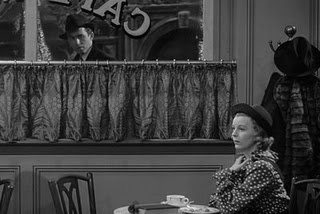
Coincidentally, we also watched (this one with the girls) the classic 1940 Ernst Lubitsch rom-com The Shop Around the Cornersuch a great movie.  The two films really have quite a bit in common in their portrayal of love and desire as mediated fantasy, routed through communications technologies — in this case, of course, the postal system and P.O. boxes (You’ve Got Mail is to some degree a remake, but let’s forget about that).  James Stewart and Margaret Sullavan work together in the shop, drive each other crazy, and maintain a postal/epistolary romance with what turns out to be one another.  In one great scene, Stewart goes to the cafe where his mystery love is waiting for him; he can’t bear to look, so asks his friend Ferencz (this all takes place in Budapest, btw) to peek in the window.

Ferencz: She has a little of the coloring of Klara.

Kralik (James Stewart): Klara? What, Miss Novak of the shop?

Ferencz: Now, Kralik, you must admit Klara’s a very good-looking girl.

Kralik: This is a fine time to talk about Miss Novak.

Ferencz: If you don’t like Miss Novak, I can tell you, you won’t like that girl.

Kralik: Why?

Ferencz: Because it is Miss Novak.

The imaginary object of desire now transforms into his disliked co-worker, metaphor into metonymy. Confronting the actual object of his desire is a bit like opening the holiday bonus envelope:

The boss hands you the envelope. You wonder how much is in it, and you don’t want to open it. As long as the envelope’s closed, you’re a millionaire. You keep postponing that moment and…you can’t postpone it forever.

Kralik, having peeked through the glass window of the cafe, has opened the envelope, and it takes him a while to reconcile what he sees in it with what he had imagined.  For Klara, for most of the rest of the movie, the envelope remains sealed.  There’s a running trope about “counterfeiting” and authenticity: “You don’t have to tell me that it’s imitation leather. I know that.”  (No one wants to be the dupe who mistakes the fake for the real.)  Or: “Are those real diamonds?” “They’re pretty near.”  This as Kralik puts the necklace on Klara, supposedly as a trial run for his actual girlfriend.  The idea of a “real” diamond suggests an escape from fantasy and mediation: fulfilled love as a transcendence of imitation and role-playing.  But of course the movie shows that desire is all of those things.  There is no “real” or authenticity that can rise above fantasy, just a “pretty near” matching up of desire with physical/bodily reality.

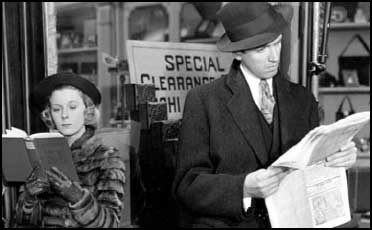
Reading books or newspapers offers another version of what Klara and Kralik had found in their epistolary relationships.  It’s Bovaryism, desire as mediated escapism:

Here’s another emblematic shot: Klara and Kralik are together in her bedroom. He’s come to visit her because she missed work, not physically sick so much as heartbroken (hard to keep the physical and the imaginative/psychic distinct).  He’s there with her — notice he is almost touching her — but is she in bed with him?  Yes and no: she’s there with his letter, which she reads to him, not understanding the circularity of this performance.  There’s a weird combination of all-saturating eroticism here along with chastity, in that she (at this point) has less than no interest in the physical Kralik.

In Catfish this all plays out through Facebook rather than mail, but with a comparable mix of misdirection, role-playing, and a sense that desire becomes revealed as a fantasy world of projection and invention.  There are matching shots: in Catfish, of the Facebook page as a new message pops up; in Lubitch’s film, of the actual P.O. box through which once or twice we actually glimpse Klara as she peers, looking for a new letter.  As befits a contemporary version of Lubitsch’s scenario, though, in Catfish the inventions manifest themselves less in words than in visual images (paintings, photographs, and especially Facebook images) and sounds (there are some interesting counterfeit singer-songwriter performances).

Some reviewers have found some condescension in the way the geography of Catfish plays out: the savvy but trusting professional-class boys from NYC head to the heart of rural, working-class Midwestern darkness where they find lies, invention, and a shamefully uncontrolled fantasy.  Nev moves, in a sense, from the media and the internet as we might like them to be today — facilitators of talents and emotional connections that can move swiftly across time and space, enabling new networks and expressions — to the media as they may in fact be: murky pools of potential deceit, role-playing, and solipsism.  (Although in the end, especially if you watch the DVD extra interview, the movie feels surprisingly sweet, I though.)

Catfish is all about what happens when Nev opens the envelope.

Kenneth Anger at the IU Cinema

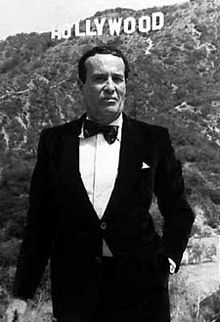
I’ve been looking forward to Kenneth Anger‘s visit to the IU Cinema for quite a while.  The 300 tickets for the evening showing of some of his films sold out at least a month ago, so I was not the only one.  My understanding of Anger was actually pretty received and second-hand.  I own his scurrilous early-Hollywood tell-all history Hollywood Babylon (first published in France in 1959; the version I have is the 1970s one that sold 2 million copies, I believe) but had never seen full versions of any of his films.

The evening showing included two of his most famous, 1947’s Fireworks and 1964’s Scorpio Rising, along with a few very recent short films.

Fireworks is quite amazing.   It’s actually difficult to imagine it being made at that date.  It’s a 15-minute fantasia in which a good-looking young man played by the 19 or 20 year old Anger dallies with and is beaten up by some buff, muscle-flexing sailors.  Blood spurts out of Anger’s nose and milk pours on his head; it culminates with the fiery explosion of a Roman Candle sticking out of a sailor’s crotch.  Anger says he was influenced by early-cinema pioneers like the Lumiere brothers and Melies; it’s easy to see the influence Fireworks must have had on David Lynch and queer cinema of the 1980s and 1990s by Gus Van Sant and others.

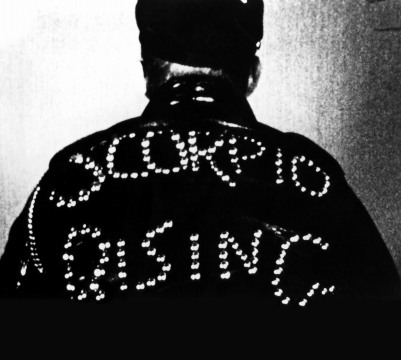
Scorpio Rising seems similarly way ahead of its time.  Anger himself has aptly described it as “a death mirror held up to American culture… Thanatos in chrome, black leather, and bursting jeans.”  Biker dudes caressing their motorcycles, reading comic strips, petting a Siamese kitty, buckling their leather jackets and slipping into leather boots.  Death’s heads, Nazi insignia, and grim reapers.  Pop songs of the moment:  “Blue Velvet” by Bobby Vinton, “Torture” by Kris Jensen and “I Will Follow Him” by Little Peggy March.  And “Wipeout” for the inevitable fiery crash.  David Lynch must have been inspired by Anger’s use of “Blue Velvet.” I believe Anger invented the jarring juxtaposition of cheerful, peppy pop songs with scenes of violence that directors like Martin Scorsese (who’s said he’s a fan of Anger’s) made so much a part of their method; there’s no question that Scorsese’s use of pop songs in Mean Streets had to be directly influenced by this movie.

We went (with our visiting friend Jane) to see Anger’s afternoon talk as well as the evening show, which also featured a Q&A.  Not sure we really had to go to both.  Anger was for the most part very unreflective about his work, sometimes almost hilariously so.  One example: someone asked a question about the origins of Fireworks.  Anger told a story about the 1943 Zoot Suit Riots in L.A. when sailors beat up zoot-suit-wearing Latinos, explaining that it was the inspiration for the movie.  OK, fair enough, but someone followed up to ask, “could you say a little more about how those events turned into this film?”  Anger basically had nothing more to say other than that it was based on a dream he had in which he the one beaten up by the sailors, and that he considers it to be an anti-war film.  In the two hours or so of on-stage discussion I saw, he had almost nothing to say about the homoeroticism of his films (though to be fair, he was asked very little about this directly) nor about their formal innovation and experimentation.  From his conversation, you might never guess that his movies were anything but fairly straight-forward narratives.  He seemed mostly interested in technical issues about the camera and film stock, and about his continual difficulties in finding funding.  (He’s never made a feature film, despite various efforts.)  Another example, when someone asked him about his ground-breaking use of sound and music in Scorpio Rising, his answer was something like, “well, those were the songs that were popular on the radio that summer.”

One funny thing happened.  In the Q&A he mentioned that he had been going to show three recent films, but that the IU Cinema director Jon Vickers (who was standing right there) had told him one of them was too racy for the “mixed audience.”  Anger implied that the film had one “explicit” scene as seen through a peephole, but that it was fairly tame.  Someone pressed him about this — the audience was not happy –and finally Vickers took the mike and explained that since the audience had not been warned about very explicit content, he had not wanted to spring this one on us.  He suggested that after the Q&A, there would be a brief break allowing anyone who wanted to leave to do so, and then the movie would be shown.

It was 9 p.m. and I was starving and sort of wanted to go eat dinner, but of course we could not be the prudes to get up and leave at that point!

The movie turned out to be, basically, a little piece of arty porn featuring closeups of some kind of wealthy industrialist receiving fallatio from his bodyguard while another titillated guard watches on a surveillance camera.  This to the soundtrack of the Police’s “I’ll Be Watching You.”  Pretty lame, actually — and definitely pornographic, so I felt kind of sympathetic to Vickers’ actions (after all, this is a public institution in Southern Indiana and you don’t necessarily want to get the attention of Republicans in state government), even though he came off initially as the bluestocking censor.

Despite Angers’ generally low-affect tone, his affection for the Kinsey Institute came through clearly.  He told a neat story about how he met Alfred Kinsey in the late 1940s, who turned up at an early showing of Fireworks and asked Anger if he could purchase it for the Kinsey collection.  Anger said, sure, you can have the reel we just watched, so they made the transaction on the spot, and Anger later (in the early 50s) visited Bloomington and did interviews with Kinsey.

IU Cinema/ John Ford

I moved to Bloomington about a decade ago and although I had never lived in such a small town, I was pleasantly surprised to realize that most of the things I needed or wanted existed here.  You don’t always have a dozen choices as you would in a big city, but there’s usually one or two of whatever you’re looking for — decent Japanese restaurant, good rock club, nice bar, etc.  OK, some of the shopping (for clothes say) is pretty limited, but you can always go to Indianapolis now and then.

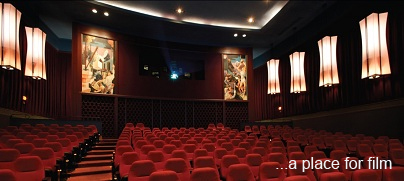
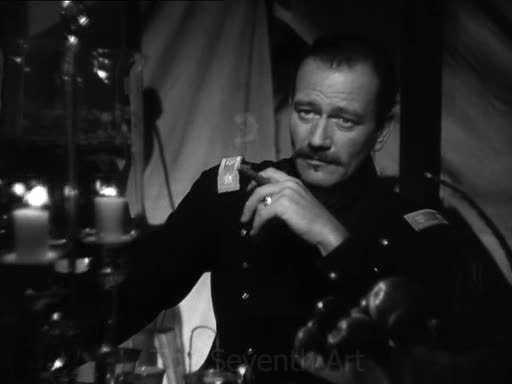
For me, the one single biggest absence has always been a good independent movie theater.  I grew up going to the Brattle and Orson Welles Theaters in Cambridge, and one of my favorite things about living in NYC was access to places like the fantastic MOMA theater and the Angelica, etc.  Cambridge still has the Harvard Film Archive and the Kendall Square Theater.  You might be hard-pressed to buy a pair of tube socks, say, in Hyde Park in Chicago (it never used to have a Target or anything, that may have changed), but you can see amazing movies every night at Doc Films.  In Bloomington, though, it’s always been the suburban mall experience of Kerasotes (now AMC) or bust, basically.  Yes, there’s the Ryder but I never enjoyed sitting in the uncomfortable seats in the classroom auditorium, it felt too much like school for me.  So, sadly, I focused my cinephilia on Netflix.  All this is to say that the opening of the IU Cinema is maybe the single biggest improvement to my quality of life in Bloomington since I moved here.  Can’t say how good it felt to sit with my daughters, waiting for John Ford’s Rio Grande (the final film in his “cavalry trilogy”) to begin, and watch the theater curtain rise as the two smaller curtains fell over the Thomas Hart Benton “Indiana Murals” (originally created for the 1933 World’s Fair).  I’d also seen Stagecoach a few days earlier, and watching both movies, I was strongly aware of the film as projected light.  One example– the amazingly beautiful scenes early in Rio Grande when John Wayne interviews his long-lost son in his candle-lit camp tent: shadows play on the tent as they talk in what seems an implicit allegory for the surface light effects of cinema itself, creating a Plato’s Cave-like effect.

The girls did pretty well with the movie, which is maybe pitched a bit above the 7-y.o. attention span.  Throughout, I tried to whisper basic explanations of the Civil War context which explains the John Wayne’s character’s estrangement from his wife (played by Maureen O’Hara), etc.  Celie commented that she liked the fact that the movie “really paid attention to the horses.  Usually when horses are in movies they’re just there for riding, but in this movie they really paid attention to them.”  Her example was the discussion over the theft of John Wayne’s own favorite horse.  There’s some fun stunt-riding, too (standing up on two horses at once).

Stagecoach is fantastic, of course. One moment I especially liked: the prostitute Dallas looks over at the town’s priggish society ladies and comments, “there’s some things worse than Apaches:” the movie ponders different forces of violence, including the social violence of shaming and ostracizing.  Dallas asks, “Haven’t I any right to live? What have I done?” and the alcoholic doctor replies, “We’re the victims of a foul disease called social prejudice, my child.”  Of course, it’s hard not to think about the question of the “right to live” of the Apaches who enter the film only as nameless, savage antagonists to civilization.

In both movies, the mowing down of the Indians (and their horses) is a bit hard to take.  Politics aside, just watching all the horses fall over (I assume) trip wires is kind of brutal — did they routinely break their legs?

So far, each film I’ve seen at the IU theater has ended in audience applause, which I think is partly sustained appreciation for the existence of the theater.

Newspaper Obituaries/ Tom Rachman’s *The Imperfectionists*

Sometime over the last few years I started to appreciate the New York Times‘ obituaries for the first time.  I started reading parts of the NYT at a pretty young age but I don’t know that I ever made it through an obituary in my youth, unless perhaps for someone like John Lennon.  My new interest in the genre must have had something to do with getting older myself, although I have to say that I think it’s less about that or anything morbid than appreciating the obituary as a concentrated little life narrative.  I’ve never done this, but I’ve considered bringing in some examples to a class, perhaps with wedding announcements, as a way to think about life narratives and their conventions and forms.  The NYT ones are usually little gems, filled with surprises, twists, and wonderfully vivid and odd details.

Today has an especially good collection.  (Or at least, these are the ones in my Sunday paper — of course now the concept of “today’s paper” is mutable.)  The longest one is of Poppa Neutrino, “an itinerant philosopher, adventurer and environmentalist… who founded his own church, crossed the Atlantic on a raft made from scrap and invented a theoretically unstoppable football strategy.”  He invented “the Neutrino Clock Offense, a system of secret hand signals, based on the face of a clock, designed to let passer and receiver communicate while a play is in progress. Despite his best efforts, Mr. Pearlman was unable to persuade any college football teams to adopt it.”

Also on the page are Eleanor Galenson, a psychoanalyst who revised Freud’s accounts of the origins of sexual identity and concluded “that children make the discovery of genital difference between the ages of 15 to 19 months, and that this has an impact on their play, their relationship with their own bodies, their relationship with their parents.” Also Bernd Eichinger, screenwriter and producer of many films including the Hitler film Downfall, criticized by Wim Wenders for generating a “kind of benevolent understanding” of the Nazi leaders by virtue of seeing the world through their perspective.  (Maybe a missed opportunity here: why no mention of the Downfall internet meme?)

And finally — in some ways this is my favorite kind of obituary, a mini-biography of someone one is guaranteed never to have heard of before — an account of the life of Milton M. Levine, who made his fortune on “Uncle Milton’s Ant Farm,” over 20 million of which have been sold since he invented it in 1956, inspired by the red ants at a July 4th picnic.  The obit concludes, “I found out [the ants’] most amazing feat yet… They put three kids through college.”

There’s a neat story or section in Tom Rachman’s excellent novel The Imperfectionists about the writing of an obituary.  This novel revolves around a broad cast of characters who worked at various times, from the 1950s through the present, for an English-language newspaper in Rome; Rachman worked at the International Herald Tribune so I presume that’s the model, although the novel’s paper seems maybe like a more second-rate version of the IHT?  The book reminded me a little of Jennifer Egan’s A Visit From the Goon Squad in its revolving/expansive/overlapping cast of characters.  It’s not as innovative as Egan in its use of this structure, however, perhaps a bit more like Winesburg, Ohio or (a more recent example) Olive Kitteridge.

The novel has a bit about a journalist with a flagging career who’s been assigned to do “preparedness” for an obituary of a forgotten Austrian feminist of the 1960s and 70s: “preparedness” meaning the research a paper does ahead of time for a potential subject of an obituary.  A potentially awkward situation, of course:

[N]othing is worse than obit interviews.  He must never disclose to his subjects why he’s researching because they tend to become distressed.  So he claims to be working on ‘a profile.’  He draws out the moribund interviewee, confirms the facts he needs, then sits there, pretending to jot notes, stewing in guilt, remarking, ‘Extraordinary!’ and ‘Did you really!’  All the while, he knows how little will make it into print — decades of a person’s life condensed into a few paragraphs, with a final resting place at the bottom of page nine, between Puzzle-Wuzzle and World Weather.

I won’t give away how it turns out, but the experience is surprising in various ways.

The novel is a valedictory love letter to print journalism and simply to print itself in its pre-internet forms.  This passing detail from the final chapter, about one of the book’s more peripheral characters, nicely captures that mourning and the sense that from our perspective, 1950-2000 or so feels like an era, an era of print’s gradual decline, not understood until close to the end:

Winston Chang, after a period of sleeping in his parents’ basement, found work at an exotic-animal refuge in Minnesota.  He adored the job overall but disliked lining the monkey cages with newspaper — even the sight of headlines made him panicky these days.  However, this was not to bother him for long: the local paper folded, and he switched to sawdust.  Soon, even the monkeys forgot the comforts of newspaper.

E.S.P. for naked ladies


I found this NYT article, “Journal’s Paper on E.S.P. Expected to Prompt Outrage,” pretty hilarious.  I had just finished a fascinating New Yorker article about unreplicable experiments, “the decline effect,” unconscious experimenter bias, and other problems leading to seemingly false or misleading conclusions in scientific research, and this E.S.P. research seems a perfect example.

This was the funniest part:

In another experiment, Dr. Bem had subjects choose which of two curtains on a computer screen hid a photograph; the other curtain hid nothing but a blank screen.

A software program randomly posted a picture behind one curtain or the other — but only after the participant made a choice. Still, the participants beat chance, by 53 percent to 50 percent, at least when the photos being posted were erotic ones. They did not do better than chance on negative or neutral photos.

“What I showed was that unselected subjects could sense the erotic photos,” Dr. Bem said, “but my guess is that if you use more talented people, who are better at this, they could find any of the photos.”

So everyone has E.S.P. for pictures of naked ladies???  Only the “more talented” can tell the future when the future does not involve nude photos??

Since the phrase “naked ladies” appears twice in this post I fully expect it to be my most-popular ever.  Also, that people from the past, especially teenage boys, will employ E.S.P. to sense it and will then be bitterly disappointed when they click through. Sorry boys!– enjoy the image of flying guitars…