Joan Jett’s fictional leather pants

Finally got around to watching The Runaways. It was all right… somewhat entertaining… directed by a music-video auteur (Floria Sigismondi, who did that apparently influential Marilyn Manson video “The Beautiful People” — which I do recall for some reason) and (so?) enlivened by random bursts of arty visual sequences that don’t really add up to much.  Kristen Stewart was in my opinion simply bad as Joan Jett.  Just felt like a miscasting.  She does her best to be the tough working-class Philadelphia chick, but she’s too delicately refined and it doesn’t come off.  Michael Shannon is entertaining, although I suspect way too benign, as the famously creepy/evil producer Kim Fowley, the Fagin/Svengali who put the band together.

I found the commentary track with Kristen Stewart, Dakota Fanning and Joan Jett very amusing.  Stewart and Fanning seem properly awed by Jett and sort of babble on school-girlishly about their various acting choices.  You have to feel for Stewart — must’ve been embarrassing to have to sit through the scenes in which she attempted to recreate Jett’s teenage years with the icon herself.  My favorite exchange (I only watched for 20 minutes or so) was when Jett complained that she never in fact wore leather pants.  Stewart had some convoluted justification about how it was important that the character always be dressed exactly the same way, to which Jett responded, in her almost Patty-or-Selma-Simpson-esque growl, “Yeah… but I could’ve always just been wearing jeans.”

Here’s the re-incarnation and the original:

An interesting fact I learned from the credits (though this is from Wikipedia):

Jett’s self-titled solo debut was released in Europe on May 17, 1980. In the US, after the album was rejected by 23 major labels,[8] Jett and Laguna released it independently on their new Blackheart Records label, which they started with Laguna’s daughter’s college savings. Laguna remembers, “We couldn’t think of anything else to do, but print up records ourselves, and that’s how Blackheart Records started.”

I presume this means that Jett was one of the first women to helm her own record label.  I’m also curious, given the enormous success of that album and the finances of the music industry in those days, whether she made a fortune from it.  She was all of 22 years old when her post-Runaways solo album came out.

More Nordic thrillers

I thought I’d recommend a couple Nordic mystery series that I’ve enjoyed lately (we’ve — Sarah has read them all too).

The one I’m most excited about is the Swedish trilogy (so far?) by Asa Larsson (no relation to Stieg).  These are Sun Storm, The Blood Spilt, and The Black Path, all featuring as protagonist a troubled young lawyer named Rebecca Martinsson.  In the first novel we learn that although Martissson is working at a fancy law firm in the city, she grew up in the rural far North of Sweden where she was involved in some way with a fundamentalist Christian church.  When the pastor of this church is found brutally murdered, she returns home and gets sucked into the investigation.  Actually, I think the series takes an uptick in quality after this first one; I liked Sun Storm but thought both The Blood Spilt and The Black Path were really impressive.  I hate to invoke this invidious concept, but the latter two in the series seem to transcend the procedural genre, achieving the qualities of really good, complex literary fiction, with a range of highly individualized, distinct consciousnesses all represented precisely and evocatively.  However, it’s worth starting at the beginning with Sun Storm.

The novels have some things in common with Henning Mankell and, yes, with Stieg Larsson.  They don’t have the Tom Clancy-ish, pulpy qualities of Stieg’s — they’re pretty sober and measured in tone with no techo-thriller flourishes — but they are similarly obsessed with misogyny and male institutional/structural domination of women.  And while the “feminism” of the Stieg Larsson series is sometimes challenged on the grounds that his novels wallow in depictions of violence against women, these Asa Larsson books are certainly deeply female and I think feminist in approach.  Sarah remarked on how good they are on parenting and motherhood — subtle depictions of the complicated emotions involved in raising young kids (especially in relation to one very appealing policewoman).

The other series is Arnaldur Indriðason’s Icelandic novelsI wrote about Jar City and Arctic Chill a while ago and just read Voices, the third in this series featuring detective Erlendur Sveinsson.  OK, a Wikipedia check revealed that there are actually TEN in the series and that I’ve read them slightly out of order.  The one I just read, Voices, actually belongs after Jar City and Silence of the Grave (which I’ve also read) but before Arctic Chill.  Anyhoo, these are all excellent, pretty straight-forward procedurals in the Mankell style.  Erlendur is a lot like Kurt Wallender and the novels, like Mankell’s, expose the seamy underbelly of a Nordic society adapting to new forms of immigration, diversity, and associated stresses and pathologies.  Indriðason is particularly obsessed with child abuse and other issues related to children and parents.  Voices takes place in and around a Reykjavik hotel where the longtime handyman/doorman is found stabbed to death in his Christmas Santa Claus outfit.  We soon discover, of course, that the murdered man has an interesting past — he was once a famous child-prodigy choirboy whose rare recordings are now valuable.  Erlendur and his colleagues delve into the mystery while dealing with the usual family pressures of Christmastime (Erlendur is trying to reconcile with his drug-addict daughter).

Anyway — good reads.  If you liked Stieg Larsson they’re worth a try, and in fact if you didn’t like Stieg you might like these as they’re a bit more “literary” and restrained in style, lacking some of Stieg’s pulp-fiction, Ian Fleming-esque excesses (no giant Russian thugs impervious to pain, etc.)

Scott Pilgrim vs. Junior Brown

Damn it, I just wasted too much time trying to create a Venn diagram for this post.  Easy to make one but I couldn’t embed it; I give up.  The failed diagram was my attempt at a graphic representation of my unusually active Friday night, when Sarah and I and our friend Leah went to see Scott Pilgrim vs. the World and then I peeled off from the tired ladies to see Junior Brown performing downtown.

The Venn diagram represented the small overlap between the youthful “Emerging Adults” at Scott Pilgrim (one circle) and the mostly 50/60-ish Hoosier country music fans of Junior Brown (second circle).  The little sliver of overlap between the two circles may only have been only me on this particularly evening: 40ish aging hipsters/ incipient geezers.

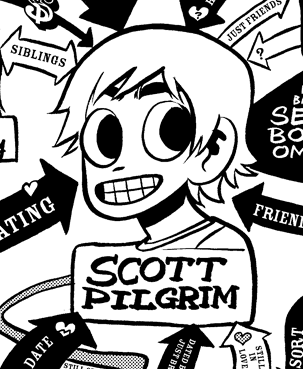
If you don’t know, Scott Pilgrim is the film version of a graphic novel series depicting the adventures of young Toronto indie-rock 20-somethings in pseudo-Manga (e.g. Japanese comic) style.  I got the first book or two several years ago and didn’t keep buying it the series, but it’s very witty and fun.  The charm is partly in the casual way the inbred, gossipy, wise-cracking, media-saturated world of these arty hipsters blends into video-game and sci-fi tropes and events (Scott for some reason must battle to the death the seven evil exes of his new girlfriend Ramona).   Probably inevitably, the movie somewhat pumps up the Mortal Combat-esque battle scenes which end up taking over the movie a bit too much.  But it’s all very funny and well done.  One highlight was Scott’s battle with Romana’s ex who possesses the unstoppable force of Vegan power: “we’re just better than non-vegans,” he observes (or some such).  He cannot be defeated, it would seem, until Scott tricks him into accidentally drinking some coffee with half-and-half in it, at which the Vegan Police show up and haul him away.  Michael Cera was not exactly how I imagined Scott, but he was good in his own wimpy way.

From a head-spinningly different universe is Western Swing legend Junior Brown, is actually an Indiana native (which I’d never known) who’s been an Austin fixture for years.  When we visited George in Austin in 1996 or something he took us to see Brown at his then-weekly (I think) show at some cool outdoor restaurant venue.  On Friday night he came out a bit late — someone I ran into there told me this is generally the case b/c Brown is busy smoking his famously excellent pre-show weed backstage.  He is perhaps best known for having invented what he calls his guit-steel, a two-necked guitar.  He’s a virtuoso and many of the songs — mostly country/ Western Swing, with some surf and Hawaiian steel excursions — are designed to allow him to show off his impressive skills.

Although it was a challenge to find any common ground between the world of Scott Pilgrim and Junior Brown, my ever-busy relations-seeking mind led me to imagine JB battling the Katayanagi Brothers (a Japanese synth rock duo) in one of the battles-of-the-bands from the movie.  He’s definitely stand a decent chance, especially with the power of the guit-steel’s double neck, one available to vie with each evil brother.

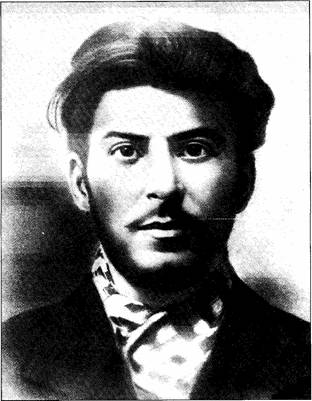
Soso a.k.a. Osip a.k.a. Koba a.k.a. Pockmarked a.k.a. Stalin

The family story goes that my maternal grandmother’s several brothers (three?) were all killed by Stalin in the purges of the 1930s.  (The family was Latvian.) The only other story I remember about these brothers is that one of them was a devoted collector of birds’ eggs who was once attacked by a hawk while near the top of the tree and barely made it down while fighting off the bird.  I think as a kid in my mind these stories somehow conjoined into one scary Latvian-Gothic image.

Anyway, I recently read Simon Montefiore’s Young Stalin about the dictator’s youth up to the Revolution in 1917.   The book is a page-turner, sometimes to a fault — as one critical Amazon reviewer put it, it can occasionally read “as if he thinks he competes with Dan Brown (Well, maybe he does?),” in a highly florid, sensationalistic style filled with dramatic reenactments of events from 90 years ago.  It was certainly entertaining to read, though, and based on troves of absolutely new materials from the archives that offer major revisions of our understanding of the man. He was a total thug — basically the guy who’d get things done and who raised funds for the cause via outrageously daring and brutal robberies and hold-ups.  Interestingly, though, he was also something of an intellectual and a poet.  And very much a Georgian before a Russian.

Other aliases used at one time or another by Stalin: K. Safin; The Milkman; The Priest; K. Kato; The Loper.  There’s a whole appendix with a list of about 40 he used in his long years in the revolutionary underworld.

This was one of my favorite passages:

Kamenev gave Stalin The Prince by Machiavelli, perhaps an unwise gift for someone who was already Machiavellian enough.  At a boozy dinner, Kamenev asked everyone around the table to declare their greatest pleasure in life.  Some cited women, others earnestly replied that it was the progress of dialectical materialism towards the workers’ paradise.  Then Stalin answered: “My greatest pleasure is to choose one’s victim, prepare one’s plans minutely, slake an implacable vengeance, and then go to bed.  There’s nothing sweeter in the world.”

He does have a point.

Julie and Julia as indictment of 21st century life

I finally got around to watching Julie and Julia.  Thought it was a strangely bifurcated movie.  Meryl Streep was fabulous, Stanley Tucci excellent too, and the whole Julia Child narrative very enjoyable overall.  Amy Adams on the other hand was irritating and off-putting, the character Julie a narcissistic whiner, her husband deeply unappealing.  Was this part of the movie filmed by a different director?

The movie felt to me like a bitter satire on the glib hollowness of contemporary life.

According to the movie, Julia and her husband’s 1950s expatriate experience is characterized by great beauty and charm, human connection, leisurely, unpretentious daily life, pleasure in friends and lovers, laughter, commitment to craft & cultural tradition, rewarding hard work.  And, at a meta-level, by fantastic acting and fine film-making: Paris looks wonderful, Julia Child’s marriage is loving and playful, and Streep a total delight.

21st century Queens/NYC, on the other hand, is sort of a nightmare — of fake friends, narcissism, empty careers, soul-crushing architecture, and irritating, mannered acting.  The Julie character has her contrived obsession with Julia Child, which feels mirrored or multiplied by Amy Adams’ over-perky portrayal of the character.  I just found it depressing.  It’s a totally unfair comparison, of course, apples and oranges: on the one hand, a major figure of 20th century American and international life; on the other, this self-involved would-be writer in Queens trying to promote her blog.

It feels so… sad, is if this is the choice (not that we have a choice):

Vibrant creativity, pleasure, friendship, beauty and sensual delight, immersion in complex and sustaining cultural traditions, passionate work performed for its own sake, and brilliant originality (Julia/ mid-century) vs.

Blogging and self-promotion — life lived as a PR stunt — in an apartment above a pizzeria in Queens (Julie/ contemporary life).  Julie can be read as a figure for post-9/11 NYC and America: surrounded by reminders of the trauma (she works for the city taking calls from 9/11 victims) and doing anything she can to forget, to sublimate or repress, to withdraw into manic private activities and little projects of self-making.  (At the risk of being humorless about it, there’s something off-putting about the way Julie completely tunes out the voices of the 9/11 victims in order to submerge herself completely in her foodie-Francophile fantasy.)

I liked that the movie admitted that Julia Child herself hated Julie’s blog.  This felt surprisingly honest because it works against the broader parallel the movie tries to put in place — with Julie getting her book contract for her blog (ludicrously) posited as equivalent to Julia’s publication of Mastering the Art of French Cooking.  I wonder if this was contractual — if Julia or her people would only allow the film to go forward with this proviso of Julia’s disapproval?

The meaning of a “book” seems so different in the two contexts.  For both Julia and Julie, the book contract is a personal fulfillment, a career goal, and a vindication.  For Julia, though, the book is a summing up of an extended immersion into rich cultural traditions; an expression of her own love of food and French culture; a pedagogical tool to teach others to learn the same pleasures.  For Julie, the book is a media event — the key moment is when she gets a write-up by Amanda Hesser in the Dining section of the New York Times and the agents start calling.

From “Julia” to “Julie“: the supplemental “e” trivializes, empties out substance, so food becomes the plaything of “foodies.”

Maybe the movie is actually deeply clever and sly?   All this is intentional, and the movie is itself about the ways culture and creativity have now been reduced to shameless plagiarism of the past and narcissistic PR projects in personal branding.

p.s.  Sarah once sat next to Julia Child at a hair salon in Cambridge; Julia complimented her hair.

p.p.s.  Since I’m (partially) knocking Nora Ephron’s movie, I’ll also mention that I thought her recent Girl with the Dragon Tattoo parody in the New Yorker was hilarious.

p.p.s. Thinking more about it, I’m probably too hard on Amy Adams above; she probably did about as well as she could with this material & character.

Sam Lipsyte’s The Ask: the Disgust and the Pity

Sam Lipsyte’s The Ask will probably long remain the funniest and best novel filed under this Library of Congress Cataloging-in-Publication data:

1.  College administrators– Fiction.  2.  College benefactors — Fiction.  3.  Education fund raising — Fiction.

Because god forbid this cheapskate thrifty consumer should actually buy a new hardback book (sorry, Sam), I first read his previous novel Home Land while I was waiting for this one to come from the library.  They have a lot in common, to the point that Home Land feels a bit like a first run at this one (which is deeper and more emotionally nuanced, though Home Land is also hilarious).  The narrator/protagonist of both is a similar character, a middle-aged (39 in The Ask, a bit younger in Home Land I believe) middle-class fuck-up confronting his own failure (in career, friendship, love, sex) and the success of his former friends and classmates.  In both novels the guy struggles with an educational institution — in Home Land he’s trying to submit class notes for his high school alumni newsletter; in The Ask he’s in effect graduated such that he dwells on his college days and is trying to keep his job as a fund-raiser for Mediocre University of New York City.

Lipsyte is just a very very funny writer.  I’ll share two of my favorite passages in The Ask. Here he describes his wildly-successful former college buddy Purdy who made a fortune with some kind of 1990s tech/internet music enterprise.

Still, he had been ahead of his time with his online music outfit.  It might sound ridiculous now, but he had been one of the first to predict that people really only wanted to be alone and scratching themselves and smelling their fingers and staring and screens and firing off sequences of virulent gibberish at other deliquescing life-forms.  So for us he provided new music and photographs of fabulous people making and listening to the new music, as well as little comment boxes for the lonely, finger-smelling people to comment on the looks and clothing of the fabulous people…

That captures the tone and worldview pretty well.  A Confederacy of Dunces came to mind for me; there’s a similarly disgusted, hilarious bile directed at contemporary culture.   This passage is also typical in its seething jealousy — Lipsyte is a poet of self-hating envy.  Milo hates and resents Purdy for being a winner in such a corrupt, crappy, stupid game, and he can’t break out of his self-destructive spiral of envy/self-hatred/self-pity/rage.

It also struck me that The Ask is oddly similar to Man Gone Down by Michael Thomas.  Screw-up artist father in contemporary Brooklyn, trying to hang on to his shaky marriage and to be a good father despite himself; encounters with successful friends from long ago; somewhat desperate unemployment leading to bouts of last-ditch manual labor.  The tone is 180 degrees different — Man Gone Down isn’t funny in the least (I kind of admired it but actually didn’t finish it) — and the vector of sociological analysis is all different too.  Man Gone Down is about an African-American (half white) man in a world of white privilege; The Ask is about a white man “of many privileges and zero skills” who played his cards slightly wrong (he intended to be a painter) and is on the verge of falling out of the middle class entirely.

Here’s another passage that cracked me up.  Milo, with his 3-year-old son (the novel’s very funny on parenting, daycare, etc), is having a coffee with the mother of another kid.  He thinks they’re flirting heavily, and he’s decided he doesn’t have it in him to cheat on his wife, so he’s going to disappoint the woman by pulling back.  Then she mentions her boyfriend.

“Boyfriend?”

I watched her face register what I, and only I, it turned out, had been mulling, saw the surprise there, the disgust, the deeper disgust, the moral judgment, the slight flattery, the steepening dive into new realms of physical revulsion, followed by pity’s steadying hand.

So hilarious.  “Pity’s steadying hand” killed me.  In post-college days Lipsyte was the cape-wearing singer of a sort-of grunge band called Dung Beetle, singing under the name Sam Shit.  There’s definitely something rock-and-roll and improvised-feeling in the novel’s wildly creative and obscene invective — Milo and Lipsyte could be what Sam Shit turned into — but the writing is also very precise and exact.  This passage captures the self-pity and disgust that well up out of the narration.  Lipsyte’s protagonists have a bit of a hangup about the physical ideal embodied by preppy WASPs; the novels are partly about being white and privileged but not quite privileged enough or as much as it seemed back in college, not secure or coolly confident in one’s privilege, not handsome, not fully in control of one’s body, emotions, life or career.  (Can’t find the line now but at some point someone says to Milo something like: 400 years of white male privilege and you can’t do any better than this?)

Home Land is pretty amazing as surreal satire — witness for example the Kid, the world’s champion masturbator, who makes dream-like appearances as a wandering cowboy sage continually pondering the question, “how much whang can a man spank?”  But The Ask goes deeper and is both uproarious, affecting, and pretty unsettling — it’s really fricking bleak.

Here’s an interview.… And a good Jennifer Scheusler NYRB review.  And the A.O. Scott think piece linking The Ask to Hot Tub Time Machine (he totally has a point, actually).

Toy Story 3: nightmare of emotional socialism

I took the girls to see Toy Story 3 on a hot and humid July 4 afternoon.

It’s incredibly clever and good.  I was fascinated by the way it seems to play out a conflict between what could be described as emotional capitalism and emotional socialism.  Andy is going off to college and is consigning his old toys to the attic — unless he’s persuaded by his mother to donate them to the local Sunnyside Daycare.   Although Woody is suspicious, the other toys view Sunnyside as a utopian solution to their dilemma.  For a toy attached to a single human child, obsolescence is all but guaranteed.  The child ages and casts the toys aside: if they’re lucky, to be saved for the child’s own children a generation later; more likely, tossed out.  It’s the old Velveteen Rabbit problem, exacerbated in an age of cheap Chinese plastic toys.  (That’s the most unrealistic part of the Toy Story films, that Woody & Buzz and friends would survive for 10-15 years.)

At Sunnyside, as the reigning, avuncular patriarch Lots-o’-Huggin’ Bear (who “smells like strawberries”) explains, toys escape the remorseless cycle of child aging and emotional withdrawal from the world of play: as we can see from the class photos on the wall, when one group of children ages, another replaces them.  It’s presented as a kind of socialism of love and play: the toys enjoy no primary human bond, but are played with by a cycling collective of children.  Kind of a toy kibbutz.  Love is free, easily passed on from individual to individual.  (And the toys are always donated, not purchased.)  Woody seems like a stubborn, old-fashioned individualist capitalist holdout, insisting to his comrades that “we have an owner, his name is Andy, remember?”  But the other toys refuse to go back to Andy’s attic (to wait patiently and perhaps hopelessly for the possibility of Andy eventually passing them on to his own children).

It turns out that Sunnyside is actually no utopia but a prison-camp Gulag nightmare, and Lots-o’-Huggin’ Bear not a wise and loving elder but “Lotso,” a cynical and cruel (and, as we learn, emotionally traumatized) despot.  At this point the movie turns into a creepy Manchurian Toy narrative filled with Cold War anti-communist tropes (overlapping with prison-movie conventions).

Perhaps the most chilling image is the initially adorable, ultimately frightening baby infant doll, who toddles around cooing as Lotso’s golem-like enforcer.  We eventually learn that the bear and doll were abandoned at a rest stop by their own first owner, Daisy.  Lotso was always Daisy’s most “special” toy; when they somehow make it back to Daisy’s house after an Incredible Journey-like odyssey, and Lotso sees through the window that he’s been replaced by another bear of the same model, he can’t accept his own displacement, and allows the experience to turn him into a brutal cynic who no longer believes in any primary human-toy affectual bond.

Part of what’s so powerful about the movie is the way it traffics in a primal fear of loss of love.  Lots-o’-Huggin’ Bear, denied affection, transforms into the cruel prison boss Lotso.  The toys’ experience of displacement and denied love is given disturbing overtones of sexless, loveless marriages.  They gaze with longing at their child who no longer will look at them, love them, touch them.  The movie begins with the toys engaging in “one last plan” to somehow induce Andy to pick them up and play with them the way he once did: pathetically, the only way they can think to do this is to steal his cell phone, to which Andy has transferred all his attention.  All of the toys begin to seem like abandoned spouses, yearning for contact.  The (almost inevitable) nightmare of abandonment or loss of love is literalized in being treated as “trash” or junk (in a landfill), denied any personhood or value by the former partner/parent/love object.  (This part recalls Wall-E a bit, although the environmental themes aren’t emphasized; the trashing of toys always feel highly individualized and metaphorical, not really about the disposal of plastic.)

In this depressed, emotionally desperate state, the toys give in easily to the illusory promise of Sunnyside, a total institution promising escape from the transience of human emotions — but where in fact, real love and affection have been transformed into a noisy, frightening ritual of impersonal abuse.  Sunnyside feels a bit like a Soviet orphanage.  The movie can be read as shockingly prejudicial about institutional childcare.  It suggests that “real,” peaceful, quiet emotions can only be found in a single family and a private home, experienced with an individual child; in the institutional setting of Sunnyside, children sweep in and out of the playroom on a rigid clock schedule, descending into a howling mass of screaming tots who can only abuse and destroy their toys.  I found a bit disturbing the film’s implication that the individual child’s ownership of a toy can be the only model for authentic love; the toys are finally redeemed by being not “donated” to the daycare center but given (a transaction between individuals, involving no institution) to a single child.  (To be fair, the horror of the Sunnyside playroom is explained by the fact that Lotso has consigned the protagonists to the age-inappropriate three-year-old room.  Also, Sunnyside is redeemed in the end and transformed from a prison camp into a fun daycamp run by counselors Ken and Barbie, but this felt tacked-on to me, and none of the toy protagonists stay there.)

Anyway, it’s all brilliant and hilariously witty.  Perhaps my favorite routine involves Buzz the astronaut accidentally being thrown into “Spanish mode,” which involves a lot of hip-shaking flamenco dancing, smoldering glances at Cowgirl Jessie, and dual-cheek kisses of greeting.

The sexless marriage theme is given a comic echo is the Barbie and Ken relationship; they make a big romantic-lovebird show, but they’re obviously happiest when trying on outfits together (with changing room) and putting on big group dance parties.  The “well-groomed” Ken’s homosexuality is fairly subtly joked about, although the film pushes the envelope a bit (hilariously I thought) at the end when we realize that a very girly, heart- and curlicue-filled note in purple ink was actually written not by Barbie but Ken.

p.s.  The girls liked it too; Iris said her favorite part was the disco-dance scene at the end.  Celie dismissed my reading of the film as “facile cultural-studies-by-numbers” (just kidding…).

I Built 1% of this Wall

I spent last week reading, among other things, George Eliot on the sanctity of skilled manual labor (Adam Bede) while Sarah constructed a stone wall in our front yard.  It was pretty funny.  In the evenings we’d both be saying “Whoo!  Long day!  I’m tired!” but I was tired from sitting in the library/cafe turning pages slowly, reading about Adam and Seth building cabinets and coffins, Sarah from heaving big slabs of limestone, chipping at it with hammers, rearranging the dirt and gravel, etc.

This wall has actually been a going concern for two years.  Sarah’s been working on it off and on with our friend Jack and a few other colleague/sidekicks of Jack’s.  It’s sat unfinished for the last year and now Sarah’s been making a push to complete it.  (Aha!  I realize that I wrote about this project, then the “New Wall Project,” back in the Fall of 2008.)

This is a “dry-laid” wall, meaning that it’s made without mortar, simply by fitting the pieces of limestone together neatly.  Sarah and Jack bought four tons of limestone in the end, 1/2 ton at a time in a truckload.  It costs $80 per ton (pretty good deal, $320 for all of this stone).  The pieces were cut by saws with smooth edges, so they needed to be “split-faced” — chipped away with a carving tool — to make them look more natural.

Yesterday I laid aside the Victorian fiction for the morning to help Sarah with some of the stone-lifting, digging, and root-cutting.  It’s good exercise, my arms were tired afterward.  She thinks that strenuous digging is the perfect exercise for psychological health, I think partly for evolutionary-biology-related reasons, and that instead of aerobics or step classes at the gym, people should just spend an hour digging dirt.  Probably true.

I asked her if she thought it was a fair estimate to say that I contributed 1% of the labor on the wall.  She didn’t really dignify that with a response, but I think it’s about right.

We were joking that passersby would say, “wait, who’s that pale man in the huge sun hat?  That’s not Jack!!  Wait — is that woman married??”

Hey — we all have different skill sets and interests…

Aldous Snow

I’ll go out on a limb and declare that Aldous Snow may be the best cinematic comic character of the past few years.  He’s by far the high point of Forgetting Sarah Marshall (which is much better than I expected generally — saw it on t.v. recently) and is hilarious throughout the Aldous Snow vehicle Get Him to the Greek.

[photo removed b/c I think too many people were coming here from Google Image search]

(Is there a technical term for this kind of narrative spin-off, when a secondary character in one narrative becomes the protagonist of a subsequent one?  Anyway, to truly understand Get Him to the Greek in all its nuances you might need to see Forgetting Sarah Marshall, although I suppose it’s not absolutely necessary.  There’s a funny reference to the previous movie in GHTTG when Snow catches a clip of Sarah Marshall, who’s a t.v. actress, and a light bulb goes off: “I think I shagged her once!” or some such.)

I haven’t paid too much attention to Russell Brand, the comedian who plays Snow… and maybe if I had I’d be slightly less amused by his alter ego?  Dunno.  Anyway, Brand is absolutely spot-on as a hypersexual, fatuous yet sort of brilliant, degenerate, spoiled, louche, drug-gobbling, Cockney Jim Morrison knock-off.  His insinuating eyebrow expressions alone are worth the ticket to Get Him to the Greek.

It’s a performance worth considering in the line of modern British comedy greats from John Cleese through Jennifer Saunders and Ricky Gervais.  In fact, when Brand/Snow is a bit irritated or peeved about something, whiny, he can remind me a lot of those three, although the effect is very different in the body/persona of a rock and roll sex god. (See the letter U. clip below — either Cleese, Saunders or Gervais would’ve killed this one too.)

While I’m on the topic: Get Him to the Greek is pretty gross and frat-boy/ potty-humor filled, but its gender politics are actually not so bad.   Elisabeth Moss (aka Peggy Olson in Mad Men) is good in the seemingly thankless role of the fiance whose dull embrace Jonah Hill must flee to set the movie’s plot into motion.  You assume he’ll end up dumping her for someone flashier.  But (SPOILER ALERT) in the end he actually moves with her to Seattle so she can take up her medical residency there; he’s absolutely the trailing spouse and ultimately he’s happy to move to accommodate her career.  (Of course he gets everything he wants in any case, but I was sort of impressed by the way this unrolled.)  Despite less gross-out sexual humor in FSM it’s probably worse on gender at least if you judge by the climactic scene where Jason Segal’s character declares Sarah Marshall to be “the devil”(!) — she becomes a kind of fantasy figure of the vilified terrible ex-girlfriend.

Here’s Brand in an audition tape from Forgetting Sarah Marshall:

And here’s Aldous becoming infuriated while filming an episode about the letter U. for a children’s t.v. show (he thinks the puppeteer’s “not committing to this”):

Recent music: Surfer Blood, Titus Andronicus, A. B. Crentsil & The Osookoo Stars

Some recent music I’ve been listening to.

Spoon Transference.  I’ve never entirely fallen for Spoon, one of those bands whose albums always struck me as at least pretty good but none of which wowed me.  The singer always seemed slightly charisma-challenged.  Or maybe for me they started to seem like a band you were supposed to be rooting for.  They were nice guys, good guys, and/thus (perhaps?) a little dull?  Anyway, I like this newest one more.  It feels very unspontaneous, a studio construction, altogether controlled and worked-over, with several really stand-out tracks.  My favorite is “Out Go the Lights,” their “All My Friends” maybe, a gorgeous, drawn-out ballad filled with spooky/beautiful studio effects.  “I Saw the Light” also very good, and “Who Makes Your Money,” a piece of thin, stuttering Chic white funk.   Somehow made me think of Steely Dan (the song title is a Steely Dan kind of question to ask).

Surfer Blood Astro Coast.  I ignored this for a while — missed them when they played in town — maybe because their name seemed so rote.  But the album’s actually excellent, a great summer album.  They do feel like a bit of a pieced-together Frankenstein apparatus of influences and resemblances.  A rougher Weezer, definitely, in the super-catchy surfy tunes; some Vampire Weekend (the vague afropop feeling in the lightness and lilt of the guitars); the Shins; the Pixies in the background.  But less obviously, I sense parallels with another young band I like a lot, No Age; in “Floating Vibes” or “Fast Jabroni” or “Anchorage,” for example, the way they ride a simple riff in a way that makes me think of 1980s SST (like early-mid Sonic Youth): punk forms (the Ramones) filtered through a more knowing, art-informed perspective (although they’re not really conceptualists like No Age or the Dirty Projectors, as far as I can tell).  Pretty much every song is really good with instantly memorable hooks you could pound your dashboard to.  Wish I’d seen them.

Finally came around to the National. I’m not sure if the new one High Violet is as good as Boxer or not but I like it despite the vague concern that it’s all getting too close to U2 or Coldplay.  My favorites are “Lemonworld”, “Vanderlyle Crybaby Geeks,” “Bloodbuzz Ohio” [I like that they’re from Cincinnati, btw] and “Conversation 16,” the latter which goes a bit over the top with the climactic zombie-movie confession, “I was afraid… I’d eat your brains — ’cause I’m evil….”  My reading of “Lemonworld:” it’s about being a poorly-paid over-educated wage slave in NYC spending the weekend in your girlfriend’s parents’ swank Hamptons or Long Island weekend home.   “So happy I was invited/ Gave me an excuse to get out of the city.” Mixed feelings and depressive affect ensue.  Part of what works about this song is the ironic relation between the song’s form and content: it’s a song about ambivalence about wealth and luxury that is itself luxuriously lush (and likely a bit guilty about it).

I’ve probably listened to those four songs at least a dozen times each.  You can sink into this album’s lush textures– a good headphones album.

Titus Andronicus A More Perfect Union. This album sounds so silly.  A New Jersey punk rocker obsessed with Springsteen, who named his band after a violent Shakespeare play, makes a concept album about the Civil War inspired by the Ken Burns documentary, featuring readings of Lincoln speeches???  But surprise, it’s great.  By the time he’s ripped off/payed homage to the Boss and Billy Bragg in the same line a couple minutes in (“I never wanted to change the world, I’m looking for a new New Jersey/ ’cause tramps like us, we were born to die”), I was sold.  It’s in another universe from the cool studio perfectionism of the National and Spoon — makes you think of various famously drunken bands (early Replacements, the Pogues), obviously very much a live band spilling over with Celtic reels, bagpipe, saxophone, singalongs.  I suspect a big Pogues influence, and likely the Civil War thing is an attempt for this New Jersey punk band to find their own comparable folkloric/ historical frame — adding gravitas and depth to what might otherwise just be hungover pissing and moaning.  E.g. when he sings “I’m worthless and I’m weak, I’m sick and and I’m scared,” it sounds like a 22 year old kid on a Sunday morning scared he may be becoming an alcoholic, but the next line, “the enemy is everywhere” lifts what could be a merely personal drama into a national-historical register.

Ultimately I think its reach exceeds its grasp a little bit — it’s not quite Rum Sodomy and the Lash, but this guy Patrick Stickles (who does sound uncannily like Conor Oberst, btw) is seriously talented.  “Gimme a Guinness, gimme a Keystone Light, gimme a kegger on a Friday night, gimme anything but another year in exile.”

This one’s a bit older, but another fave has been Tegan and Sara’s Sainthood.  Of course I love the Canadian twin-sister angle.  A few songs here I’ve listened to over and over.  “Arrow” is a great elaborated Cupid’s arrow metaphor: “I feel the breeze, feathers of an arrow; I take my aim, you feel me coming close.”   “Sentimental Song” is really smart on what it means to reject sentimentality, or sentimental art.  “You hate the tenderhearted torch song,” she sings to her lover.  “Hard-hearted — don’t worry, I’m ready for a fight;” that is, I may like corny love songs but it doesn’t mean I’m not tough.  And “Someday” is fantastic, super-catchy, needs to run over the credits of an inspiring teen movie: “I might write something I might want to say to you someday,/ Might do something I’d be proud of someday/ Mark my words, I might be something someday.” I think it’s a coming-out song.  “The Cure” another favorite: “I know the world’s not fair to you, I’ve got a cure for its crimes.”  Surely this could’ve been a big hit on MTV in 1990.  Very new wave (minus the frills), taut/tense songs that stick in your head.

Love the thought of Celie and Iris as a band — in theory if not probably in practice.  “Hi dad, yeah we just finished the show in Pensacola, we’re driving to Texas tonight.”  Never mind, not a good idea at all!!!

OK, one token non-indie rock album, A. B. Crentsil & The Osookoo Stars. I presume I downloaded this from Awesome Tapes from Africa (“Free mp3s of obscure African music”).  Really great notwithstanding the scratchy audio.   “When I was going to the cinema I saw a girl who resembled my sister…She turned in a soft voice and said ‘I am Juliana.'”  I learn from Wikipedia that A. B. Crentsil “is one of the big three of contempoary Ghanaian vocalists….Crentsil’s music has always been considered controversial but always makes the highest sales once it hits the market. Crentsil resorts to various themes and antics to convey his message with appropriate proverbs where necessary and that always strikes a listener to appreciate his music.”  Sounds right to me.