The girls carved jack o’lanterns last night. It kind of seems as if the one on the right is muttering something out of the side of his mouth to the one on the left. (Possibly, “dude, I seem to have a third eye on my cheek.”) Btw you can faintly see C&I in the background with kitty face paint on.
Author: Ivan Kreilkamp
Real Mouse Magic
Am I overdoing it with the girls’ stories? Celie brought home another one:
One day a little mouse went on a trip. And the airplane was so big that he thought it was a giant. And he went to… uh, India. And India — it was so fancy that he couldn’t believe his eyes. And he went to a very fancy house and he had a cookie and some milk. And then it started to get dark and he said “I better get back to my real house in India.” And he went to bed. And in the morning he got dressed and went to school and he played with a puzzle. And his momma came and he said, “Momma I did magic. Real magic. Real mouse magic.” Real mouse magic. The end.
I remain uncertain about where and when the Real Mouse Magic was applied in this story. Does it take mouse magic to travel to India?
Last Days of David Foster Wallace
Excerpt from Rolling Stone article: The Lost Years & Last Days of David Foster Wallace.
Last night I had some time to kill and went to Borders, ended up reading this whole long article about D.F. Wallace. It’s very sad — he’d suffered from chronic depression, including hospitalizations, since high school or so. The suicide itself was far from a surprise; it had followed an earlier attempt, and he was in terrible terrible shape in the final months, trying to adjust to a new medication regime.
This is from a short story he published in an Amherst College literary magazine as an undergraduate:
You are the sickness yourself…. You realize all this…when you look at the black hole and it’s wearing your face. That’s when the Bad Thing just absolutely eats you up, or rather when you just eat yourself up. When you kill yourself. All this business about people committing suicide when they’re “severely depressed;” we say, “Holy cow, we must do something to stop them from killing themselves!” That’s wrong. Because all these people have, you see, by this time already killed themselves, where it really counts…. When they “commit suicide,” they’re just being orderly.
When I heard about his death, aside from sadness, I had a strong feeling of disappointment and of having been cheated of what he would have written in the future. But this article suggests that his depression was so overwhelming that it was not clear he would have ever been able to emerge from it well enough to write another novel. (Although perhaps he just never received the proper treatment and it could have been different.)
On a more light-hearted note, the most amusing detail in the article (not in this excerpt) is that he went through an Alanis Morissette obsession in the early 90s (I think) during which he had a huge poster of her on his wall. This succeeded long Melanie Griffith and (get this) Margaret Thatcher obsessions.
Here’s a NY Times article about a recent service held for Wallace.
New Wall Project
Sarah is working on a major project — rebuilding the wall adjoining our front driveway. It looked very picturesque, covered with ivy, but sagging & bulging all over. When we pulled the ivy off we realized that it was in mid-collapse. This is a classic D.I.Y./ My Wife Does it Herself project in that I have had very little to do with it. Depending on her mood, Sarah is resigned or mildly irritated about this. I did carry some heavy stones on several occasions, I’ll say in my defense.
Sarah did a lot of research on the mechanics and hydraulics, etc., of supporting walls in preparation, but she is not truly doing it herself — she now has Jack and his assistant Hunter on the project, but she has so far worked side by side with them the entire time. They spent all day Wednesday on it and one other afternoon. Sarah pressed them to set a dollar amount on the value of her labor. “Admit it, would I be the $10 per hour guy?” she asked and they assured her, “no, no, you’d be the $12/hour guy.” She felt OK about that — still on the bottom of the pay scale, but respectable.
The one thing Sarah is regretting so far is that she realized too late that they had probably already destroyed the chipmunk home. We have this chipmunk Chippy who is hanging out in the driveway 75% of the time and had some kind of lair in the rock wall which has now obviously been obliterated. But we are hoping that he’ll have time this Fall to figure out some new arrangement.
An Election Day rout?
I know it’s not in our nature to feel sanguine about the election, but I think it’s starting to become clear that it is almost certainly going to be a blowout. Or at least, an Obama/Democratic victory by a comfortable margin. Now, it might be preferable for people to stay nervous and as motivated as possible to get out the vote… but read this (from Politico) and try to imagine how this story concludes with a McCain victory. (fivethirtyeight.com now gives McCain a 3.7% chance of victory, btw.)
Blame game: GOP forms circular firing squad:
With despair rising even among many of John McCain’s own advisers, influential Republicans inside and outside his campaign are engaged in an intense round of blame-casting and rear-covering — much of it virtually conceding that an Election Day rout is likely….
These public comments offer a whiff of an increasingly acrid behind-the-scenes GOP meltdown — a blame game played out through not-for-attribution comments to reporters that operatives know will find their way into circulation.
I’m trying to allow myself to enjoy this and just indulge in the sheer pleasure of some of the details: the Michelle Bachmann self-immolation, Palin’s shopping spree, etc. (something new almost every day)
Alan Greenspan/ Thomas Gradgrind
Sorry for all the Dickens-related posts, but this amazing scene of Alan Greenspan admitting the failure of his free-market ideology reminds me of Thomas Gradgrind’s anguished confession to his daughter Louisa, whose life he has destroyed with his inhumane utilitarian philosophy:
“I have proved my — my system to myself, and I have rigidly administered it; and I must bear the responsibility of its failures. I only entreat you to believe, my favorite child, that I have meant to do right.”
Here’s the Ayn Rand acolyte Greenspan admitting to Congress that his ideology didn’t really turn out so well:
Facing a firing line of questions from Washington lawmakers, Alan Greenspan, the former Federal Reserve chairman once considered the infallible maestro of the financial system, admitted on Thursday that he “made a mistake” in trusting that free markets could regulate themselves without government oversight….
“I made a mistake in presuming that the self-interests of organizations, specifically banks and others, were such as that they were best capable of protecting their own shareholders and their equity in the firms,” Mr. Greenspan said.
Referring to his free-market ideology, Mr. Greenspan added: “I have found a flaw. I don’t know how significant or permanent it is. But I have been very distressed by that fact.”
Mr. Waxman pressed the former Fed chair to clarify his words. “In other words, you found that your view of the world, your ideology, was not right, it was not working,” Mr. Waxman said.
“Absolutely, precisely,” Mr. Greenspan replied. “You know, that’s precisely the reason I was shocked, because I have been going for 40 years or more with very considerable evidence that it was working exceptionally well.”
I Say it’s Prog-Rock, and I Say to Hell With It
Saw Deerhoof last week. Was kind of underwhelmed. Loved the amazing drummer Greg Saunier, who beat the hell out of his kit in a Keith Moon/ Animal-from-the-Muppets way. They all play their instruments really well (they are “classically trained,” some of them anyway) and there are some great riffs and moments, but in the end it feels like what we 30-somethings (only for a few more months, yikes!) used to call prog-rock. Showing off, jamming, rococo elaboration for its own sake. And I haven’t warmed to Satomi Matsuzaki’s keening vocals, sometimes in Japanese, sometimes nonsense in English (quite likely also nonsense in Japanese, but I can’t tell). I can think of singers, like Joanna Newsom, whose vocals at first struck me as affectedly weird but came to make sense to me. But Matsuzaki mostly just seems like someone keening in a discordant/precious way with no particular payoff.
Punk/post-punk cycles dialectically through austerity and minimalism, and then back to the elaborate and rococo, fueled by the constant need for novelty. It’s partly just a matter of taste, but the new-rococo/ prog-rock often feels contrived and arid to me.
I don’t hate Deerhoof, was just, again, underwhelmed. Have not checked out the new album, though.
Here’s the great 1928 E.B. White New Yorker cartoon. Apparently broccoli was somewhat exotic in the 20s.
R.I.P. Rudy Ray Moore
R.I.P. Rudy Ray Moore.
“I’m the one that had the elephants roosting in trees and all the ants in BVDs.”
John McCain Left Locked Overnight in Straight Talk Express
Cruel but hilarious. For me the funniest bit is the sight of the completely trashed interior of the bus.
“Taking care of John McCain’s a big responsibility!” “It sure is! But they all knew that when they got him as their candidate.”
It works so well as an allegory of his campaign.
English Professors as Therapists
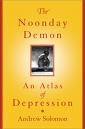
I loved this, from Andrew Solomon’s The Noonday Demon: An Atlas of Depression:
In an important study done in 1979, researchers demonstrated that any form of therapy could be effective if certain criteria were met: that both the therapist and the patient were acting in good faith; that the client believed that the therapist understood the technique; and that the client liked and respected the therapist; and that the therapist had an ability to form understanding relationships. The experiments chose English professors with this quality of human understanding and found that, on average, the English professors were able to help their patients as much as the professional therapists.
This leaves me with several questions. Why English professors? Is this choice intended to be some kind of extreme example that goes to show that any sensitive person, in any random profession, might be able to do as much good as a trained therapist? (As in, even an English professor.) Or were English professors presumed to be relatively intuitive and emotionally sensitive to begin with? I suppose probably the latter, although I wonder if that assumption would be as likely to be made today; in 1979, before the theory and culture wars, the profession may have seemed seemed more “sympathetic” in some respects that it does today. (See, for example, movies like Smart People.)
Were self-nominations accepted for English professors possessing these “qualities of human understanding”? Imagining therapy at the hands of certain English profs I’ve known over the years would be a somewhat scary thought. But much as we dislike it when students try to turn class discussion into group therapy, I kind of like the implication that there could be some hidden therapeutic benefit in our talking cure (not that this is the point of the experiment).
Anyway, Solomon’s book is excellent and quite moving and eye-opening in its descriptions of the devastating effects of chronic/major depression. It made me feel sad about David Foster Wallace, who apparently had suffered from very serious depression for years prior to his recent suicide. (Btw, I feel retrospective guilt about my reaction to his very bleak story “The Depressed Person,” which I took to be somewhat cruel in its depiction of a woman whose depression is overwhelming and tedious to her acquaintances; for some reason it did not occur to me that it might be based on his personal experience as a “depressed person.”)