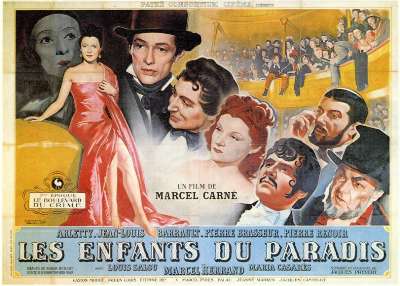
New print of *Children of Paradise* (1945)

I saw Children of Paradise (1945), which was at some point voted the greatest French film of all time, in a new print at the IU Cinema a few days ago. It is absolutely gorgeous, the luminous newly-restored print as blemish-free as a new movie (as if a movie like this would be made today).  The film, about bohemian theater folk in 1820s-30s Paris, is often described as the apotheosis of what the French New Wave was reacting against: a thoroughly luxurious, labor-intensive, classical cinema in which every shot, performance, and piece of design was obviously planned with extreme care and forethought. It “marks the culmination of France’s Golden Age of moviemaking.  Never again would the French cinema produce a film so unashamedly literate and lavish” (Edward Turk, Child of Paradise: Marcel Carne and the Golden Age of French Cinema, 1989). Because the Nazis, occupying Paris at the time of its filming, would only allow 90-minute maximum films (why were 100-minute movies degenerate?), it was shot in two 90-minute parts with an intermission between.  The narrative’s main love quadrangle (or quintangle?) is established in Part I, and then 10 years have passed in Part II when the various principals re-encounter one another, some of them now famous and successful.

Children of Paradise contains a protagonist, Baptiste, who must be one model of that much-maligned French type, the mime.  My favorite scene may be the very first one, a very famous (I believe) panoramic tracking shot of the “Boulevard de Crimes,” teeming with activity and commerce, where Baptiste (at this point an unemployed and disrespected mime whose unloving father is a star of a local theater) witnesses a pick-pocketing of which the small-time actress-model Garance is initially accused (he provides her alibi).  Garance, with whom Baptiste promptly falls in love, has a not-so-successful highbrow peep-show act in which she plays a nude Venus who is only partially visible because immersed in an elevated barrel of water. This opening scene brilliantly establishes the film’s preoccupations with theater, duplicity, disguise, ambition, love & lust, and crime.  (It has probably influenced countless other movies, but Mike Leigh’s Topsy-Turvy came to mind for me in particular as an analogue in its depiction of a chaotic 19th-century backstage theater world.)
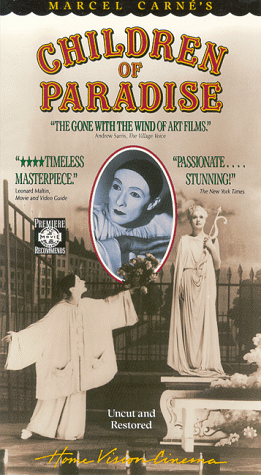
I learned from Wikipedia that the star Arletty, who plays Garance, “was imprisoned in 1945 for having had a wartime liaison with a German officer…. She allegedly later commented on the experience, “My heart is French but my ass is international.””  Good line, but yikes!  Arietty seems to have been 47 or so when the movie was filmed, and I found it a bit confusing that she was supposed to be playing a fresh young ingenue in the first part.

Edward Turk again from 1989: “Until that unlikely time when movie viewers become unresponsive to impeccably mounted displays of grand feeling and form, Les Enfants du paradis will retain a privileged position among film masterworks.”  Let’s see, top grossing films of 2011 include Transformers: Dark of the Moon and Pirates of the Caribbean: On Stranger Tides— is it possible that this sad day has in fact arrived?  Anyway, be sure to catch this new print of Children of Paradise when the DVD comes out…

On the One: RJ Smith on James Brown

I mentioned that I’d been reading RJ Smith’s The One: the Life and Music of James Brown.  You may have seen the rave review in this Sunday’s NYT Book Review by Al Sharpton (!), who I thought was an odd choice as reviewer given that he was, as the biography explains, a protege of and “like a son” to James Brown.  Sharpton did convey some of what’s great about the book, though.

RJ Smith, whose music criticism I used to read in the Village Voice way back in the 1980s, is really good at connecting Brown’s music to larger cultural and political forces and movements — shifting deftly in register from James’ signification as an international black culture hero (the account of Brown’s 1974 trip to Zaire and his meeting with Fela, sometimes called “the African James Brown,” is fascinating) all the way down to tiny details of rhythm, movement, gesture, and song.

This was a brilliant piece of lust and rhythm.  “Mother Popcorn” was not soul music; it spoke to the body, and it moved the body in ways that soul music knew not.  This was funk, possibly the moment when Brown fully moved from soul to funk — a music that didn’t even have a name yet.  It was just James Brown music.  It was the sound of the One….

Brown had a capacity for expressing different rhythms through his form.  “Every part of his body had a beat, had a rhythm going on — his feet, his head, his neck, his chest, his ass,” said Lola Love, a dancer in the show.  “And all those beats were different and were made him funky.”… However explosively or fiercely he moved, Brown telegraphs that there’s more we don’t get to see — his actions exert maximum impact with a minimum of exertion (coolness), a withholding that compels the viewer to follow the gesture through in the imagination.

Smith is not just appreciative, but near-reverent about Brown’s musical and cultural accomplishments — as Sharpton points out, the book leaves no doubt that Brown should be recognized as the single most important figure in later 20th century American music — but the book is also hilarious on the man’s frequently insane behavior.  Early in his career he nearly always packed heat, and shot up juke joints more than once, having to pay off those he’d accidentally hit.  He beat up his wives and girlfriends (not so funny).  He was grandiose but also wounded and perpetually insecure, partly due (presumably) to his upbringing in a Georgia brothel run by his aunt.  (With Richard Pryor, this makes at least two towering figures in late 20thC American popular culture who were raised in a brothel.)  He was an outrageous and sometimes cruel tyrant to the members of the band, capriciously handing out fines for the tiniest perceived infractions; one former band member calls him no less than “a black Hitler” (which seems maybe a little exaggerated).  In his final years, he regularly smoked PCP-laced marijuana while waxing self-righteous about any suggestion that he was a drug user.  There’s an implication that he thought PCP was some kind of vitamin-like health booster (he of course eventually served several years in jail.)  Most perplexingly, he was a Nixon supporter; Smith makes clear that Brown’s alliance with Nixon in the 1970s fatally tainted his previously godlike status in the African-American community.

“The One,” a mystical concept of Africanist rhythm, weaves through the biography, sometimes amusingly:

If Brown had something to share with the bassist [a teenage Bootsy Collins] after a show, most likely it was his unwavering parental disapproval.  “Son, you just ain’t on it,” he would grunt, his head sadly shaking with the bad news.  “You just ain’t on the One.”  Collins took it for a while, but then he tuned the guy out.  “As far as he was concerned, we were never on the One.”… It drove the formally trained musicians around him slightly crazy.  “It’s really — it’s a joke,” scowled Fred Wesley.  “He didn’t know what the One was to him.  To him it’s the downbeat.  But he didn’t know what it was. The emphasis of the one of the bar… his music kind of emulated that, but, as far as it being some kind of concept — I don’t think so.”

RJ Smith ultimately does suggest, though, that even if James could be a bit fuzzy on what precisely constituted the state of being on the One, he spent his career in successful pursuit of this state of rhythmic/musical/erotic grace.

JB on the good foot:

p.s.  Another great piece of writing on James Brown is this 2006 Rolling Stone article by Jonathan Lethem.

RJ Smith’s *The One*– James Brown on *the T.A.M.I. show*

I’ve been reading RJ Smith’s great The One: the Life and Music of James Brown.

Much has been made of how Brown upstaged the Rolling Stones, the show closers [on The T.A.M.I. Show].  How Mick Jagger was petrified as he watched Brown work and needed backstage consoling from Marvin Gaye — “Just go out there and do your best,” Gaye told him.  He had to tell him something.  Decades later, Keith Richards told an interviewer the biggest mistake of his life was going on The T.A.M.I. Show after Brown.

The second time he falls to his knees, we get a closeup of Brown’s face as he is being guided off the stage, the guys now intent on delivering him from this unsafe place.  Brown touches his cheek in an almost shocking way, and the crowd is shouting, “Don’t go!” along with the Flames, but what you notice is how Brown is shaking his head and muttering something.  Is he speaking in tongues?  So gone he’s lost bodily control?  He seems barking mad… He’s conducting the band from the depth of his paroxysm.

Be sure not to miss the incredible dancing on “Night Train,” too, especially the bit that begins around 8:30.  This is one of the most amazing live concert clips I’ve ever seen (I’d never seen the film…).

Lee Ranaldo @ Landlocked Music

Lee Ranaldo of Sonic Youth is touring in support of his new (& first full?) solo album, and appeared for a free performance and reading at our estimable local record/music store Landlocked Music.  The cool hook of the visit was that it was promised that Ranaldo would do a reading of a poem, ‘Bloomington Indiana Autumn’, that he’d written on his only previous visit to town, in 1990, when Sonic Youth performed at IU.

The store was full, though not a mob scene — I think you may have needed to be on Landlocked’s email list to hear about this one. Apparently a press in Louisville, White Fields Press, don’t know if it still exists, produced this broadside/poster of the Bloomington poem back in 1995, and they had signed copies for sale for $10.  Although I’m not crazy about the image of a mid-90s Ranaldo looking broody in a hoodie, I had to buy a copy.

Ranaldo, who’s gone grey in an nicely distinguished way, alternated songs from the new album, with two guys playing along with him*, and some recited poetry.  The poems maybe work best as song lyrics, by and large, although I actually enjoyed the recitations, too.  I have not listened to the album itself (which Pitchfork kind of panned, I see) but in this context the songs came across as somewhat blurred or abstract songwriter folk.  He seems like an unreconstructed Beatnik, in a way.  There was a funny bit where he reminisced about a summer when he was 16 or 17 and did a lot of drugs hanging around with friends in a parent’s backyard.

[*did not realize until now that these two guys were Alan Licht and original S. Youth Steve Shelley drummer on cardboard box!]

Since his Bloomington poem includes a reference to Sylvia Plath, I wanted to tell him about the Lilly Library afterwards — he may not realize that the major Plath holdings including all of her juvenilia and a lock of her hair are here in town– but he was chatting with a kind of line of kids afterwards so I decided not to wait.  The crowd was young, btw; a few other old-timers like me, but mostly 20-something.

In the bookstore I can barely see/ to let a few words from some page through/

All these words collide/ and jostle one another: Anne Sexton/ I open at random and find “Sylvia’s Death”/ which then bumps against biographical blurbs on Dylan, and Joni.

He said that the poem was written to his wife (then girlfriend) who is back in NYC while Ranaldo explores the college town:

The courthouse square, my head still for a moment/ The breeze scattering jewel-like leaves all at my feet/ Burnt yellow, bright yellow, mottled reds and oranges/ I press a few into my book, why?/ Have you kicked through leaves, in the city?/  Let them come up under your toe?/ Well I have, out here, while thinking of you.

Some other books I’ve been reading

Richard Price, Ladies Man (1978) — his third novel; depressed, horny young man in late 70s NYC working as a door-to-door salesman of home products in Greenwich Village.  This fascinated me — that he would stake out an apartment building and go door to door selling cleaning supplies and the like to bored housewives.  Manhattan was really different then.  His girlfriend is a failed/would-be singer who endures a disastrous open-mike night.  He walks in on her masturbating with a vibrator and screams at her, at which she leaves him and he sinks into depression and tries to pick up women at singles’ bars.  It is a wonderfully vivid time capsule of its moment although is marred by very dated culmination in the scary underworld of downtown gay bars/nightclubs (which he explores with old buddy who turns out to be gay; the sad thing is that I have a feeling that for its historical moment this whole episode may have passed for progressive).  Price is one of those consistently good writers; I have enjoyed many of his novels (e.g. Clockers, Freedomland).

It is ridiculous, whenever I read anything taking place around this time in NYC I always find myself thinking, “just scrape together some money for the down payment on an apartment and you will be set for life!!!”

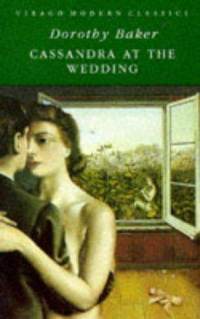
Dorothy Baker, Cassandra at the Wedding — kind of amazing 1962 novel (in the New York Review of Books reissue series) about brilliant identical twin African-American sisters.  Movies like Rachel Getting Married and Margot at the Wedding must be ripping this off (the latter most obviously & explicitly).  Cassandra, working on her literature PhD at Berkeley, depressed and blocked, difficult and with a drinking problem, shows up for twin sister Judith’s wedding, which she proceeds to disrupt because she is frightened of losing the sororal/twin bond.  The novel switches halfway through to Judith’s POV.  A bit of an exhausting high-style stylistic performance, but excellent.

Denise Mina, The End of the Wasp Season — am in the middle of this now — excellent police procedural taking place in contemporary Glasgow.  Protagonist detective is pregnant with twins, dealing with sexism and other stuggles among her colleagues (a tiny bit in the Jane Timoney mode, maybe).

Alison Bechtel, Are You My Mother?  A Comic Drama.  The subtitle is necessary or you will get the children’s picture book in Amazon.  This got a rave review in the Sunday Times Book Review and a bit of a slam from Dwight Garner in the daily.  I’m somewhere in between — I agree with him that its celebrated 2006 predecessor Fun Home (which seems to have become a “canonical” graphic novel almost at the level of Maus or Persopolis) was better because it had much more of a story: this one is ultimately too much of a therapy diary about her relationship with her mother, which turns out to be just not as newsworthy as her narrative about her strange father.  I still liked it, though, and she’s a wonderful artist whose pages are always fun and appealing to read and examine.  It sent me to finally read Alice Miller’s The Drama of the Gifted Child (which she discusses; she then gets to Donald Winnicott via Miller) which I’d been meaning to check out since reading about David Foster Wallace’s obsession with it (his copy of it is extensively annotated with personal reflections, as this piece, well worth reading, explains).

Lloyd Alexander, The Book of Three.  Have been reading this to the kids.  The first in the Prydain series.  I have strong (though vague) memories of reading The Black Cauldron and The High King but I think I never read the others in the series, or at least not this one.  It’s fun although all the Welsh names are challenging to read aloud: Gwydion, Caer Dathyl, Achren, Melyngar, Dyrnwyn, Fflewddur Fflam.  I now realize that J.K. Rowlings’ Dobbie the House Elf ripped off not just Gollum/Sméagol but also Alexander’s Gurgi.

Dan Chaon, Await Your Reply — good, creepy fable of identity theft, (almost) worthy of Patricia Highsmith.

Steve Erickson’s Cineautistic *Zeroville*

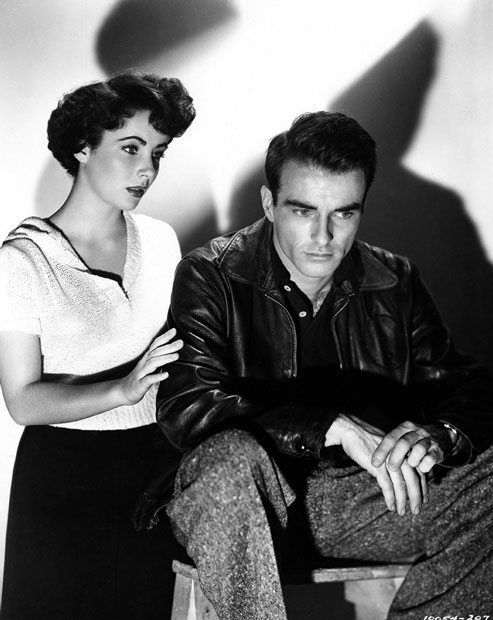
I found this on the “recommended reading” shelf at the public library — thanks, hipster librarian!  I’d read reviews of Zeroville (2007) when it came out but had forgotten about it and had never read any Erickson.  It’s a great Hollywood novel.  In fact, if I had any minor criticism it might be that it could be accused of straining just a little to be The Great Hollywood Novel, with its mythopoetic tendencies and highly self-aware self-positioning in relation to 20th-century Hollywood and film history & literary representations of H’wood from Fitzgerald and Nathaniel West onward.  (As Liesl Shillinger pointed out in her NYT review of the novel, it follows a parallel trajectory to Peter Biskind’s great non-fiction Easy Riders, Raging Bulls: How the Sex-Drugs-and-Rock ’n’ Roll Generation Saved Hollywood, and could almost be seen as an attempt to retell this history as visionary fiction).  The protagonist is a semi-autistic mystery — a character aptly describes him as “cineautistic” at one point — named Vikar with an image of Montgomery Clift and Elizabeth Taylor from George Stevens’ A Place in the Sun tattooed on his skull who shows up in Hollywood on the week of the Manson murders– for which he’s promptly taken into questioning.  He ends up falling in with some bohemian film types and eventually gets taught film editing by an older woman who seems maybe modeled on Thelma Shoonmaker, Martin Scorsese’s legendary editor since the 1960s.

It’s a running joke that people tend to mistake the image of Clift and Taylor on Vikar’s skull for James Dean and Natalie Wood, an error which enrages Vikar notwithstanding his admiration for Wood.  In fact early on he slams someone over the head with a cafeteria tray for the mistake, although he subsequently gets better at controlling his violent rages.

Vikar turns out to be a visionary, intuitive film editor — can’t think offhand of any other novelists with film-editor protagonists, btw; it doesn’t exactly rank with police detective or cowboy as an iconic fictional occupation — who is nominated for an Oscar for his ground-breaking work on a film, Pale Blue Eyes (which Erickson says is the only made-up film in the whole novel) that had been viewed as an unredeemable disaster by the studio after shooting.  While working on this film in Madrid he is, in effect, kidnapped in order to moonlight as editor for a propaganda film for an insurgency revolutionary organization.  His success allows him to begin collecting original prints of classic films which he does not screen but simply hoards.  Among other things the book is a nice collection of lists for one’s Netflix queue:

He sees Performance, Preminger’s Laura (for the third time), Murmur of the Heart, Gilda, Disney’s Pinocchio, The Battle of Algiers,… Dirty Harry…, an old forties movie called Criss Cross where Burt Lancaster and Yvonne De Carlo drive each other mad across what seems to Vikar a fantastical downtown Los Angeles with trolley cars that glide through the air…

The book winds up exploring Vikar’s obsessive quest for the key to what amounts to a kind of cabalistic, secret history of cinema as encoded in a magical single cinematic frame which has, in some inscrutable manner, migrated from Cary Dreyer’s 1928 La Passion de Jeanne d’Arc to a contemporary porn movie and, it turns out, elsewhere (not to give too much away).

The novel is halfway between the genres of fiction and film criticism (Erickson is himself also a film critic) in its brooding, incantatory obsession with the mysteries & magic of the cinematic image at their most “deeply irrational and even rapturous” (a phrase I take from an interview with Erickson).  I wonder if it’s ever taught in film history or theory classes; it could work well as a final text.  It also offers a broader history of modern Hollywood including, among other things, accounts of the birth and development of punk rock (Vikar becomes the guardian for a kid in a band in the early 80s L.A. scene along with X, the Dils, the Germs, and so forth).  Reminds me a bit of Bruce Wagner’s earlier novels, and shares with Wagner a tendency to drop in references to real-life stars and events, although the mode is less satirical, more reverent and appreciative of Hollywood’s history (although similarly fascinated by its frightening and disturbing undersides).

Its film rights apparently been optioned by James Dean lookalike James Franco, which makes a lot of sense, it actually seems like a great match for Franco.

“Racial Tone-Deafness” on “Girls”: Where’s the Black Best Friend?!?

[image stolen from NY Magazine’s Vulture blog]

I am actually kind of pissed off at this Jon Caramanica piece that begins, “Those looking for hints of racial tone-deafness on the second episode of “Girls,” last Sunday on HBO, wouldn’t have been let down.”

The evidence for this?  “Jessa (Jemima Kirke), nervously facing down an abortion, insists, ‘I want to have children with many different men, of different races,’ as if they were trinkets to be collected, like key chains or snow globes.”  Yes, this is an instance of a character, a hilariously fatuous 23-year old, revealing (in a moment of heat and personal crisis) “racial tone-deafness” in a conversation with a close friend.   The whole point is that she is fatuous and un-selfaware.

What irritates me is the hypocrisy of the New York Times* criticizing a (IMHO) very smart and funny show for depicting the lives of (so far) four relatively privileged (though not actually remotely near member of the 1%– they all have to work day jobs) white girls living in Brooklyn.  What, this should be like the beer commercial where every white person has one reassuring best friend of color with them at the bar?  Please, just read through an issue of the Sunday Styles section in the NYT and then watch Girls and tell me which one reveals more unselfconscious, unexamined privilege.

*Yes, I do realize that the Styles section is not actually Jon Caraminica’s fault or responsibility.  But that is a weasly formulation: “those looking for hints… won’t be let down.”  Of course, this writer is just using the pseudo-controversy over the show as a hook to write a piece about the politics of representation on t.v.

In an email exchange on this topic, a friend who basically agrees with me observed, “The one thing I would say is that the portrayal of the Asian-American girl in the publishing office as ‘bitch w. computer skills’ did seem slightly jarring in the all-white context.”  That is actually a good point; I’d forgotten about that, but it’s true, that scene (and I can’t think of any others) could possibly be read as a somewhat Curb Your Enthusiasm-like wince-inducing moment.  As my friend also commented, however, this scene takes place in an utterly realist context — the rival editorial assistant with better computer skills (she just learned Photoshop) might very well be Asian-American, there is no reason why she might not be.  The bottom line for me is that unless you are shocked, shocked, that in a group of four recent liberal arts college graduate buddies in Brooklyn, all are white (where’s the black best friend?), it seems absurd to pick on Girls for television’s (very real) larger failings of diversity.  (Of course Caraminica did eventually say more or less this.)

So far I am loving the show.  Part of my thinking here derives from a “don’t look a gift horse in the mouth” principle of popular aesthetic criticism.  A favorite moment, for example: the scene where the Lena Dunham character’s job interview is going great until she, flushed by success and unable to bite her tongue, makes a joke suggesting that her interviewer was a notorious date-rapist in college, and is told (as the interview screeches to an unsuccessful close) that this kind of humor isn’t appropriate in “an office environment.”  Cut to her maneuvering her dejected and wonderfully imperfect (just normal) body down the street…

Backyard Hugelkultur Redux

Sarah has developed a new Hugelkultur initiative in the backyard. (I previously wrote about backyard Hugelkultur way back in June 2008.)

What, you ask, is Hugelkultur?  Think of it as very slow composting.

Hugelkulture is the practice of composting large woody material to create a raised garden bed. It is a way of dealing with excess amounts of woody garden wastes, for example prunings, hedge clippings, brassica stems, or brashwood.

The name comes from German – hügelkultur translates as “hill culture”.

The technique involves digging a circular trench about 1′ (30 cm) deep and 5′ (1.5 m) wide, in the centre of which is dug another hole 1′ (30 cm) deep hole. The material is piled in. Turf (grass) is then stacked face down on top, then layers of compost, well rotted leaves and manure, etc as available. The layers break down slowly and creating rich humus over four or five years. It is claimed that this is ideal for growing hungry crops such as zucchinis (courgettes) or strawberries.

As the years pass, the deep soil of the raised bed becomes incredibly rich and loaded with soil life. As the wood shrinks, it makes more tiny air pockets – so your hugelkultur becomes self tilling. The first few years, the composting process will slightly warm the soil giving a slightly longer growing season, in temperate and cold climates.

We dug out what looked like a large grave which soon filled with water.  For a week or so the girls would say things like “can we go play in the grave?” to creepy effect.  (In fact, the presence of this inexplicable gravesite in the backyard, slowly filling with water, created a very Rear Window effect.) Then, after it seemed to be starting to breed insects, not to mention becoming a likely death trap for skunks or other smaller mammals, Sarah filled it with sticks and branches and we all went out to jump on the branches and break them as much as possible and drive them down into the ground; and then we loaded the dirt back on top.  Sarah claims it will somehow all be fertile compost in a year or two.

I swear to god we don’t have a pesky former neighbor buried under all that…

Penguin Crime edition of Chandler’s The Lady in the Lake

God I love this Raymond Chandler paperback.  Check out that amazing cover.  I think I picked it up from a pile in my mother in law’s house (you can have it back if you want, Suzy!).

Great book too.

He leaned forward and smiled. “Maybe you’d like a face full of knuckles.”

I stared at him with my mouth open. “That one went by me too fast,” I said. “I never laid eyes on it.”… I put my hand out, hoping he wouldn’t pull it off and throw it in the lake.  “You’re slipping  your clutch,” I told him.  “I didn’t come up here to inquire into your love life… What the hell’s the matter with you?”


“This do, Miss Keppel?”

“Mrs. But just call me Birdie. Everybody does. This is fine. Pleased to meet you, Mr. Marlowe. I see you come from Hollywood, that sinful city.” She put a firm brown hand out and I shook it. Clamping bobbie pins into fat blondes had given her a grip like a pair of iceman’s tongs.

I will admit that by the end I had somewhat lost track of the nuances of the crime and the plot… was really reading for the sentences, for the most part.

Ann Arbor man punched during literary argument

Too awesome!

Ann Arbor man punched during literary argument

Posted: Mon, Mar 19, 2012 : 3:24 p.m.

A 34-year-old Ann Arbor man was sent to the hospital with a head injury after another man punched him on Saturday during a literary argument, according to police.

Ann Arbor police Lt. Renee Bush said the man went to a party at a home in the 100 block of North Ingalls Street at about 2 p.m. on Saturday. Bush said the man was sitting on the porch with some people he had just met, talking about books and authors.

The 34-year-old man was then approached by another party guest, who started speaking to him in a condescending manner. An argument ensued and the man was suddenly struck in the side of the head, suffering a cut to his left ear, Bush said.

The man’s glasses went flying off of his head and fell to the ground, with one of the lenses popping out of the frames, Bush said.

Police were notified of the incident at 10 a.m. Sunday when they responded to St. Joseph Mercy Hospital Ann Arbor in the 500 block of North Maple Road. The man was being treated for his injuries there, she said.

The incident occurred at about 9 p.m. and the men had been drinking for several hours, Bush said.

The incident still is under investigation.

Kyle Feldscher covers cops and courts for AnnArbor.com. He can be reached at kylefeldscher@annarbor.com or you can follow him on Twitter.

As a friend commented, “literary criticism ain’t beanbag”!  And never forget the awesome power in this sport of “a condescending manner.”

I’d love to know more about what precisely they were arguing about.  First work of detective fiction, Edgar Allan Poe or Wilkie Collins?  Sentimentality of Uncle Tom’s Cabin a political strategy?  Emily Dickinson’s work necessarily to be read in its original manuscript/fascicle form?  Twilight vs. Hunger Games?

p.s.  To clarify, I do not think it is awesome that this poor soul went to the hospital with a head injury…