“‘Good-bye, everybody!'”: Hart Crane Revival in *The Paris Review*

I started subscribing to the Paris Review a while ago and enjoy it– find it consistently interesting/good to great.  I think what may have spurred me to start subscribing was the serial publication of the Roberto Bolano novel The Third Reich last year.  Other good recent-ish contents that come to mind: the Wallace Shawn interview in #201; a portfolio of “anonymous photographs of children from the personal collection of Terry Castle” in issue #198.  The art portfolios always tend to be interesting and the fiction is almost never boring or predictable.

Got the new issue #202 the other day.  What has leapt out at me about it, thus far, is that it contains TWO different stories that include reference to Hart Crane’s supposed last words.

David Gordon’s “Man-Boob Summer”: the 38-year old narrator seems to have recently finished a Comp Lit thesis and is depressed and living for the summer with his parents.  He starts flirting with the young lifeguard at the apartment complex’s pool who is reading Crane’s Collected Poems.

“You know what his last words were? As he jumped off the steamship?”

She was watching me very closely now.  She shook her head.

“‘Good-bye, everybody!'”

She laughed abruptly, a short burst, and covered her mouth with her hand.

“It’s true,” I said.  “I think, anyway.  I read it somewhere.”  And then while I wasn’t looking, she kissed me.  (p. 28)

And Sam Savage’s strange, long “The Meininger Nude,” narrated by a dyspeptic, dying art collector:

I was always fascinated by great-artist suicides.  By Hart Crane, for example, who called out, ‘Good-bye, everybody,” before leaping from the stern of a steamship.  He was 270 miles North of Havana, returning from a year in Mexico, where he had written nothing.  (p. 90)

Coincidence?  Something else?  Will I find any additional citations of this line as I keep reading the issue?

Dylan’s *Tempest*, *Where’d You Go, Bernadette*, *Homeland*

Several great things I have recently read/seen/heard:

The new Bob Dylan album Tempest (I try not to buy everything on Amazon these days but I will note that it is $5 for the Mp3s on Amazon).  I’ve only listened to it 2-3 times can say that it continues his amazing late-career run.  For a long time I took for granted that nothing Dylan had done since 1975 (Blood on the Tracks) was even remotely in the same ballpark of quality or significance of much of his music before that point.  But ever since, I guess, World Gone Wrong in 1993 it’s all been great, much of it amazing.  (I don’t know about Christmas in the Heart, I gave that to my dad for Xmas but have not really checked it out myself!)   Some of the new one sounds like, I don’t know, Western Swing, Johnnie Cash, Nashville Skyline; weird, craggy, old-timey; funny, tender, & mean.

Where’d You Go, Bernadette.  This is the funniest book (novel) I have read in quite some time– totally sharp, witty, entertaining, and moving too.  The author, Maria Semple, used to write for Arrested Development so the funny part is not surprising.   One reviewer sums it up pretty accurately as “a wry slice of a life– one that’s populated by private school helicopter parents, obsessively eco-conscious neighbors, and green-juice swilling, TED-talking husbands.”  The social satire is hilarious and spot-on even for someone who doesn’t know Seattle– Seattle stands here for a certain kind of techie contemporary bourgeois bohemian that one finds everywhere.  The private school shenanigans are priceless. What’s most immediately impressive and amusing is Semple’s facility with the different voices, jargons, and styles contained in all the documents she incorporates seamlessly into the novel — which is a dossier of texts, somewhat in the style of Clarissa or Wilkie Collins’ The Moonstone, I suppose, with no real central narrator but only Bernadette’s 8th-grade daughter, who (we eventually figure out) has collected the set of texts and is collating them and turning them into a narrative.  There are emails back and forth from various parties; a psychiatrist’s report; memos from the head of the not-quite-A-list Seattle private school; a cruise ship’s log; a news article or two; tributes by famous architects to the protagonist Bernadette, who designed an influential early “green”/eco house, won a MacArthur, and mysteriously retired; some IM messaging within Microsoft’s system, etc.  In this way it brings to mind A Visit From the Goon Squad a tiny bit — and there’s one riff about the pauses between songs on a CD that almost seems a homage to Egan’s novel — but the mode is more brightly comic and satirical.

Homeland, the Showtime show starring Clare Danes.  Season one is recently out on DVD and we are devouring it (waiting for the 3rd and final DVD to arrive).  Danes is fantastic and the show is addictively suspenseful– I’ve never seen 24 but I imagine it has some things in common with that?  It is, interestingly, a remake of an Israeli t.v. series.  Danes plays a somewhat unstable C.I.A. officer who has become convinced that Nicholas Brody, a war hero and former POW recently captured and brought back from Iraq, is in fact a mole or double agent who was turned by Al Quaeda.  Three episodes left and I do not know how it’s going to turn out, although I have some theories.  Season Two starts pretty soon.

Recent reads: Ellen Ullman, Brian Moore, Chad Harbach, Sara Levine

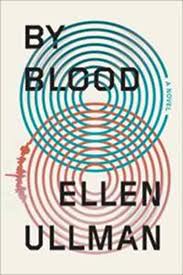
By Blood by Ellen Ullman.  This 2012 novel takes place in San Francisco in the 1970s, narrated by a professor who is on work leave following what, we eventually suss out, was some kind of sex scandal or impropriety (shades of Coetzee’s Disgrace?).  He is deeply depressed and, simply to keep himself sane and to force himself to leave his bedroom, he rents an office to go to every day.  In the office he soon realizes that he can hear the sessions conducted by the psychoanalyst in the room next door.  Our creepy narrator starts listening in and becomes obsessed with one particular patient, a lesbian woman struggling with issues related to her adoption and her heritage.

This is one of those novels that’s super-literary and smart but also has thriller/pulp fiction tendencies. (I noticed it was recommended recently in the NYT Magazine’s “summer reads” feature.)  Complex issues of Jewish/Israeli/ German identity come to the fore in unexpected ways, and to be honest, at times it’s all laid on a bit thick, but it kept me hooked.

Brian Moore, The Lonely Passion of Judith Hearne (the recent NYRB reissue edition).  This 1955 novel was Brian Moore’s first success and was made into an 1987 film starring Maggie Smith and Bob Hoskins that I believe I saw at the time.  Set in 1950s Belfast.  From the NYRB site: “Judith Hearne is an unmarried woman of a certain age who has come down in society. She has few skills and is full of the prejudices and pieties of her genteel Belfast upbringing. But Judith has a secret life. And she is just one heartbreak away from revealing it to the world.”  The novel is, in part, about alcoholism, and about Catholicism at this period in Ireland.  Great novel, kind of devastating.  It’s a very lonely passion…

Chad Harbach’s The Art of Fielding.  This was the/a big literary breakthrough this year.  I think I did not like it quite as much as many others did, but I didn’t regret reading it either and liked/enjoyed various things about it.  I probably just came to it too late in the hype/backlash cycle.

Sara Levine’s Treasure Island!!!  This weird and very funny novel is narrated by a feckless young woman who could, maybe, fit into the world of Lena Dunham’s Girls.  She has a crappy job, mooches off her parents and her long-suffering boyfriend, sister, and friends, and longs for excitement.  A chance reading of Stevenson’s novel sets her off on a misguided quest for “adventure.”  It’s very amusing, sharp and surprising.

Some other books I’ve been reading

Richard Price, Ladies Man (1978) — his third novel; depressed, horny young man in late 70s NYC working as a door-to-door salesman of home products in Greenwich Village.  This fascinated me — that he would stake out an apartment building and go door to door selling cleaning supplies and the like to bored housewives.  Manhattan was really different then.  His girlfriend is a failed/would-be singer who endures a disastrous open-mike night.  He walks in on her masturbating with a vibrator and screams at her, at which she leaves him and he sinks into depression and tries to pick up women at singles’ bars.  It is a wonderfully vivid time capsule of its moment although is marred by very dated culmination in the scary underworld of downtown gay bars/nightclubs (which he explores with old buddy who turns out to be gay; the sad thing is that I have a feeling that for its historical moment this whole episode may have passed for progressive).  Price is one of those consistently good writers; I have enjoyed many of his novels (e.g. Clockers, Freedomland).

It is ridiculous, whenever I read anything taking place around this time in NYC I always find myself thinking, “just scrape together some money for the down payment on an apartment and you will be set for life!!!”

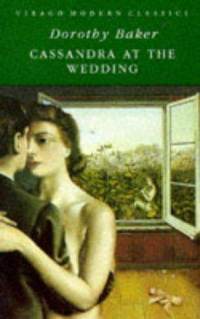
Dorothy Baker, Cassandra at the Wedding — kind of amazing 1962 novel (in the New York Review of Books reissue series) about brilliant identical twin African-American sisters.  Movies like Rachel Getting Married and Margot at the Wedding must be ripping this off (the latter most obviously & explicitly).  Cassandra, working on her literature PhD at Berkeley, depressed and blocked, difficult and with a drinking problem, shows up for twin sister Judith’s wedding, which she proceeds to disrupt because she is frightened of losing the sororal/twin bond.  The novel switches halfway through to Judith’s POV.  A bit of an exhausting high-style stylistic performance, but excellent.

Denise Mina, The End of the Wasp Season — am in the middle of this now — excellent police procedural taking place in contemporary Glasgow.  Protagonist detective is pregnant with twins, dealing with sexism and other stuggles among her colleagues (a tiny bit in the Jane Timoney mode, maybe).

Alison Bechtel, Are You My Mother?  A Comic Drama.  The subtitle is necessary or you will get the children’s picture book in Amazon.  This got a rave review in the Sunday Times Book Review and a bit of a slam from Dwight Garner in the daily.  I’m somewhere in between — I agree with him that its celebrated 2006 predecessor Fun Home (which seems to have become a “canonical” graphic novel almost at the level of Maus or Persopolis) was better because it had much more of a story: this one is ultimately too much of a therapy diary about her relationship with her mother, which turns out to be just not as newsworthy as her narrative about her strange father.  I still liked it, though, and she’s a wonderful artist whose pages are always fun and appealing to read and examine.  It sent me to finally read Alice Miller’s The Drama of the Gifted Child (which she discusses; she then gets to Donald Winnicott via Miller) which I’d been meaning to check out since reading about David Foster Wallace’s obsession with it (his copy of it is extensively annotated with personal reflections, as this piece, well worth reading, explains).

Lloyd Alexander, The Book of Three.  Have been reading this to the kids.  The first in the Prydain series.  I have strong (though vague) memories of reading The Black Cauldron and The High King but I think I never read the others in the series, or at least not this one.  It’s fun although all the Welsh names are challenging to read aloud: Gwydion, Caer Dathyl, Achren, Melyngar, Dyrnwyn, Fflewddur Fflam.  I now realize that J.K. Rowlings’ Dobbie the House Elf ripped off not just Gollum/Sméagol but also Alexander’s Gurgi.

Dan Chaon, Await Your Reply — good, creepy fable of identity theft, (almost) worthy of Patricia Highsmith.

Steve Erickson’s Cineautistic *Zeroville*

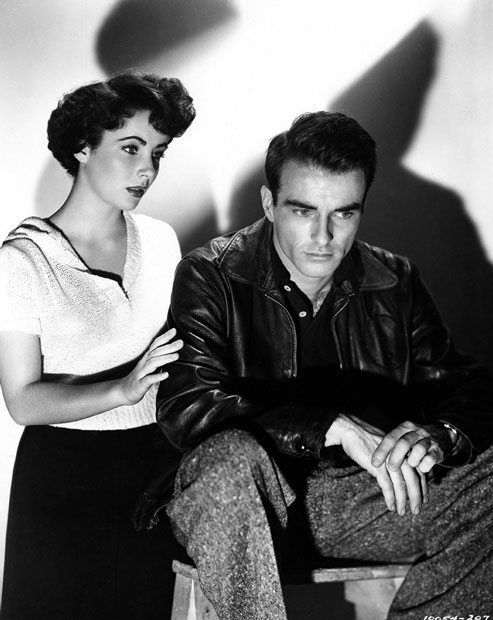
I found this on the “recommended reading” shelf at the public library — thanks, hipster librarian!  I’d read reviews of Zeroville (2007) when it came out but had forgotten about it and had never read any Erickson.  It’s a great Hollywood novel.  In fact, if I had any minor criticism it might be that it could be accused of straining just a little to be The Great Hollywood Novel, with its mythopoetic tendencies and highly self-aware self-positioning in relation to 20th-century Hollywood and film history & literary representations of H’wood from Fitzgerald and Nathaniel West onward.  (As Liesl Shillinger pointed out in her NYT review of the novel, it follows a parallel trajectory to Peter Biskind’s great non-fiction Easy Riders, Raging Bulls: How the Sex-Drugs-and-Rock ’n’ Roll Generation Saved Hollywood, and could almost be seen as an attempt to retell this history as visionary fiction).  The protagonist is a semi-autistic mystery — a character aptly describes him as “cineautistic” at one point — named Vikar with an image of Montgomery Clift and Elizabeth Taylor from George Stevens’ A Place in the Sun tattooed on his skull who shows up in Hollywood on the week of the Manson murders– for which he’s promptly taken into questioning.  He ends up falling in with some bohemian film types and eventually gets taught film editing by an older woman who seems maybe modeled on Thelma Shoonmaker, Martin Scorsese’s legendary editor since the 1960s.

It’s a running joke that people tend to mistake the image of Clift and Taylor on Vikar’s skull for James Dean and Natalie Wood, an error which enrages Vikar notwithstanding his admiration for Wood.  In fact early on he slams someone over the head with a cafeteria tray for the mistake, although he subsequently gets better at controlling his violent rages.

Vikar turns out to be a visionary, intuitive film editor — can’t think offhand of any other novelists with film-editor protagonists, btw; it doesn’t exactly rank with police detective or cowboy as an iconic fictional occupation — who is nominated for an Oscar for his ground-breaking work on a film, Pale Blue Eyes (which Erickson says is the only made-up film in the whole novel) that had been viewed as an unredeemable disaster by the studio after shooting.  While working on this film in Madrid he is, in effect, kidnapped in order to moonlight as editor for a propaganda film for an insurgency revolutionary organization.  His success allows him to begin collecting original prints of classic films which he does not screen but simply hoards.  Among other things the book is a nice collection of lists for one’s Netflix queue:

He sees Performance, Preminger’s Laura (for the third time), Murmur of the Heart, Gilda, Disney’s Pinocchio, The Battle of Algiers,… Dirty Harry…, an old forties movie called Criss Cross where Burt Lancaster and Yvonne De Carlo drive each other mad across what seems to Vikar a fantastical downtown Los Angeles with trolley cars that glide through the air…

The book winds up exploring Vikar’s obsessive quest for the key to what amounts to a kind of cabalistic, secret history of cinema as encoded in a magical single cinematic frame which has, in some inscrutable manner, migrated from Cary Dreyer’s 1928 La Passion de Jeanne d’Arc to a contemporary porn movie and, it turns out, elsewhere (not to give too much away).

The novel is halfway between the genres of fiction and film criticism (Erickson is himself also a film critic) in its brooding, incantatory obsession with the mysteries & magic of the cinematic image at their most “deeply irrational and even rapturous” (a phrase I take from an interview with Erickson).  I wonder if it’s ever taught in film history or theory classes; it could work well as a final text.  It also offers a broader history of modern Hollywood including, among other things, accounts of the birth and development of punk rock (Vikar becomes the guardian for a kid in a band in the early 80s L.A. scene along with X, the Dils, the Germs, and so forth).  Reminds me a bit of Bruce Wagner’s earlier novels, and shares with Wagner a tendency to drop in references to real-life stars and events, although the mode is less satirical, more reverent and appreciative of Hollywood’s history (although similarly fascinated by its frightening and disturbing undersides).

Its film rights apparently been optioned by James Dean lookalike James Franco, which makes a lot of sense, it actually seems like a great match for Franco.

Penguin Crime edition of Chandler’s The Lady in the Lake

God I love this Raymond Chandler paperback.  Check out that amazing cover.  I think I picked it up from a pile in my mother in law’s house (you can have it back if you want, Suzy!).

Great book too.

He leaned forward and smiled. “Maybe you’d like a face full of knuckles.”

I stared at him with my mouth open. “That one went by me too fast,” I said. “I never laid eyes on it.”… I put my hand out, hoping he wouldn’t pull it off and throw it in the lake.  “You’re slipping  your clutch,” I told him.  “I didn’t come up here to inquire into your love life… What the hell’s the matter with you?”


“This do, Miss Keppel?”

“Mrs. But just call me Birdie. Everybody does. This is fine. Pleased to meet you, Mr. Marlowe. I see you come from Hollywood, that sinful city.” She put a firm brown hand out and I shook it. Clamping bobbie pins into fat blondes had given her a grip like a pair of iceman’s tongs.

I will admit that by the end I had somewhat lost track of the nuances of the crime and the plot… was really reading for the sentences, for the most part.

Ann Arbor man punched during literary argument

Too awesome!

Ann Arbor man punched during literary argument

Posted: Mon, Mar 19, 2012 : 3:24 p.m.

A 34-year-old Ann Arbor man was sent to the hospital with a head injury after another man punched him on Saturday during a literary argument, according to police.

Ann Arbor police Lt. Renee Bush said the man went to a party at a home in the 100 block of North Ingalls Street at about 2 p.m. on Saturday. Bush said the man was sitting on the porch with some people he had just met, talking about books and authors.

The 34-year-old man was then approached by another party guest, who started speaking to him in a condescending manner. An argument ensued and the man was suddenly struck in the side of the head, suffering a cut to his left ear, Bush said.

The man’s glasses went flying off of his head and fell to the ground, with one of the lenses popping out of the frames, Bush said.

Police were notified of the incident at 10 a.m. Sunday when they responded to St. Joseph Mercy Hospital Ann Arbor in the 500 block of North Maple Road. The man was being treated for his injuries there, she said.

The incident occurred at about 9 p.m. and the men had been drinking for several hours, Bush said.

The incident still is under investigation.

Kyle Feldscher covers cops and courts for AnnArbor.com. He can be reached at kylefeldscher@annarbor.com or you can follow him on Twitter.

As a friend commented, “literary criticism ain’t beanbag”!  And never forget the awesome power in this sport of “a condescending manner.”

I’d love to know more about what precisely they were arguing about.  First work of detective fiction, Edgar Allan Poe or Wilkie Collins?  Sentimentality of Uncle Tom’s Cabin a political strategy?  Emily Dickinson’s work necessarily to be read in its original manuscript/fascicle form?  Twilight vs. Hunger Games?

p.s.  To clarify, I do not think it is awesome that this poor soul went to the hospital with a head injury…

Eugenides’ *The Marriage Plot* as Neuronovel

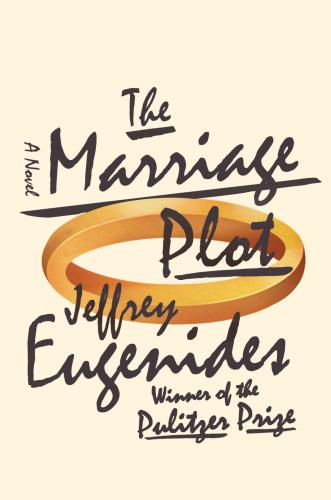
Just finished Jeffrey Eugenides’ The Marriage Plot which I enjoyed very much.  [The following contains no big spoilers but I do discuss the book as a whole, which requires some hinting at the way the plot unfolds.] Of course, as someone who went to school at Brown/ in Providence (a decade after the book’s 1980s setting and graduate rather than B.A., though), there was some strong nostalgia operating for me or, perhaps not nostalgia, but personally interested recollection & testing of details (e.g., the diner where two character go to eat seems to be located right by my old apartment, although there was no diner there — could it have folded before my time?).

The book seems practically to be begging to be adopted as a final text in a course on “Anglo-American Fiction and the Marriage Plot.”  Consider this early riff about a class one of the three protagonists, Madeleine, is taking:

In [Professor] Saunders’s opinion, the novel had reached its apogee with the marriage plot and had never recovered from its disappearance.  In the days when success in life had depended on marriage, and marriage had depended on money, novelists had had a subject to write about.  The great epics sang of war, the novel of marriage.  Sexual equality, good for women, had been bad for the novel.  And divorce had undone it completely.  What would it matter whom Emma married if she could file for separation later?  How would Isabel Archer’s marriage to Gilbert Osmond have been affected by the existence of a prenup?  As far as Saunders was concerned, marriage didn’t mean much anymore, and neither did the novel.  Where could you find the marriage plot nowadays?  You couldn’t.  You had to read historical fiction.  You had to read non-Western novels involving traditional societies.  Afghani novels, Indian novels.

Eugenides does cash out this key early riff in various ways, as the eventual winding of the plot involves marriage, a choice between two suitors, a prenup, travel to India, and, for the sake of avoiding spoilers, I’ll just say consideration of various post-marriage options.

I am not sure I feel that these themes and ideas are played out in deep enough ways, though, to make this book that perfect choice for the contemporary final text in the marriage course that I’d been imagining (e.g. a course including books by Austen, Eliot, Wharton, Henry James, then finally Eugenides).  The problem is that the book seems to suggest in the end that Professor Saunders is correct.  The characters do still struggle over marriage and the question of whom to marry, but not very much is at stake in the literal or legal fact of marriage.  For a young couple today or in the 1980s who have not yet had kids, it is not too difficult to sever all ties, whether or not a marriage has occurred.  A divorce or annulment requires a lawyer, and individuals may (probably will) invest extra meaning in a marriage (as opposed to a “relationship” or what they used to call concubinage in the old days!), but Professor Saunders’s basic point (about society, anyway) seems true, and this novel bears it out.

So, I guess I was slightly disappointed by this aspect of the novel; if I had hoped that the novel would ultimately prove that Saunders was wrong — that “the marriage plot” still endures as a powerful structure for the contemporary novel — I was not really satisfied on this score.  Madeleine comments at one point on her honeymoon that

She felt as if she’d aged twenty years in two weeks.  She was no longer a bride or even a young person.

This reminded me of Dorothea after her honeymoon with Casaubon (an intentional reference I’m sure), but what has given Madeleine this feeling is her husband’s mental illness (which renders him Casaubon-like in certain respects, including in the bedroom), not marriage as such.  If Madeleine exits the marriage, will she be irrevocably changed, altered and damaged in the eyes of the world?  Not in the least, so The Marriage Plot can not really be a modern/domestic “epic” in the way Professor Saunders (and George Eliot) assert that nineteenth-century novels were.

One could make the case that The Marriage Plot jibes with the claim some have been making recently that the really crucial topics for the contemporary novel are not marriage & love but consciousness and neurology– in that we have a protagonist who is mentally ill and whose drama, as it unfolds throughout the book, necessitates intensive consideration of drug intake and the management of his faulty/erratic interior wiring.  (On Fresh Air, Eugenides flatly refuted the suggestion that the brilliant, manic, and bandana-wearing Leonard is modeled on David Foster Wallace; it’s indeed tempting to read him this way, as it gives the novel as whole additional layer of self-conscious reflection on recent literary history.  However, in support of Eugenides, it has to be said that Leonard can’t play tennis and finds the game off-puttingly elitist (D.F. Wallace of course was a teenage tennis champion); this almost seems suspiciously planted as a red herring, though…)

In fact, Madeleine’s error, as a nascent scholar of Victorian fiction, may be that she misreads literary history and her own lover: she believes she is living in a Marriage Plot but she is actually a protagonist of a Neuronovel: “What has been variously referred to as the novel of consciousness or the psychological or confessional novel—the novel, at any rate, about the workings of a mind—has transformed itself into the neurological novel, wherein the mind becomes the brain” (Marco Roth).

Dana Spiotta’s *Stone Arabia*: a musical tree falling in the woods

The one other novel I read in the midst of my Classic Doorstops was Dana Spiotta’s new Stone Arabia (link to Amazon where it’s for sale for less than $14).  This was also my first Kindle book purchase of over $1.99 or so.  I have to say that the whole Kindle (on iPad) experience was pretty great.  There I was up in Maine — the libraries did not even have the novel in yet, and in one minute I had it downloaded for $12.99.  Sarah keeps telling people that I “clutched the iPad to my breast like an infant” the entire time in Maine which I think is a gross overstatement, but it’s true that I do love my enchanted/ing tablet.  Reading in bed can be mesmerizing… no book light… the words hang in space, luminous and abstract.  Flip, flip, flip with your finger like Merlin or the Wicked Witch navigating a magic crystal.

I enjoyed this novel but don’t think it’s as strong as her great previous one, Eat the Document, which was based loosely on the life of Cathy Wilkerson, I believe, the former Weather Underground radical who changed her identity and lived ‘underground’ for a decade after playing a role in the accidental explosion of her father’s Manhattan townhouse.  Eat the Document is one of my favorite novels of recent years… Stone Arabia is well worth reading, especially if you’re a pop music fan, but felt to me slightly schematic or high-concept (movie-ready) by comparison.  The narrator is a woman, Nicole, whose older brother Nik almost made it as a rock and roll star, but (kind of along the lines of the Ben Stiller character in Greenberg?) missed out on success due to some combination of intransigence, eccentricity, and refusal to compromise.   Nicole narrates the novel, but big chunks of it constitute Nik’s “self-curation,” in the form of an obsessive project of semi-fantastic memoir, telling in great detail the counterfactual story of his major success and decline as an internationally famous pop star, including elaborately fabulated documents such as record reviews, fan mail, etc.  He also records cd after cd of his increasingly strange music, which he distributes in tiny, fully-packaged editions to a small circle of family members.  [btw, Great Jones Street (1973) by Spiotta’s mentor Don DiLillo, about reclusive, Dylan-esque rock legend Bucky Wunderlick and the theft of his unreleased recordings, hangs over this one.  The title of Spiotta’s last, Eat the Document, is appropriated from a Dylan tour documentary, fwiw.]

In this sense Stone Arabia reminded me a little bit of Jonathan Lethem’s The Fortress of Solitude, with the similar structure of a narrator describing a close family member’s eccentric, non-circulating project of self-memorialization or curation.  Or I suppose it’s a bit different in that in Lethem’s novel the father is simply working on a never-ending private artwork (an avant-garde film)… but there’s a similar feel in the relationship and the way the novel contains and represents a displaced self-memorialization.  Towards the end the self-curation takes a final turn of the screw when Denise’s daughter, Nik’s niece, begins a documentary film about Nik and his projects.  The novel is thinking through very of-the-moment questions about the meanings of our self-documentation, the degree to which celebrity has become normalized as a life path for ordinary people (Youtube stars, etc), and the psychological/social effects of viewing one’s own life as a “project” or a mediated story.  When self-documentation ends, can life or identity continue?  The threat of suicide-via-data-erasure (or cessation) hangs over the narrative (with almost P.K. Dick overtones at times).

Spiotta obviously knows and understands pop music, underground celebrity, the contemporary mythologies of semi-popular culture, from the inside, and so the portrayal of Nik is really compelling.  He’s a fictional cousin to real-life “lost” figures of underground music along the lines of, I don’t know, R. Stevie Moore, Skip Spence, Scott Walker?  Especially since the 1980s, we’ve been drawn to the narrative of unknown post-punk/rock legends who emerge and reveal a fully-realized body of work that was recorded but kept secret or totally ignored. It took a few decades of rock and roll history to allow sufficient sedimentation of the historical record such that giants could be “discovered,” preserved in amber from some previous strata.  Rehabilitation projects, reclaiming the marginalized, almost a World-Music-ization of Western pop, finding the primitive genius out in in the wilds.  With bands like Pavement and Guided by Voices, this became an increasingly conventional means, even, of launching oneself as a band or musician “out of nowhere” — generating the effect of “who are these guys?  Who made these strange artifacts?  Who plucked then from obscurity?”  Nik intentionally withdraws and chooses to perform as a pop music star in a private world of non-circulation, yet with a fully-articulated story of public significance, turning himself into a musical tree falling in the woods.

Stone Arabia has received rapturous reviews — “Evocative, mysterious, incongruously poetic…gritty, intelligent, mordant, and deeply sad,” NYTBR — and I think they’re are at least partly deserved… But in the end I agree more with the review in New York Magazine that praises the novel highly but complains that Denise can feel somewhat “generic…  a packhorse for all the familiar baggage of modern life;” we’re always looking through her to get to her mysterious brother’s more interesting, and only partly accessible, consciousness.

Still, if you like rock and roll/pop music fiction, this is a good one; not as great as A Visit from the Goon Squad, IMO, but in some ways a worthy pair to Egan’s novel from last year.

Excruciating & Tragic Dentistry of Buddenbrooks

I had two wisdom teeth removed on June 3.  Dentists had been telling me to do so for at least 15 years, maybe longer.  I’m not sure how my current dentist convinced me; I think in part because he was pretty lowkey about it, and didn’t seem to be pressuring me.  Anyway, I made the appointment and had it done.  The few days immediately afterwards were not as bad as I feared.  The pain, managed with Vicodin for a few days and then a lot of ibuprophren, was very bearable.  I went to my office to do some work on the Monday after the Friday appointment and felt ok.  However — the (bearable & manageable) pain did not go away.  It turned out that I had the disturbingly-named Dry Socket.  I ended up going back 4 times or so for Dry Socket treatment, which consists very simply in sticking some intense clove oil, and clove oil-soaked gauze, in the back of your mouth.  It tastes absolutely terrible, like you’ve just swallowed some kind of potpourri spice ball, and numbs everything for a while.

So I kept going back… finally the dentist himself met with me… They were worried about infection, but the wounds were healing fine.  In they end they told me that at my age, early 40s, it’s not so unusual to have a long reaction time as the teeth readjust themselves.  I kept taking 9-12 ibuprophren a day, which is what I needed to go about my business (it still hurt, too), and it was seeming like quite a long time to be keeping up that rate of the medication, I was getting a little worried about the ol’ liver — and then finally in late July it just stopped hurting, all of a sudden.  I’ve had occasional twinges since then, but only enough to make me feel relieved that the real pain is over with.

Kids, get your wisdom teeth out before you’re 30!!

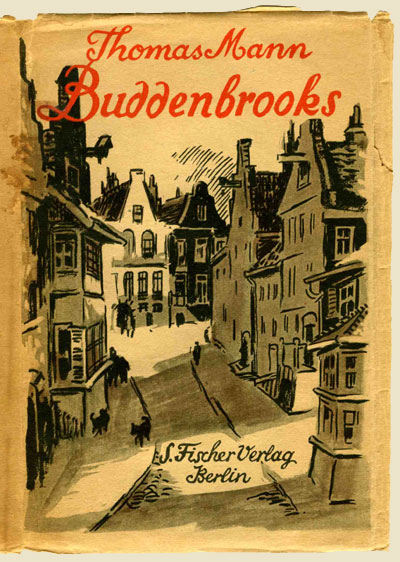
Anyway, as I was enduring this in July, I was reading Thomas Mann’s Buddenbrooks.  I kind of have a tradition of trying to read at least one door-stopper classic work of fiction, preferably one not directly related to ‘work,’ when we’re in Maine.  I absolutely loved Buddenbrooks; I’d read The Magic Mountain a few summers ago, and I think that’s more original, weirder and probably greater, but BB (published 1900) would be a good candidate for the Last Great Nineteenth-Century Novel, one of those (like Conrad’s, James’, a few others) that seem to have one foot in the realist novel, one just starting to move towards new approaches (although BB is pretty heavily realist).  It’s mindblowing to me that Mann published in at age 26 — amazing.

Anyway, in some ways Buddenbrooks turned out to be exactly the wrong choice for me this summer because it contains so many hair-raising descriptions of painful dentistry.  It’s practically a Big Book of German Smiles.  And without giving anything away, this is a novel that demonstrates very vividly how dangerous 19th-c dentistry could be for a patient.

The young boy Hanno, whom I presume is based on Mann himself, has teeth which

had been a source of trouble and the cause of many painful episodes… His teeth, which were as beautiful and white as his mother’s, were unusually soft and brittle; they came in all wrong, crowding each other.   And because these complications had to be corrected, little Johann was forced early on to make the acquaintance of a terrible man: Herr Brecht, the dentist…

The man’s very name reminded Hanno of the horrible sound his jaw made when, after all the pulling, twisting, and prying, the roots of a tooth were wrenched out.  The mere mention of that name would jolt his heart with the same fear he felt whenever he had to sit cowering in an armchair in Herr Brecht’s waiting room…

Hanno would sit there in a limp cold sweat, unable to protest, unable to run away — in a state no different from that of a felon facing execution — and with enormous eyes he would watch Herr Brecht approach, his forceps held against his sleeve, and he could see the little beads of sweat on the dentist’s brow and that his mouth, too, was twisted in pain.  And when the ghastly procedure was over — and Hanno would spit blood in the blue bowl on his side and then sit up pale and trembling, with tears in his eyes and his face contorted with pain — Herr Brecht would have to sit down somewhere to dry his brow and drink a little water.

(Part of what’s amazing and excruciating here is the way Herr Brecht suffers along with Honno…)

Here’s another scene in which Hanno’s father Thomas Buddenbrook sits in Herr Brecht’s chair:

Thomas Buddenbrook grasped the velvet armrests firmly with both hands.  He barely felt the forceps take hold of the tooth, but then he heard a crunching sound in his mouth and felt a growing pressure in his head…. It took three or four seconds.  Herr Brecht quivered with the exertion, and Thomas Buddenbrook could feel the tremor pass through his whole body;  he was pulled up out of his chair a little and heard a soft squeak coming from somewhere deep in his dentist’s throat.  Suddenly there was a violent jerk, a jolt — it felt as if his neck had been broken — and one short loud crack… [H]ot pain raged in his inflamed and maltreated jaw; and he felt quite clearly that this was not what had been intended, that this was not the solution to his problem, but simply a premature catastrophe that had only made matters worse.

Ow!  I can read it a bit more dispassionately now, but I was really squirming and clutching my jaw when I first read it a few weeks ago.  Of course modern life is crap in many ways, but I feet deep gratitude to live in the post-anesthesia era.  They knocked me out for the wisdom teeth, I did not feel a thing.

Then, I finished Buddenbrooks earlier than I thought I would, and decided to move on to Classic Bookstop #2, Anna Karenina, which I read in high school, I think, but not the Pevear/ Volokhonsky translation I’ve been curious about.

There’s certainly not as much dentistry in this, but there is this interesting passage when Anna Karenina’s husband finally learns definitively that Anna has been unfaithful to him:

He felt like a man who has had a long-aching tooth pulled out.  After the terrible pain and the sensation of something huge, bigger than his head, being drawn from his jaw, the patient, still not believing his good fortune, suddenly feels that what has poisoned his life and absorbed all his attention for so long exists no more, and that he can again live, think and be interested in something other than his tooth… The pain had been strange and terrible, but now it was gone; he felt that he could again live and think about something other than his wife.

Perhaps Tolstoy had had better luck with dental care than Mann.

It’s a somewhat chilling image.  You can sympathize with him to whatever degree the tooth in the metaphor is the affair, but the tooth also seems to be Anna herself, whom Alexei proves very ready to discard as something poisonous and tainted.

There are probably some (likely boring) dissertations out there on such topics…